
Traffic Congestion & Vehicular Pollution Need To Be Addressed

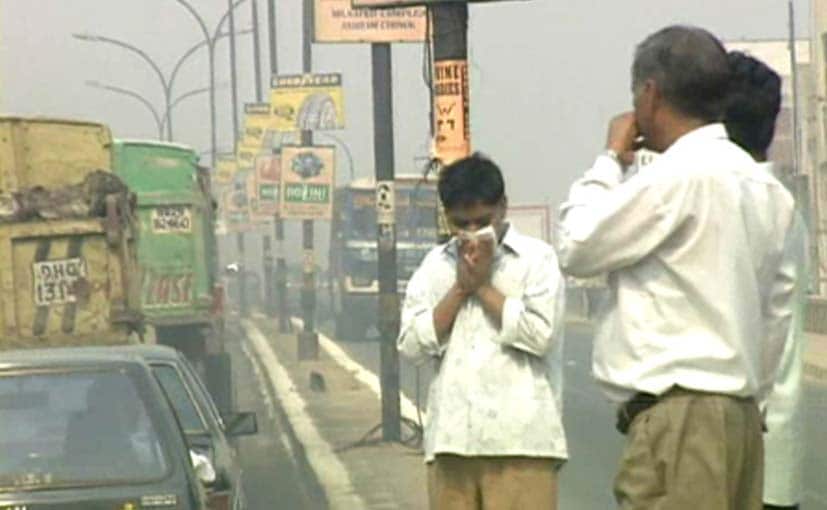
- Traffic congestion & vehicular pollution are inextricably interconnected
- Technologies have emerged to address the latter issue
- Pollution can also be reduced by mandating stricter fuel & emission norms
Technologies have emerged to address the latter issue, carmakers such as Tesla have taken the lead in all-electric cars and global carmakers are catching up with Porsche and Jaguar showcasing their own all-electric concepts in the recent past although the BMW i3 has been around as well. Most other global carmakers, mainly Toyota and Volkswagen have gone down the hybrid route. We can debate the pro's and con's of either technology, but the fact is that other than the new Toyota Camry and Prius and the Honda Accord with the occasional supercar like the BMW i8 there are no full-hybrids in India. As for electrics, Tesla has said they will sell their next model in India but we have an electric version of the Verito and the Reva E2O from Mahindra, both cars while interesting and notionally subsidised by the government's 'FAME' scheme are not viable in terms of cost unless they're used as commercial vehicles and a limited range and lack of fast-charging infrastructure fatally flaws that as well.
Indeed, the lack of progress on the drivetrain front has meant that even basic technologies such as 'Start-Stop' is limited in the mass-market in India limited to the Ciaz and Ertiga and with Hero's 'iSmart' motorcycles. These technologies are expensive and India remains a price-sensitive market with the government more concerned about making money from car sales than thinking of future technologies. The FAME scheme does give subsidies but they hardly make a dent and because imports can't access these subsidies, truly revolutionary cars which might need to be brought in small batches initially can't make it to Indian shores. Indeed, not only should the government look at expanding the FAME program with higher subsidies but it should apply limited subsidies to imported hybrid and electric vehicles as well. Now, while one could argue that subsidies alter market realities, they are vital in fostering technological growth. Today clean solar power is being generated at almost the same price per kilowatt-hour as polluting coal-based thermal power. Would that have been possible without the subsidies of a decade ago? The government should think of these subsidies not as a discount but a way to encourage carmakers to bring these technologies to India. India is too large a potential market to be flooded with imports, but the market needs to be seeded with imports.
Another way of reducing pollution is to mandate stricter fuel and emission norms. India's emission norms are already very strict but as events at a carmaker proved a few years ago, the system can be beaten. While carmakers will have to make their vehicles 'Bharat Stage-VI' compliant by 2018, the lack of testing fuels is condemning that process to a slow start. But is the government and other regulatory bodies missing the woods for the trees?
Much of the pollution crisis in northern India is to do with particulate matter, known as PM2.5 and PM10. Much of that is related to the dust in our cities due to poor municipal cleaning. Vehicles do pollute, but as higher fuel standards have been brought in, particulate matter pollution from well-maintained vehicles is minimal. The 'Dieselgate' crisis that hit Volkswagen for example had nothing to do with particulate pollution but with Carbon Monoxide (CO) and Nitrous Oxides (NOx) pollution; the latter is a serious problem in Europe due to high vehicle concentrations and the dominance of diesel cars.
A lot of vehicular pollution in India is related more with poor maintenance and unfit vehicles on the roads. While vehicles in India technically need fitness certificates, mainly in the form of a pollution certificate to run, these are almost never checked in major cities let alone elsewhere. Poorly maintained vehicles operate on our roads all the time, and while the National Green Tribunal's move to ban diesel vehicles over ten-years old is very heavy handed and lacks any nuance whatsoever, possibly they had little choice. But the fact is that a well-maintained ten-year old BMW diesel 5-series is likely to be much less polluting than a ten-year old diesel hatchback which has led a tough life.
Instead of very strict implementation of the policies currently in place which will prevent old, polluting vehicles from being on the roads and looking at smart subsidies for clean vehicles, the government has looked at crazy schemes. Like it or not, the 'Odd-Even' scheme had only limited success and that too primarily with dealing with traffic congestion. We need more thought on dealing with this problem and the government, both central, state-level and municipal as well as other authorities should plan out credible solutions. I will explore some solutions to vehicular congestion in the second part of this series.
Kushan Mitra is the managing editor of The Pioneer and a member of the NDTV Car and Bike Awards Marketing and Communications jury for 2017
Related News


Latest Cars


Upcoming Cars


Trending News





Latest News


 car&bike Team | Dec 14, 2025Top-Spec Tata Sierra Accomplished, Accomplished+ Prices RevealedRegardless of the powertrain combination chosen, all Tata Sierra Accomplished+ trims cost upwards of Rs 20 lakh (ex-showroom).2 mins read
 car&bike Team | Dec 13, 2025Skoda Slavia Facelift Spied Testing Again Ahead Of DebutThe facelifted Slavia is expected to debut in 2026 as Skoda-VW India looks to refresh its India 2.0 range.1 min read
 car&bike Team | Dec 13, 20252026 MG Hector Facelift Interior Previewed Ahead Of DebutLatest teaser video of the upcoming Hector facelift suggests minimal cosmetic changes to the interior as well as reveals a new alloy-wheel design.1 min read
 Jaiveer Mehra | Dec 13, 2025Passenger Vehicle, Two-Wheeler Sales Surge In November 2025: SIAMBoth segments reported a growth in the region of 20 per cent, though year-to-date sales growth in FY2026 was notably flatter at around 3 per cent.1 min read
 car&bike Team | Dec 12, 2025Nissan Entry MPV Design To Be Unveiled On December 18New MPV to be the first of three new models for India by Nissan, alongside the Tekton and a three-row SUV.1 min read
 Jaiveer Mehra | Dec 12, 2025New Mini Convertible Launched At Rs 58.50 LakhDrop-top variant of the iconic Cooper hatchback available in a single Cooper S spec.1 min read
 Janak Sorap | Dec 11, 2025Harley-Davidson X440 T First Ride Review: Smarter and SharperHarley-Davidson has taken the X440 and given it a more focused and engaging twist. The result is the X440 T—essentially the same platform but updated in areas that give the motorcycle more appeal and riders more thrill.5 mins read
 Shams Raza Naqvi | Dec 10, 20252025 Mini Cooper Convertible Review: More Colour On Indian RoadsThe updated Mini Cooper Convertible is set to be launched in the Indian market in the next few days. We drive it around Jaisalmer for a quick review.1 min read
 Bilal Firfiray | Dec 8, 2025Tata Sierra Review: India’s New Favourite?Marking its return after a few decades, the reborn Sierra has made everyone sit up and take notice. But is it worth the hype?10 mins read
 Girish Karkera | Dec 4, 20252026 Honda Prelude First Drive: Domesticated Civic Type RA sporty-looking coupe built to give customers a taste of performance but not at the expense of everyday practicality.5 mins read
 Seshan Vijayraghvan | Nov 29, 2025Mahindra XEV 9S First Drive Review: Big Electric SUV, Bigger ExpectationsThe XEV 9S lands at a time when the EV crowd is growing fast. It’s a big, born-electric, three-row SUV that starts under 20 lakh. It sits close to the XUV700 in size, but the brief is very different. Here’s what it’s like on the road.11 mins read