
Waymo, Cruise Seek Permits To Charge For Autonomous Car Rides In San Francisco


Alphabet Inc's Waymo and rival Cruise have applied for permits needed to start charging for rides and delivery using autonomous vehicles in San Francisco, state documents reviewed by Reuters showed, setting the stage for the biggest tests yet of their technology in a dense urban environment.
Neither company revealed when they intend to launch services. But they detailed contrasting deployment plans, with Waymo starting with "drivered operations" and Cruise expecting to deploy vehicles without humans behind the wheel.
California's Department of Motor Vehicles (DMV) has yet to decide on the previously unreported applications made by Waymo on Jan. 19 and Cruise on March 29, according to the documents. The agency said it is still reviewing the applications.
Also Read: Waymo Continues To Lose Money As Revenue Increases For Alphabet's "Other Bets"
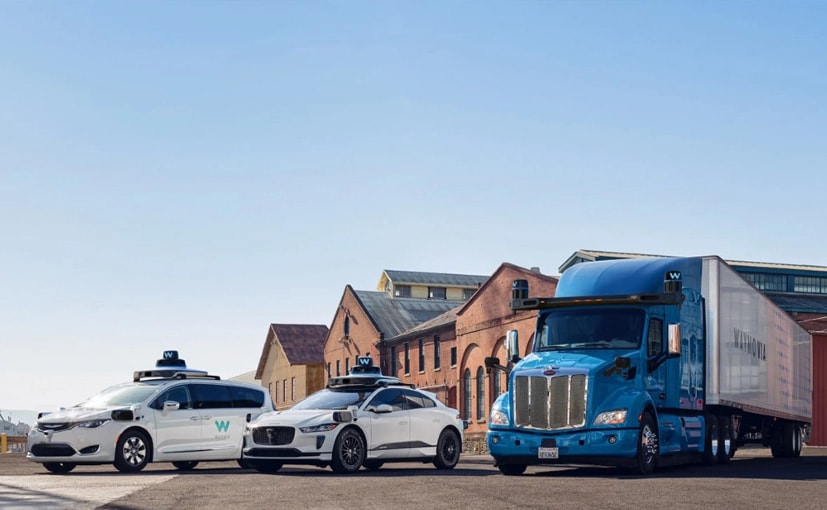
Waymo has provided paid, driverless rides hailed through its app in the Phoenix suburb of Chandler since 2019
The efforts come at a turning point for Waymo, which Google launched over a decade ago. Waymo has provided paid, driverless rides hailed through its app in the Phoenix suburb of Chandler since 2019. But it has failed to scale up Arizona operations as quickly as analysts once envisioned.
Its longtime chief executive, John Krafcik, stepped down in April and was replaced by two co-CEOs.
Cruise, backed by General Motors Co, Honda Motor Co Ltd and SoftBank Group Corp, has focused on San Francisco since its beginning. It said in the permit application it has logged 2 million autonomous driving miles (3.22 million km) in the city.
Waymo said it has had over 83,000 autonomous miles in its proposed deployment area, according to its application.
"You have a faster path to meaningful revenue in dense urban environments such as San Francisco than in the suburbs such as Chandler," said Grayson Brulte, a consultant who advises companies around autonomous mobility strategies.
Waymo told Reuters that the permit would allow it to "complete paid deliveries in autonomous mode, with a driver behind the wheel." The company said it could eventually offer passenger service without anyone else in the car.
Cruise did not have an immediate comment.
The companies would not be the first to obtain one of two permits required to operate robotaxis for hire in California. Silicon Valley startup Nuro in December became the only company to secure a DMV deployment permit. Nuro in March announced an unspecified investment from Chipotle Mexican Grill Inc, which said it was interested in new delivery systems.
If Waymo and Cruise secure DMV approval, they would next need a permit from the California Public Utilities Commission to begin charging passengers.
Until now, self-driving cars in San Francisco and Silicon Valley primarily have been used on a test basis, although the vehicles - with whirring lidar sensing gear on their roofs - have become an increasingly common sight. Cruise and Waymo plan to maintain some limits during commercial operations as public concerns grow over the safety of self-driving systems.
Waymo said in its application it would have a safety driver in its hybrid Chrysler Pacifica minivans and all-electric Jaguar I-Pace SUVs. They would operate around the clock, offering rides or transporting goods on roadways with posted speed limits of up to 65 mph in San Francisco and in the northern part of bordering San Mateo County.

Waymo said it has had over 83,000 autonomous miles in its proposed deployment area, according to its application
Also Read: Samsung To Develop Autonomous Driving Chip For Google's Waymo
Waymo said it may switch off autonomous mode in specific areas such as freeway ramps and construction zones, or for heavy rain and wet roads. Cruise also said it may limit driverless deployment to "certain routes" and "non-inclement weather conditions," without elaborating.
Cruise said its service hours would be late evening to early morning with speeds of up to 30 mph, according to the documents.
When ready for commercial deployment, the company would receive $1.35 billion from SoftBank's Vision Fund as part of an earlier investment agreement.
The timeline for revenue-generating deployment of self-driving vehicles has been pushed back repeatedly.
"It's an incredibly difficult thing that we're trying to solve for," said Timothy Papandreou, a former Waymo employee who now leads consultancy Emerging Transport Advisors.
This year, Waymo also has been discussing collaborating with San Francisco transportation authorities and university labs to secure an unspecified U.S. Department of Energy grant "to investigate the use of AVs to provide first-/last-mile transit service" in San Francisco, according to public records seen by Reuters.
Related News


Latest Cars


Upcoming Cars


Latest News


 Jaiveer Mehra | Jul 14, 2026Kia Carens, Carens Clavis Cumulative Sales Cross 3 Lakh UnitsMilestone arrives a little over a year after the 2 lakh unit milestone and a little over 4 years after the MPV’s India launch.3 mins read
 Jaiveer Mehra | Jul 14, 2026Renault Duster Adventure Edition Launched At Rs 12.99 LakhThe new special edition is positioned between the Evolution and Techno trims and is offered with both the 1.0 Turbo and 1.3 Turbo engine options.1 min read
 Bilal Firfiray | Jul 13, 2026Toyota Innova Hycross Facelift Spied For The First TimeIt’s been a good chunk of four years since the Toyota Innova Hycross was launched in India. So, it seems to be a good time to get in a facelift.1 min read
 car&bike Team | Jul 13, 2026Hero MotoCorp Flags CAFE Norm Risks for Two-Wheelers Ahead of New Fuel Efficiency RulesHero MotoCorp says the proposed expansion of Corporate Average Fuel Economy (CAFE) norms to two-wheelers will improve fuel efficiency but could also bring significant cost and compliance challenges for manufacturers.1 min read
 car&bike Team | Jul 13, 2026Hero MotoCorp To Launch New 150-350 cc Premium MotorcyclesTo capitalise on market trends and growth in the sub-350 cc premium motorcycle segment, Hero MotoCorp says it will launch new products under both Hero and Harley-Davidson brands.3 mins read
 car&bike Team | Jul 13, 2026Ignyte Launches New Carbon Fibre Series Helmets In India; Prices Start From Rs 14,999New helmet series features a carbon fibre composite shell & kevlar reinforcement and meets ISI & DOT standards.1 min read
 Bilal Firfiray | Jul 12, 2026Tata Sierra EV Review: Reborn In The Electric AgeThe Tata Sierra EV isn’t drastically different from its ICE counterpart when it comes to design. But being the seventh electric offering from the Indian brand, it has gotten a few things right, and very few things wrong. But is it a compelling package to buy?5 mins read
 Jafar Rizvi | Jul 13, 2026TVS Orbiter Long-Term Review (Report 1): Settling In Takes TimeFirst impressions weren't the strongest, but the Orbiter has made a mark in its first month in the car&bike garage.5 mins read
 Seshan Vijayraghvan | Jul 7, 2026Tata Altroz Petrol DCA Long-Term Review: Intercity & Highway Driving ReportWe tested the Tata Altroz Petro DCA’s highway manners, intercity performance, and real-world fuel efficiency.1 min read
 Seshan Vijayraghvan | Jun 29, 2026Renault Kiger vs Toyota Urban Cruiser Taisor: Which Underdog Deserves Your Money?Both the Kiger and the Taisor promise strong performance, solid features, comfortable cabins and everyday usability, all without breaking the bank. But which of these underrated subcompact SUVs deserves your money? Let's find out.1 min read
 Seshan Vijayraghvan | Jun 29, 2026Skoda Kodiaq RS Review: The Best Kodiaq Yet?The Skoda Kodiaq RS is finally here, and it's every bit as exciting as I expected. But was it worth the wait?7 mins read