
California Superbike School: Finding Speed The Right Way

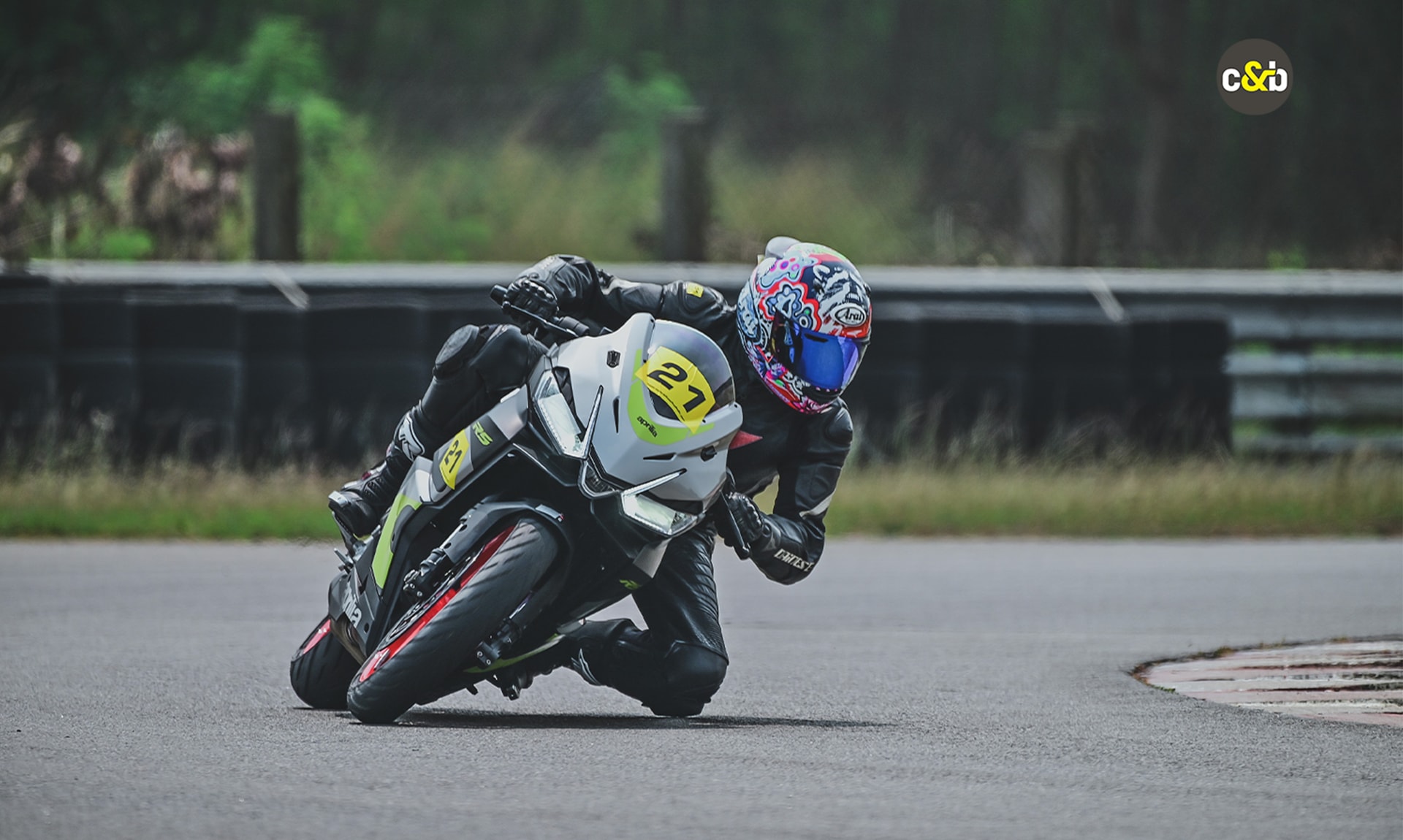
- California Superbike School is a motorcycle training programme designed for both street and track riding.
- The course curriculum is split into three levels and delivered over three days.
- Clocked over 400km on the Aprilia RS 457 during the three days of CSS.
Whenever the opportunity for track time presents itself, it is one that must be seized with complete devotion. A racetrack is one of the few places where it's just you and the machine — no traffic, no distractions, no unpredictability. So, when California Superbike School (CSS) offered me a seat for its three-day coaching programme, I wasted no time preparing for it.
I began following a stricter diet, cutting out sugary foods and taking walks whenever I found the time. The reason was simple — to get fitter and build enough stamina for three full days of track riding. It also helped that I had put on some weight over the previous few months, which had made fitting into my leather suit a bit of a challenge. Thankfully, by the time the event arrived, I had shed most of the extra weight and the zipper finally closed without much of a fight.
That same level of dedication — and perhaps even more — is evident from the coaches, organisers and support staff from the very first day of California Superbike School. By the third day, it becomes visible in the riders as well. That's how significant this school can be.
For me, this was my second experience at CSS. The first was six years ago, when I completed Level 1, which focuses on riding lines and rider inputs, and Level 2, which covers vision and reference points. The lessons from those two levels helped me become a better and faster rider, but more importantly, a calmer, smoother and more aware one every time I swung a leg over a motorcycle.
This time, however, the objective was different. I wanted to address the areas where I felt weak on a racetrack like the Madras International Circuit and further refine my riding skillset. More importantly, I wanted to finally understand and improve one aspect that had eluded me for years — body positioning, which forms a major part of the Level 3 curriculum.
Also Read: 2024 California Superbike School Review: Un-Learning To Ride!
The School
For those unfamiliar with CSS, here's a quick overview. California Superbike School was founded by Keith Code in 1980. A professional racer, accomplished author and renowned riding coach, Code has spent decades studying and teaching the art and science of motorcycle riding. From cornering techniques to understanding rider inputs and track riding fundamentals, his teachings have influenced riders around the world.
A typical CSS weekend consists of three levels, each completed over a full day. Every level is divided into five topics, with each one featuring a detailed classroom session, followed by a 20-minute on-track drill and a debrief with your assigned coach. Participants are also given a workbook that outlines the exercises for the day and highlights the key points to focus on.
Despite having attended the school before, revisiting the classroom sessions proved surprisingly insightful. With more riding experience under my belt, many of the concepts carried greater relevance and clarity than they had six years ago. While some of the techniques may already be familiar to experienced riders, revisiting them through the coach's perspective adds a completely different dimension.
The biggest advantage is that your coach follows you on track, closely observing your riding style, habits and mistakes. That allows the feedback to be highly personalised, making it far more valuable than simply watching instructional videos or reading about riding techniques. And despite all the track riding I've done over the years, the experience reinforced just how important that direct feedback can be.
Also Read: Aprilia RS 457 Review: Is It As Good As It Looks?
The Machine
The minimum requirement for participating at CSS is a mechanically sound motorcycle with an engine capacity of at least 155cc, along with tyres that are in good condition and capable of lasting the entire weekend.
During my first CSS experience, I rode the TVS Apache RTR 200 4V, which remains one of the best motorcycles for beginners looking to improve their track riding skills. Today, TVS also offers the Apache RTR 310 for participants, available on a first-come, first-served basis.
While bringing your own motorcycle is ideal — and something many riders choose to do — I wanted a machine that was quick, agile and manageable from an ergonomic standpoint. The Aprilia RS 457 ticked every box, and fortunately, Aprilia was happy to provide one for the event.
Finished in the recently introduced Arsenic Yellow paint scheme, the RS 457 looked every bit the track-ready machine, especially since it arrived without mirrors or number plate mounts. It was also equipped with optional race-spec sintered brake pads, which proved particularly useful under repeated heavy braking during the weekend's riding sessions.
Also Read: 2026 Aprilia RS 457 Launched At Rs 4.22 Lakh
Track Time
I was already fairly comfortable with the concepts covered in Level 1, which focuses on riding lines, throttle control, quick turning and remaining relaxed on the motorcycle. As such, it served as an excellent refresher before progressing to Level 2, where the emphasis shifts towards vision, reference points, three-step cornering, wide-view techniques and braking.
These topics required only minor corrections and adjustments to suit my current riding style, all of which were quickly identified by my coach. The result was a noticeable improvement in both consistency and confidence around the circuit.
Level 3, however, proved to be the biggest revelation.
Body positioning and stability had long been one of the biggest gaps in my riding skill set. On public roads, my focus has always been on scanning for potential hazards and maintaining a larger safety margin. As a result, I often kept my upper body relatively centred on the motorcycle while moving only my lower body during cornering.
While that technique wasn't necessarily wrong, modern riding methods encourage the rider to move the upper body towards the inside of the corner, positioning the head roughly where the mirror would normally sit. It's a technique widely used in racing because it allows the motorcycle to achieve the same cornering speed with less lean angle.
What I quickly realised, however, was that effective body positioning involves far more than simply hanging off the motorcycle. Several other factors need to work together, something that became increasingly clear through the classroom sessions and coaching feedback.
I also had a tendency to fatigue after five or six hard laps, which would eventually lead to mistakes and inconsistent lap times. Understanding how to use my lower body correctly and work with the motorcycle's natural movement, rather than against it, completely changed the experience. Learning how to support myself properly on the bike and use the motorcycle's inertia to help bring it upright after the apex was nothing short of transformative.
Soon, I found myself riding more consistently, holding tighter lines, focusing more on lap times and feeling noticeably less fatigued even while pushing harder. It was one of those rare moments where a small adjustment unlocks a significantly larger improvement.
Reflections
I arrived at this edition of CSS with a clear understanding of the shortcomings in my riding. Being able to identify those weaknesses, understand the mistakes behind them and replace them with better techniques was the biggest takeaway from the experience.
The motorcycle itself also plays a crucial role in the learning process. In my case, I couldn't have asked for a better companion than the Aprilia RS 457. The engine delivered strong yet manageable performance, while the chassis provided excellent feedback through the handlebars, seat and footpegs. It made learning easier and encouraged confidence throughout the three days.
To put that into perspective, the RS 457 covered more than 400km during the event. The fresh set of stock Eurogrip tyres performed admirably before the rear eventually reached the end of its life, and despite the relentless track abuse, the motorcycle completed the programme without a single complaint.
Equally impressive was the progress made by the other riders. Watching participants evolve from cautiously navigating the circuit on Day 1 to confidently using the full width of the track by Day 3 was genuinely fascinating. The transformation in confidence and understanding was visible with every session.
In hindsight, California Superbike School is one of the most comprehensive and thoughtfully structured rider training programmes available today. It helps riders better understand how a motorcycle behaves and, more importantly, how to communicate with it effectively. The result is not just faster lap times, but a deeper understanding of riding itself.
And when you eventually return to riding on the road, the benefits become even more apparent. You become more alert, relaxed, patient and composed, ultimately emerging as a more capable motorcyclist both on the track and on the street.
Related News


Learn more about

Popular Models


Latest Cars


Upcoming Cars


Latest News


 Sarthak Mahajan | Sep 19, 2026Mahindra XUV 3XO RevX Edge Variant Launched At Rs 9.39 LakhThe new variant features a 10.25-inch HD infotainment system with Android Auto and Apple CarPlay.1 min read
 Sarthak Mahajan | Sep 19, 2026Kia Carens CNG vs Maruti Suzuki Ertiga CNG: Fuel Tank Size, Power Outputs ComparedKia has launched the Carens with a factory-fitted CNG kit, with prices starting at Rs 12.12 lakh (ex-showroom).1 min read
 Shams Raza Naqvi | Sep 18, 2026Kia Carens CNG, Carens Clavis CNG Launched In India: Prices Start At Rs. 12.12 LakhWhile the Carens CNG has been introduced in a single variant, the Clavis CNG will have two variants.2 mins read
 Girish Karkera | Sep 18, 2026Maruti Suzuki Swift, Dzire and Baleno CNG AMT Launched: Check Mileage, PricesAutomated manual gearbox option makes the petrol-CNG hybrid a viable option for everyday city use for Swift, Dzire and Baleno models4 mins read
 car&bike Team | Sep 18, 20262026 TVS Apache RTR 200 4V: Top 5 UpdatesThe TVS Apache RTR 200 4V has been introduced in a new top-end variant which gets a lot of new features, including preload adjustable front suspension. Here’s a look at what’s new on the top-spec Apache RTR 200 4V.1 min read
 Jaiveer Mehra | Sep 18, 20262027 Mahindra Thar 3-Door Facelift Teased Ahead Of LaunchSecond update in two years to bring additional cosmetic changes and more features.1 min read
 Bilal Firfiray | Sep 19, 2026MG Hector Tomahawk EV Review: Play It SafeMG’s new electric SUV has one of the coolest names ever, and the coolest temperament amongst its peers. But is it worth buying?7 mins read
 Preetam Bora | Sep 16, 2026Royal Enfield Himalayan 440 Review: Better Than the 450?The new Himalayan 440 with an upsized engine and gearbox has certainly improved as a touring machine and at an extremely attractive price of Rs. 2.29 Lakh. Is it the better Himalayan to choose for many riders?9 mins read
 Seshan Vijayraghvan | Sep 15, 2026BMW i5 LWB Review: Not The M60, This Is The Proper Electric 5 SeriesThe BMW i5 LWB takes the electric 5 Series formula and puts a stronger focus on rear-seat comfort and long-distance luxury. With a 669 km claimed range, 268 bhp and a more relaxed character, is this the i5 that makes the most sense for India?7 mins read
 Preetam Bora | Sep 14, 2026Ladakh Uncharted: Himalayan Basecamp Off-Road Ride ExperienceA day-long off-road excursion from Royal Enfield’s Himalayan Basecamp event in Ladakh, the Ladakh Uncharted ride by Alpinestars was all about re-discovery!6 mins read
 Janak Sorap | Sep 12, 2026New Bajaj Pulsar 125 First Ride Review: More Tech, Less Weight, Same Pulsar DNAThe new Bajaj Pulsar 125 retains the familiar Pulsar identity but gets a new engine, lighter construction, more features and a sharper riding experience.5 mins read