
Why Turbo Petrol Cars Sometimes Feel Less Fuel Efficient In City Traffic


- Turbo-petrol cars are usually more efficient on highways than in stop-and-go traffic
- Frequent acceleration and braking force the turbo to consume more fuel
- Heavy SUVs paired with small turbo engines often struggle more in urban conditions
Modern turbo-petrol engines have become extremely common in India over the last few years. From compact SUVs to premium hatchbacks, manufacturers now use small turbocharged engines to deliver a balance of performance and claimed fuel efficiency. Cars powered by engines like the 1.0-litre TSI, 1.0-litre Boosterjet, or 1.2-litre turbo-petrol units often promise impressive ARAI mileage figures on paper.
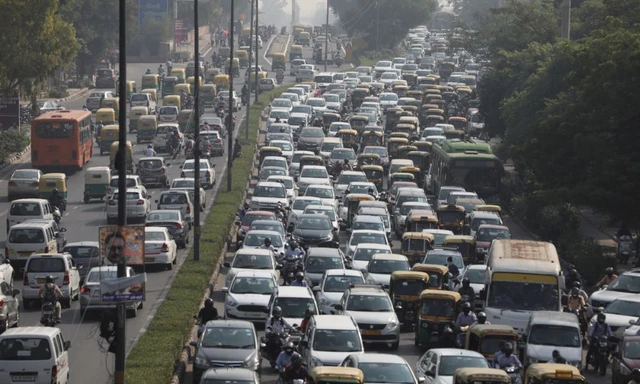
The problem starts when these cars spend most of their time crawling through bumper-to-bumper traffic in cities like Bengaluru, Mumbai, or Delhi. Owners expecting 17-19 kmpl often end up seeing single-digit efficiency figures during heavy traffic conditions instead. The reason is not necessarily that turbo-petrol engines are “bad” on fuel. It is more about how turbocharged engines behave under low-speed urban driving conditions.
Turbo Petrol Engines Behave Very Differently in Traffic
One of the easiest ways to understand a turbo-petrol engine is to think of it as having two personalities.
- At steady highway speeds, the engine feels relaxed, efficient, and effortless because the turbocharger helps maintain strong performance without needing a large engine capacity.
- But in slow-moving traffic, the same engine often behaves very differently because the turbocharger itself is barely active at low RPMs.
Also Read: The Truth About Real-World EV Range in Indian Traffic Conditions
Why Mileage Drops So Much in City Driving
Turbo-petrol engines are designed to perform best when the turbocharger operates efficiently, something that rarely happens consistently in slow-moving urban traffic.
The Engine Spends Most Time “Off-Boost”
Turbochargers usually start building meaningful boost only after around 1,800–2,000 RPM.
In city traffic, however, most cars spend their time crawling below that range. That means the engine is essentially functioning like a smaller, low-compression engine trying to move a relatively heavy vehicle without much turbo assistance.
To compensate, the ECU injects more fuel to maintain smooth drivability and prevent stalling during low-speed crawling.
Frequent Acceleration Uses More Fuel
Turbo-petrol engines feel quick because of the sudden surge of torque once the turbo kicks in.
The problem is that city driving constantly involves:
- Accelerating hard to fill small gaps
- Braking immediately afterwards
- Repeating the cycle every few seconds
Each time the turbo builds boost, the fuel injectors open wider to support the extra power demand. If that momentum is wasted immediately through braking, fuel efficiency drops very quickly.
The Engine Sometimes Uses Fuel to Control Heat
This is one of the lesser-known reasons behind poor turbo-petrol efficiency in traffic. Under repeated low-speed acceleration, turbocharged engines generate significant heat inside the combustion chamber. To protect engine components, the ECU often runs a richer air-fuel mixture by injecting additional fuel. In simple terms, part of that extra fuel is not even being used mainly for power. It is helping cool the engine internally during heavy load situations.
Also Read: MG Majestor Vs Toyota Fortuner: Is The New Flagship Worth The Premium Price In India?
Heavy SUVs Make the Situation Worse
Many modern compact SUVs now use small-capacity turbo-petrol engines despite weighing over 1.2 tonnes. At highway speeds, momentum helps carry that weight efficiently. But during crawling traffic, repeatedly moving a heavy SUV from a standstill requires far more energy than maintaining highway cruising speed. That is why turbo-petrol SUVs often show a much bigger gap between highway mileage and city mileage compared to naturally aspirated petrol cars.
| Driving Condition | Naturally Aspirated Petrol | Turbo Petrol |
| Highway Cruising | Stable efficiency | Very efficient |
| Light City Traffic | Moderate drop | Noticeable drop |
| Heavy Bumper Traffic | Predictable reduction | Can drop sharply |
| Aggressive Driving | Moderate impact | Significant impact |
Also Read: AMT vs CVT vs DCT vs Torque Converter: Which Automatic Gearbox Is Right for Your Driving Style?
Automatic Gearboxes Can Also Affect Mileage
Many turbo-petrol cars today come paired with DCT, DSG, CVT, or torque converter automatics. In slow-moving traffic, these transmissions constantly juggle between lower gears to maintain smooth crawling speeds. Some systems also hold gears slightly longer to avoid jerky movement.
As a result:
- Engine RPM stays slightly elevated
- The turbo enters boost more frequently
- Fuel consumption increases further
This is especially noticeable in dual-clutch automatic systems during dense city traffic.
Why Turbo Petrol Cars Still Feel Great on Highways
Interestingly, turbo-petrol engines often perform best once traffic clears.
At highway speeds:
- The turbo operates more efficiently
- Fewer acceleration cycles are needed
- Momentum reduces engine strain
- The engine stays within its optimal efficiency range
That is why many owners see excellent highway mileage figures despite struggling in city traffic.
Also Read: Bharat NCAP vs Global NCAP: What’s the Actual Difference?
How Drivers Can Improve Turbo Petrol Mileage in Cities
A few small driving habit changes can make a surprisingly big difference:
Use Smoother Throttle Inputs
Avoid sudden accelerator inputs that force the turbo to build boost aggressively.
Coast More in Traffic
Instead of accelerating quickly towards the next car and braking hard again, allow the vehicle to roll smoothly whenever possible.
Use Eco Mode in Dense Traffic
Eco modes usually soften throttle response and delay aggressive turbo boost, helping improve efficiency during urban driving.
Maintain Tyre Pressure Properly
Low tyre pressure increases rolling resistance, making small turbo engines work harder in traffic.
Why Turbo Petrol Cars Make More Sense on Highways Than in Dense City Traffic
Turbo-petrol engines are not inherently inefficient. In fact, under the right conditions, they can feel remarkably refined, responsive, and economical.
The issue is that Indian city traffic rarely allows them to operate in those ideal conditions for long. Constant crawling, repeated acceleration, heavy vehicle weights, and low-speed heat management all work against fuel efficiency in urban driving.
That is why turbo-petrol cars often feel brilliant on open highways but noticeably thirstier once they spend hours stuck inside bumper-to-bumper traffic every day.
Related News


Latest Cars


Upcoming Cars


Latest News


 car&bike Team | Jul 17, 2026New CAFE 3 Draft Brings Revised Fuel Consumption Variables, Reduced Derogation Factor For Strong Hybrid & MoreThe latest CAFE 3 draft also opens the door for technologies such as engine start/stop, TPMS & 12/48V mild-hybrid tech to factored into fuel consumption.3 mins read
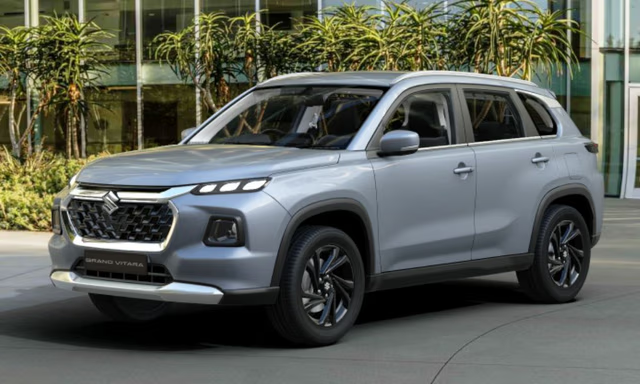 car&bike Team | Jul 17, 2026Consumer Court Orders Maruti Suzuki To Replace Grand Vitara Over E20-Related Damages; Carmaker To Escalate Matters In Higher CourtThe complainant had filed a complaint citing multiple cases of the vehicle developing technical issues due to repeated contamination in the fuel tank.1 min read
 car&bike Team | Jul 16, 2026Studds Trooper Trail Flip-Up Helmet Launched in India at Rs 2,125Studds has expanded its Trooper helmet range with the new Trail edition, featuring fresh graphics and a new colour-shifting paint option.1 min read
 car&bike Team | Jul 16, 20262027 Suzuki Hayabusa Receives Three New ColoursApart from the new liveries, the 2027 Hayabusa retains the same powertrain, electronics, and hardware.1 min read
 car&bike Team | Jul 16, 2026Hero MotoCorp Enters Germany, Expands European Presence to Five MarketsHero MotoCorp has officially entered the German market, strengthening its European presence with the launch of the Euro 5+ compliant XPulse 200 4V range.1 min read
 Jaiveer Mehra | Jul 16, 2026New Kia Syros EV Variants ExplainedThe all-electric derivative of the Syros subcompact SUV will go on sale with two battery options and in five trim levels.3 mins read
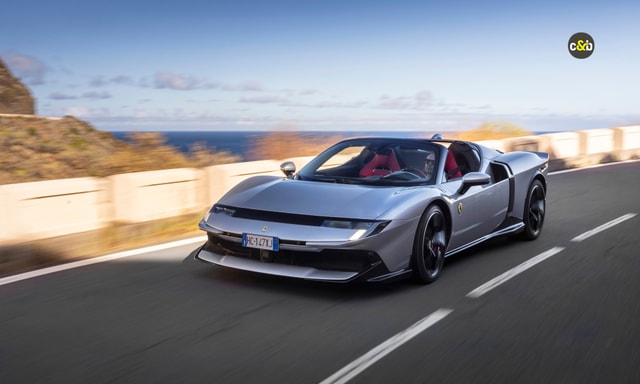 Shams Raza Naqvi | Jul 15, 2026Ferrari 849 Testarossa Spider Driven: Rs. 11.25 Crore Meets 1,000 bhpWe got behind the wheel of the most powerful convertible from Ferrari. What makes the 849 Testarossa Spider Special? We tell you.1 min read
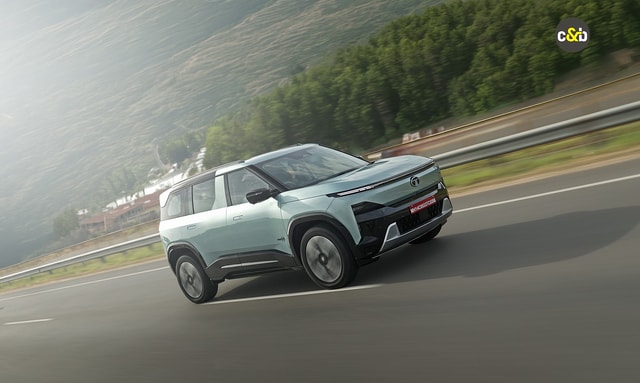 Bilal Firfiray | Jul 12, 2026Tata Sierra EV Review: Reborn In The Electric AgeThe Tata Sierra EV isn’t drastically different from its ICE counterpart when it comes to design. But being the seventh electric offering from the Indian brand, it has gotten a few things right, and very few things wrong. But is it a compelling package to buy?5 mins read
 Jafar Rizvi | Jul 13, 2026TVS Orbiter Long-Term Review (Report 1): Settling In Takes TimeFirst impressions weren't the strongest, but the Orbiter has made a mark in its first month in the car&bike garage.5 mins read
 Seshan Vijayraghvan | Jul 7, 2026Tata Altroz Petrol DCA Long-Term Review: Intercity & Highway Driving ReportWe tested the Tata Altroz Petro DCA’s highway manners, intercity performance, and real-world fuel efficiency.1 min read
 Seshan Vijayraghvan | Jun 29, 2026Renault Kiger vs Toyota Urban Cruiser Taisor: Which Underdog Deserves Your Money?Both the Kiger and the Taisor promise strong performance, solid features, comfortable cabins and everyday usability, all without breaking the bank. But which of these underrated subcompact SUVs deserves your money? Let's find out.1 min read