
Bharat NCAP vs Global NCAP: What’s the Actual Difference?

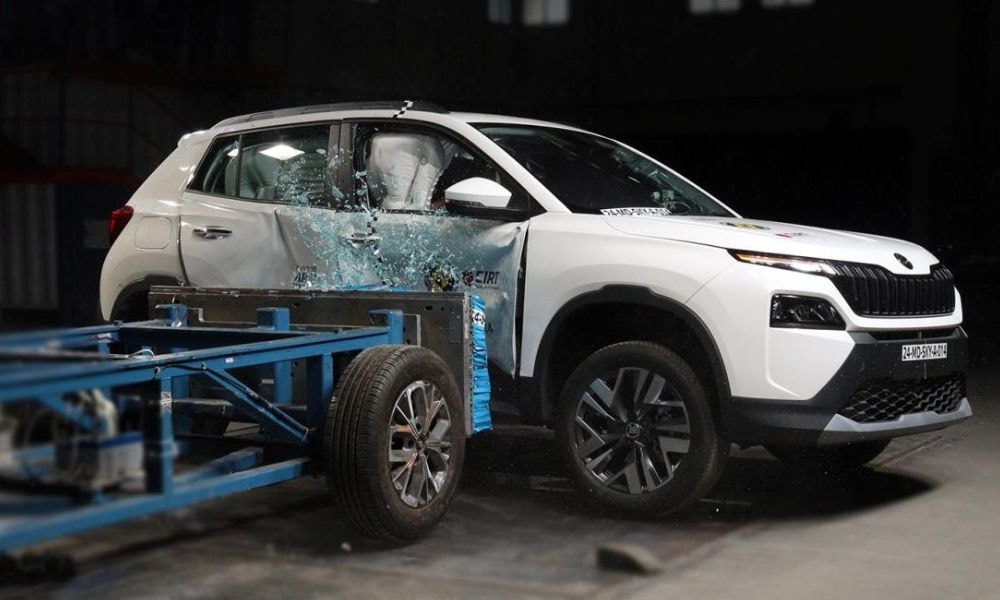
- Bharat NCAP and Global NCAP use largely similar crash-test speeds and core protocols
- The biggest differences lie in scoring, transparency, and vehicle selection methods
- Bharat NCAP ratings are government-backed, while Global NCAP operates independently
For years, the Global NCAP “Safer Cars for India” campaign completely changed how Indian buyers looked at vehicle safety. Crash-test ratings became one of the biggest deciding factors while buying a car, especially after several popular models scored poorly in earlier tests.
Also read: Top 5 Safest Cars Under ₹10 Lakh In India (May 2026) As Per Bharat NCAP Ratings
Now, with Bharat NCAP fully operational since 2023, India finally has its own official crash-testing program under the Ministry of Road Transport and Highways. But that has also created a new question among buyers: if almost every Bharat NCAP-tested car is getting five stars, is Bharat NCAP easier, or are Indian cars genuinely becoming safer? The answer is a mix of both evolving regulations and differences in how the two systems operate.
The Core Similarities: Same Crashes, Same Speeds
Before looking at the differences, it is important to understand that Bharat NCAP did not completely reinvent crash testing. Both Bharat NCAP and Global NCAP largely follow the same updated crash protocols used between 2022 and 2025.
Also read: New Renault Duster Bags Five Stars In Latest Bharat NCAP Crash Tests: Check Details
Requirements of Both Tests:
- Frontal offset crash at 64 kmph
- Side impact crash at 50 kmph
- Side pole impact at 29 kmph
- Child occupant protection using crash-test dummies
- ESC and basic active safety requirements
That means the actual physical crash severity itself is broadly comparable between the two programs.
Bharat NCAP vs Global NCAP: The Biggest Differences
We have listed the major differences between the two crash test systems below.
The Scoring System Is Slightly Different
This is one of the biggest technical differences.
| Category | Global NCAP | Bharat NCAP |
| Adult Occupant Protection | 34 Points (27-34 needed for five stars) | 32 Points (27+ needed for five stars) |
| Child Occupant Protection | 49 Points (45 needed for five stars) | 49 Points (45 needed for five stars) |
| Seatbelt Reminder | Two points awarded | Mandatory requirement |
| Final Rating Style | Separate adult & child star ratings | Unified overall star label |
Global NCAP awards bonus points for seatbelt reminders, while Bharat NCAP treats front seatbelt reminders as a mandatory requirement instead of a scoring bonus.
Also read: New Hyundai Venue Secures 5-Star Bharat NCAP Safety Rating
The “Stable vs Unstable Bodyshell” Difference
This is probably the biggest difference enthusiasts care about. Global NCAP publicly mentions whether a car’s bodyshell remained “Stable” or “Unstable” during the crash. That detail became extremely important in India because some cars managed decent scores mainly due to airbags and restraints despite significant structural deformation.
For example, some cars scoring well in occupant safety still received an “unstable bodyshell” remark from Global NCAP. Bharat NCAP does not prominently highlight the stable/unstable bodyshell classification in its consumer-facing summaries. Instead, it focuses more heavily on injury readings and overall occupant protection scores. That difference alone is one reason some enthusiasts still analyse Global NCAP reports more deeply.
Also read: Kia Seltos Gets 5-Star Bharat NCAP Safety Rating, Outscores The Tata Sierra
Vehicle Selection Works Differently
Global NCAP often tests vehicles independently by purchasing random lower-spec variants directly from dealerships. Bharat NCAP works differently because manufacturers voluntarily submit vehicles for testing under the government-backed system. This has created criticism that brands naturally prefer sending their newer, safer, or stronger products rather than older legacy models. That is one reason many people feel almost every Bharat NCAP-tested car now scores five stars.
Why Are More Cars Suddenly Getting Five Stars?
The answer is not simply that a Bharat NCAP rating is “easy” to achieve. Indian car safety standards themselves have improved a lot compared to a decade ago. Features like six airbags, ESC, stronger crash structures, ISOFIX mounts, and better restraint systems are now far more common even in mainstream cars.
Also read: Tata Sierra Gets A 5-Star Safety Rating In Bharat NCAP Crash Tests
Cars like the Hyundai Verna, Tata Nexon, Mahindra Scorpio N, and Volkswagen Virtus are structurally much safer than many entry-level cars sold in India around 2015-2018. At the same time, Bharat NCAP’s manufacturer-submission approach also means weaker or ageing platforms are less likely to be voluntarily tested.
So the reality lies somewhere in between: Indian cars genuinely are getting safer, but the testing pool itself is also more selective today.
So, Which Rating Should Buyers Trust?
Both Bharat NCAP and Global NCAP remain credible crash-testing systems, and both follow globally recognised testing standards. For most buyers, a strong rating in either program is still a good sign because the actual crash protocols remain quite demanding. However, if someone wants a deeper understanding of structural integrity and long-term crash performance, Global NCAP reports still tend to reveal slightly more technical detail publicly.
The bigger takeaway, though, is that crash safety itself has finally become a major focus area in the Indian market. And compared to where the industry stood even a few years ago, that shift alone is probably the most important change.
Related News


Latest Cars


Upcoming Cars


Latest News


 Jafar Rizvi | Aug 15, 2026Mahindra Scorpio Lifestyler Production vs Concept: What Has Changed?The Scorpio Lifestyler may look familiar, but Mahindra has made several changes in taking the Global Pik-Up from concept to production.3 mins read
 Sarthak Mahajan | Aug 15, 2026Mahindra BE 6 Sporteq: In PicturesBE 6 Sporteq is also offered in two special editions: BE 6 Launch Edition and BE 6 Sporteq Formula E Freedom Edition.1 min read
 Sarthak Mahajan | Aug 15, 2026Mahindra Scorpio Lifestyler Pick-Up: In PicturesNamed the Lifestyler in international markets, the Scorpio Lifestyler is based on the Scorpio N sold in India.3 mins read
 car&bike Team | Aug 15, 2026Mahindra BE 6 Sporteq Launched At Rs 19.45 LakhBE 6 Sporteq replaces the outgoing standard BE 6 and gets a new 70 kWh battery pack option.2 mins read
 car&bike Team | Aug 15, 2026Mahindra BE 6 Sporteq Formula E Freedom Edition Launched At Rs 24.45 LakhThe BE 6 Formula E Freedom Edition ditches the erstwhile design elements and is now in line with the standard model.2 mins read
 Jaiveer Mehra | Aug 14, 2026Mahindra Scorpio Lifestyler Pick-Up Makes Global Debut; India Launch In 2027The Scorpio Lifestyler, just Lifestyler in international markets, is the production-ready variant of the Global Pik-Up Concept unveiled in 2023.3 mins read
 Jaiveer Mehra | Aug 16, 2026Honda Amaze CVT Long Term First Report: 1800 Km InThe Amaze is the first sedan to join our long term feet in a year, and while on paper it lacks some of the features offered in its rivals, there’s plenty of promise in the package.1 min read
 Preetam Bora | Aug 12, 2026Royal Enfield Himalayan 440 Custom Review: Beating RE to the PunchDelhi-based custom motorcycle shop TNT Motorcycles introduces packages to convert existing Himalayan 411 adventure bikes to Himalayan 440. Is it worth the expense?8 mins read
 Seshan Vijayraghvan | Aug 11, 20262026 Nissan Tekton 700 km Review: Can It Conquer The Himalayas?We drove the newly launched Nissan Tekton from Chandigarh all the way up to Leh, covering over 700 km with the new SUV. From exploring the Tekton’s capabilities in the Himalayas to setting an India Book Record, here’s how the trip unfolded.8 mins read
 Preetam Bora | Aug 11, 20262026 Aprilia Tuono 457 Special Edition First Ride Review: Should You Buy It?The 2026 Aprilia Tuono 457 delivers an engaging, everyday riding experience with strong performance. At its price point, the Tuono 457 is a brilliant motorcycle, but not quite the complete package. Why is that, and should you still buy it? Read on.8 mins read
 Bilal Firfiray | Aug 1, 2026Toyota Hilux Review: The InvincibleMarking it as the ninth generation, the Hilux comes with a major cosmetic overhaul. But is it still relevant enough for the current times or is it getting too long in the tooth?5 mins read