
Budget 2019: Electric Vehicle Makers Demand Reduction In GST And Import Duties

- EV makers have asked to bring EVs under the 5 per cent GST bracket.
- Audi has also demanded reduction in import duties on EVs.
- Ather has also asked for reduction in rates charged on raw material.
The Faster Adoption And Manufacturing Of Electric Vehicles II (FAME II) scheme came as a silver lining for electric vehicles makers in India. The government is aiming for 30 per cent electrification on vehicles by 2030 and FAME II is definitely a step in the right direction. Things got fasttracked after the centre allotted Rs. 10,000 crores for setting up the requisite infrastructure gave subsidies on the imported components used to assemble EVs. However, electric vehicle manufacturers have further demands which can help pave a smoother path for the industry. EV makers have raised several demands like to reduce import duties on EVs and to bring electric vehicles under the 5 per cent GST bracket from 12 per cent. Some of the Indian EV makers have also requested to further subsidise completely knocked down (CKD) units in a bid to promote local manufacturing of EVs.
Also Read: Budget 2019: SIAM Asks Budget Committee To Reduce GST Rates And Incentivise R&D Expenses
 Audi Will launch the e-Tron in India this year.
Ahead of the budget session, Rahil Ansari, Head, Audi India said, "The e-tron is a global product from Audi that will be a perfect match for the Indian market that is moving towards clean and green mobility solutions. To that effect, tangible measures by the government towards e-mobility infrastructure and adequate support for introducing the electric vehicles import in India market would be a welcome move as this also increases the local knowledge on global EV technologies." Audi has recently unveiled the e-Tron electric SUV in India and is planning to launch it this year.
Also Read: Budget 2019: Auto Industry Demands Budget Committee To Bring Down GST Rates
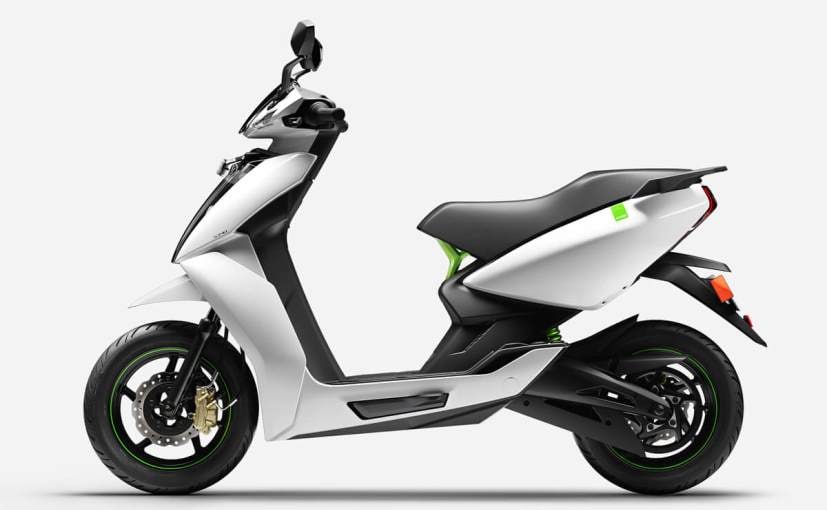 Ather has requested the budget committee to reduce GST rates to 5 peer cent on EVs.
Giving suggestions ahead of the upcoming budget session, Tarun Mehta, CEO & Co-Founder, Ather Energy said, "As a manufacturer, we would like the Centre to review the current taxation framework applicable on raw material and the final product. There is an inherent inverted duty structure as the GST input on raw material and other overheads are on average of 18 % wherein the output is pegged at 12%. The proposed reduction of the GST on EVs to 5% will increase this delta. This structure results in significant working capital blockage. Even with the existing GST inverted duty refund framework in place, there is working capital blockage on the overheads and capital investments." Mehta has also asked the government to for some more time to implement sourcing of indigenous electric motors as the industry is not ready yet. "Under the Phased Manufacturing Project, the timeline to source indigenous electric motors has been set as April 2020. This will need to be extended by 6-9 months to account for the validation and certification of the components and the vehicles, Similarly, the timeline to localise lithium-ion cells by April 2021 will not be sufficient for manufacturers to scale to meet demand and should be extended to 2023," Mehta added.
 Okinawa has asked the government to support electric two-wheeler makers.
Speaking on similar lines, Jeetender Sharma, Founder & Managing Director, Okinawa Autotech said, "The government has placed a definitive emphasis on Electric Vehicles and had already announced a reduction of customs duty on the imported electric vehicles in completely knocked-down or semi-knocked down state, to 10-15% from 15-30%. The Fame-2 Policy is also actively supporting the electric two-wheeler industry. In the upcoming budget we would like to see reduced import duties on lithium-ion cells, motors and motor controllers so that the batteries can be produced locally aligning with Governments' Make In India initiative. We also want GST on batteries to be reduced from the current 18 percent slab to the lowest possible slab. We hope the government would soon announce a concrete plan of action with its time-bound implementation in order to fulfil its stated vision."
Also Read: Delhi Government To Come Up With A Dedicated EV Policy Next Month
EV makers in India today are predominantly dependent on importing batteries and components which on an average add over 65 per cent to their cost. The demand for incentives on local manufacturing and imported component is to reduce the cost of local assembly which will help them to bring down the cost by a significant margin. Moreover, reduced GST rates will also help to cut down the final cost of electric vehicles and will be a huge favour in promoting their faster adoption.
Related News



Latest Cars


Upcoming Cars


Latest News


 Seshan Vijayraghvan | Jul 29, 2026Kia Sorento India Arrival Confirmed With New Teaser: Launch This Festive SeasonThe Kia Sorento has already been spotted testing in India, and it's expected to arrive this festive season.1 min read
 car&bike Team | Jul 29, 2026Tata Punch EV Facelift Gets 5 Stars From Bharat NCAPThe electric micro SUV scored 31.09 out of 32 for Adult Occupant Protection and 45 out of 49 for Child Occupant Protection.2 mins read
 Jaiveer Mehra | Jul 29, 2026Audi’s GLS-Rivalling Q9 SUV Unveiled With 6- And 8-Cylinder EnginesAudi’s first full-size SUV packs in the latest tech and will go on sale with either petrol or diesel engine options depending on the market.1 min read
 car&bike Team | Jul 29, 2026Ather Begins Pothole Alerts Rollout For Gen 2 Electric ScootersThrough the dashboard, the new feature notifies riders about poor road conditions in advance.1 min read
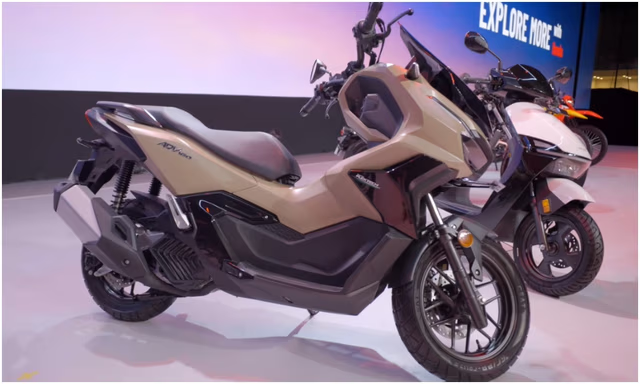 Amaan Ahmed | Jul 29, 2026Honda ADV 160 Coming To Both RedWing And BigWing DealershipsDespite being a premium product, Honda's biggest scooter for India till date will also be sold via its more widespread RedWing network, confirmed HMSI sales director Mutsuo Usui.3 mins read
 car&bike Team | Jul 29, 2026New Toyota Hilux: Variants, Features, Prices ExplainedThe 2026 Hilux is offered in two trim levels: GX and VX, and in both 4x2 and 4x4 configurations. Here is what each variant has to offer.3 mins read
 Jaiveer Mehra | Jul 27, 20262026 Maruti Suzuki Brezza Facelift Review: Bestseller Joins The Turbo ClubWhile Maruti’s facelifts have always tended to bring subtle updates over the outgoing models, the latest Brezza brings some heavy updates under the skin, including a new 6-speed manual gearbox and, for the first time, a turbocharged petrol engine option.1 min read
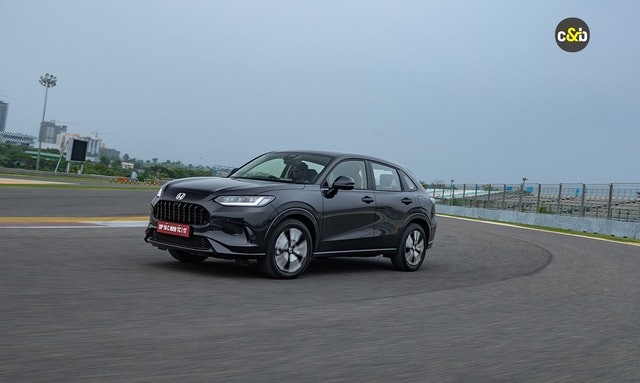 Bilal Firfiray | Jul 24, 2026Honda ZR-V Review: Who Is It For?Honda has brought the new ZR-V to India as their current flagship offering. It’s a CBU, it’s a hybrid, and it’s here for a limited few. Who is it for though?1 min read
 Girish Karkera | Jul 29, 2026Mercedes-AMG E53 4MATIC+ PHEV First Drive Review: Just What The Doctor OrderedThere are luxury cars and there are high-performance cars. But what if you want both for the price of one? Mercedes-Benz has a recommendation that promises to tread a fine line between the two – the second generation E53 with a twist.7 mins read
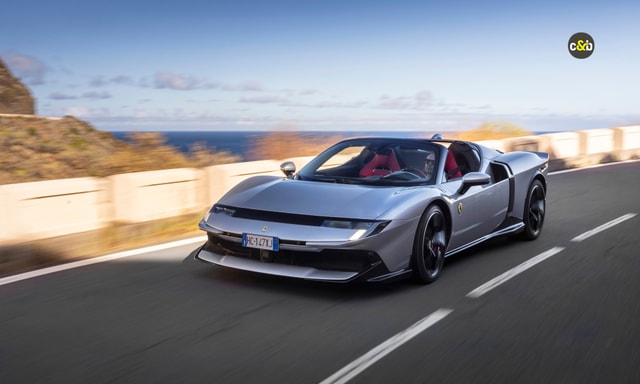 Shams Raza Naqvi | Jul 15, 2026Ferrari 849 Testarossa Spider Driven: Rs. 11.25 Crore Meets 1,000 bhpWe got behind the wheel of the most powerful convertible from Ferrari. What makes the 849 Testarossa Spider Special? We tell you.1 min read
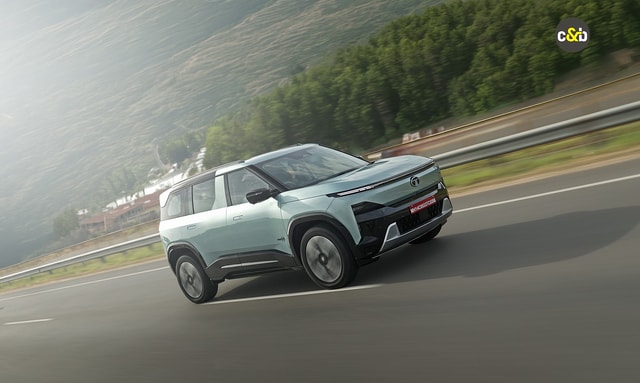 Bilal Firfiray | Jul 12, 2026Tata Sierra EV Review: Reborn In The Electric AgeThe Tata Sierra EV isn’t drastically different from its ICE counterpart when it comes to design. But being the seventh electric offering from the Indian brand, it has gotten a few things right, and very few things wrong. But is it a compelling package to buy?5 mins read