
Carmakers Dream Of Clean, Green, Mean Electric Machines


An electric car is a clean car, right? If only it were so simple.
From motor magnets with toxic histories to batteries made using copious fossil-fuel power, many challenges face carmakers seeking to purge dirtier materials from their supply chains to satisfy regulators and investors.
These obstacles represent opportunities for a growing group of companies in the electric vehicle (EV) ecosystem that bet they can capitalise on that demand.
They include Advanced Electric Machines (AEM) in northern England, which is working with Volkswagen luxury brand Bentley and others in the auto industry to develop recyclable electric motors free of rare earth metals, which are often produced using polluting chemicals.
"Our customers need ways to ditch internal combustion engines that are cost-effective and sustainable without putting tons of this nasty rare earth stuff into their cars," CEO James Widmer said.
The increasing scrutiny of supply chains comes as the European Union, which announced draft laws last year to enforce net-zero emissions targets, considers charging for excess carbon on imports, as well as legislation requiring ethical sourcing and a recycling plan for EV batteries.
Globally, the prospect looms of national carbon taxes that could cost lagging automakers dearly, while investors and financiers increasingly favour companies with strong environmental, social and governance (ESG) credentials.
"The focus on ESG has become more intense," said Moshiel Biton, CEO of Israeli battery technology company Addionics, which makes three-dimensional electrodes that Biton says are more efficient, making cleaner but less energy-dense battery chemistries commercially viable.
"But it's nothing compared to what's coming."
Yet it remains to be seen how many of the companies looking to tap the market for cleaning up electric cars will succeed in a rapidly evolving EV technology arena; what's cutting edge today could be obsolete tomorrow.
Given fierce competition, any projects not advanced enough at the right time will risk missing their chance, according to MacMurray Whale, environmental sustainability strategist at Cormark Securities in Toronto.
"You won't be able to attract the investor interest because there's a lot of them and they're all trying to argue they're the best," he said.
'ROAD MAP TO NET ZERO'
The demand is real, though, from carmakers who face a daunting task to navigate the challenges of making everything from steel to aluminium using cleaner processes, to finding less environmentally damaging battery chemistries.
"We only source new business with suppliers with a road map to net zero," said Andy Palmer, an electric vehicle pioneer who is CEO of Switch Mobility, a British-based EV maker owned by Indian commercial vehicle maker Ashok Leyland.
Switch buys credits to offset the carbon used to make metal components and factors in that cost when assessing new parts, he added.
Squeezing carbon out of the supply chain is a "vital part" of BMW's carbon-reduction strategy, sustainability vice president Thomas Becker said.
The German carmaker has negotiated with all its battery suppliers and many of its steel and aluminium suppliers that their materials are made using renewable energy, Becker told a conference in London in March.
The problem with EVs is they are so carbon intensive to make, they have to drive thousands of miles before they do less harm to the environment than a gas-guzzling saloon.
BMW has measured the CO2 footprint throughout its supply chain. If it took no action, its footprint per vehicle would be 18 tonnes of CO2 in 2030, versus 12 tonnes per vehicle in 2019, according to the carmaker. But its carbon reduction plans should cut that number to nine tonnes by 2030, it says.
The need for greener EVs has sent some carmakers back to the drawing board.
Pennsylvania-based engineering company Ansys, which develops modelling software for various industries, has seen surging demand from carmakers seeking to simulate cars and components with greener or lighter materials, such as aluminium instead of steel, said Pepi Maksimovic, director of application engineering.
"There's an intensification of the effort to address these issues in terms of ... bringing better cleaner, greener, meaner technology to the market faster, earlier," she added.
'CARBON TAX IS COMING'
Previous corporate sustainability efforts have often been derided as vague and as "greenwashing".
Costa Caldis, chief operating officer of supply chain tracing company SAFE, said carmakers were moving in the right direction, but not fast enough.
"Stakeholders are demanding supply chain visibility and not just statements."
Douglas Johnson-Poensgen, CEO of Circulor, which maps supply chains for the likes of BMW and Volvo, said financing from investors was increasingly tied to ESG targets.
"Everybody recognises they need to know where they're sourcing things from and what they're inheriting from their supply chain."
Makram Azar, CEO of London-based investment group Full Circle Capital, said companies in the auto sector that "tick all the right ESG boxes" should find raising capital easier.
"Big asset managers who have allocated huge sums of money to invest in ESG compliant companies have found there aren't enough of them," said Azar.
More carbon levies could help to change that.
Full Circle has invested in Britishvolt, a British startup that's building an EV battery plant that will run only using renewable energy.
Peter Rolton, Britishvolt's executive chairman, said national governments would need alternatives to fuel taxes that raise vast sums, and taxing carbon would help to squeeze it out of supply chains.
"Carbon taxation is an inevitable part of a 2050 net-zero vision," he added. "You can see that one coming."
MINING IN MADAGASCAR
AEM, based in Washington, a city with roots in northeast England's industrial history, has developed a recyclable motor for EVs using electrical steel and aluminium instead of copper and magnets, thus removing rare earth metals. CEO Widmer said AEM's motors would be cheaper than conventional ones and in carmakers' tests have been up to 15% more efficient.
As well as the environmental considerations, many carmakers and suppliers want to reduce reliance on China, which controls 90% of global rare earths metals supply.
China's dominance extends to graphite, crucial for anodes for EV batteries, which is typically produced using electricity from coal.
Canadian-listed mine developer NextSource plans to start commercial production of graphite in Madagascar from 2023 to capitalise on demand from companies looking to diversify supplies.
Executive vice president Brent Nykoliation said contracts with carmakers should be lucrative and long as they seek to lock in supplies tailor-made to their requirements.
"The conversation has changed dramatically in the last 12 months," Nykoliation said, referring to carmakers' engagement with mineral production.
($1 = 0.7595 pounds)
(Reporting By Nick Carey and Barbara Lewis; Editing by Pravin Char)
(This story has not been edited by NDTV staff and is auto-generated from a syndicated feed.)


Latest News


 car&bike Team | Jul 9, 2026Nissan Tekton SUV India Debut LIVE Updates: Exterior, Interior, Specifications, DetailsNissan will debut the Tekton in India today. Watch this space to get all the details firsthand.0 mins read
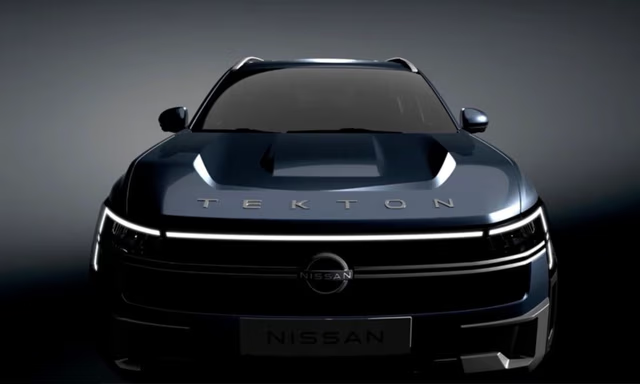 car&bike Team | Jul 9, 2026Nissan Tekton SUV To Debut Today: What To ExpectBased on the Renault Duster, the Tekton gets its own design inside and out while sharing the same platform and engine options.3 mins read
 Seshan Vijayraghvan | Jul 8, 20262026 Land Rover Defender Updated; Gets New Vertex Trim, Accessory Kit And 6-Seat Layout OptionIn addition to the new Defender Vertex trim and the new upgrades, Land Rover has also introduced a special accessory pack for the luxury off-roader.1 min read
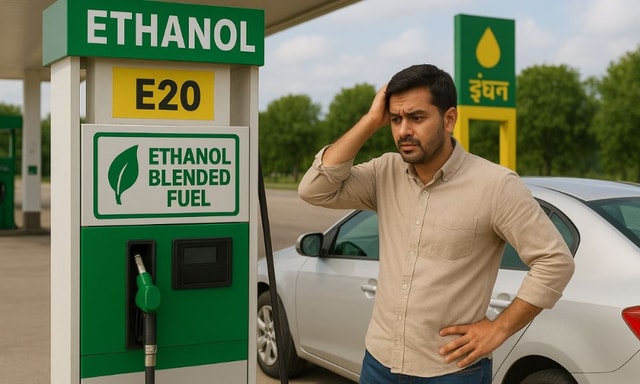 Preetam Bora | Jul 8, 2026Opinion: India’s Ethanol Blending Policy Needs More Clarity & TransparencyIndia needs a clearer, more transparent and consumer-focussed approach to roll out ethanol blends in petrol. The current confusion will only add to less public confidence.6 mins read
 Jafar Rizvi | Jul 8, 2026Yamaha Aerox Electric Launched In India At Rs 2.82 LakhThe Aerox Electric costs nearly twice as much as the petrol-powered Aerox 155.2 mins read
 car&bike Team | Jul 8, 2026New Mercedes-Benz GLB EV India Launch ConfirmedSecond-gen electric GLB is underpinned by Mercedes’ new MMA architecture and promises to offer more tech, greater cabin space and more useable range.1 min read
 Seshan Vijayraghvan | Jul 7, 2026Tata Altroz Petrol DCA Long-Term Review: Intercity & Highway Driving ReportWe tested the Tata Altroz Petro DCA’s highway manners, intercity performance, and real-world fuel efficiency.1 min read
 Seshan Vijayraghvan | Jun 29, 2026Renault Kiger vs Toyota Urban Cruiser Taisor: Which Underdog Deserves Your Money?Both the Kiger and the Taisor promise strong performance, solid features, comfortable cabins and everyday usability, all without breaking the bank. But which of these underrated subcompact SUVs deserves your money? Let's find out.1 min read
 Seshan Vijayraghvan | Jun 29, 2026Skoda Kodiaq RS Review: The Best Kodiaq Yet?The Skoda Kodiaq RS is finally here, and it's every bit as exciting as I expected. But was it worth the wait?7 mins read
 Bilal Firfiray | Jun 28, 2026BMW X6 M60i Review: It’s Back And HOW!The BMW X6 M60i blends a 530bhp twin-turbo V8, with its unmistakable coupe-SUV styling. There’s plenty of character, but is it worth your money?6 mins read
 Janak Sorap | Jun 25, 2026350cc Bajaj Dominar 400 Review: Same Character, Lower PriceA slightly lower displacement engine, a significantly lower price tag and nearly the same performance — the Bajaj Dominar 400 aims to be smarter rather than faster.6 mins read