
On The Maruti Suzuki Jimny Shopfloor


- The five-door Jimny is made at one of India’s oldest automotive plants
- More than 38 robots, 177 vendors and hundreds of workers used on Maruti Suzuki’s most sophisticated production line
- Only the second place in the world where Suzuki makes the Jimny and the only place where the five-door version is made
In the 1980s, Suzuki’s first proper SUV arrived in India as a Maruti Suzuki Gypsy. For the next couple of decades it continued to go places where most everyday cars would shy from. In the process it became an icon and also set the strong foundation for its future iterations. The latest of which we now see in India – the Jimny.
Jimny is a body-on-frame SUV
Not a new name, not a new avatar but the Indian version is the first five-door variant of the SUV. Don’t be fooled by its relatively diminutive size because this body-on-frame SUV is the real deal. The Jimny currently sells in 200 countries across the world, predominantly in the three-door version. It was launched in India earlier this year, in this never-seen-before 5-door version that is more apt for the Indian buyer. But the India launch generated quite an interest for this bigger version. Maruti Suzuki has already started exporting this (left-hand-drive versions too). Even Japan, the birthplace of this marque gets the five-door version from India. Maruti Suzuki currently has three factories in India – Gurugram (the oldest), Manesar (currently highest in production capacity) and Ahmedabad (newest and biggest in size).
Jimny 5-door is made in the same plant as the Gypsy
The Jimny is in many ways a modern-day Gypsy and manufactured in the same plant in which the OG off-roader was made. The Gurugram plant might be the oldest, but the line on which the Jimny is being made is claimed to be the most modern. It is only the second in the world where Suzuki assembles a ladder frame chassis car using over 1500 parts. It is as automated as automotive production lines get. The press shop at Gurugram makes around 120 different kind of panels for cars being made there of which 21 are used for the Jimny. The crucial start is making the ladder frame on which the powertrain gets fitted. Welding is a delicate and risky process hence Maruti Suzuki employs around 38 robots that weld these. Together there are approximated 3200 welding points which ensures the uniform structural rigidity expected for something that will be treated less delicately that other cars.
There are 3200 welding points in the Jimny
For the record, there are four Jimny variants on sale in India but at the factory, it makes no less than 93! So, most of these are for the large export markets.
Two assembly lines work together for the cabin and chassis
There are two assembly lines that work simultaneously for the cabin and chassis. The two come to together – married by a robot, of course - before heading to the paint shop, and then demerge and head to their individual lines before finally coming together once again. While it is a sight to behold, what may get overlooked by anyone watching this process is the amount of digitisation with information being collected and if need be, process corrected, in real time. This will also ensure that if any issue is detected at a later date, Maruti Suzuki is able to correctly identify the date and parts used.
An interesting sight at these lines are automated guided vehicles (simply put, more robots or rather autobots) that transfer various parts to their designated areas around the shopfloor. These self-charging machines stop automatically if there’s an obstacle in their path and start moving only if the path is clear. The path are painted tracks on the floor.
Once the Jimny is prepared, it goes through multiple checks to ensure it's working just the way it is supposed to. These include a physical inspections, drum test at 120 kmph, long road test, short road test and interestingly also a heavy shower test which has the same intensity as the one seen in Meghalaya’s Cherrapunji – one of the wettest places on earth.
The Jimny undergoes heavy shower tests during production process
For a layman, the Gurugram plant can be mind-boggling as it makes everything from a seemingly ubiquitous Alto to a global star like the Jimny. The latter currently accounts for nearly 20% of its 5-lakh annual production. And making the Jimny production rather unique is that there are no foreign suppliers. All 177 vendors contracted for the five-door Jimny are Indian. The Jimny is indeed a shining example of how far automotive manufacturing has progressed in India and can now be counted alongside the best in the world.
Also Read: Maruti Suzuki Jimny 5-door Official Accessories: Complete List With Prices
Related News


Research More on Maruti Suzuki Jimny


Popular Maruti Suzuki Models


Latest Cars


Upcoming Cars


Latest News


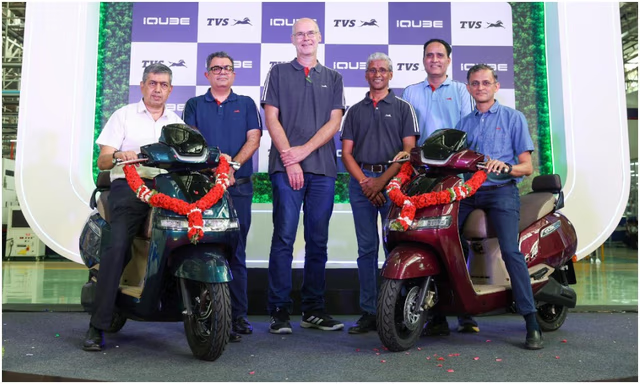 car&bike Team | Jun 25, 2026TVS iQube Electric Scooter Crosses 10 Lakh Units Production MilestoneIntroduced in 2020, the iQube is TVS' first high-speed, long-range electric scooter, which has soared to the top of sales charts in recent years.1 min read
 car&bike Team | Jun 24, 2026Kawasaki KLX230 Gets Dearer For MY2027; Price Increased By Rs 35,000The MY2027 Kawasaki KLX230 arrives with a significant price hike, but no mechanical or cosmetic changes over the outgoing model.1 min read
 Seshan Vijayraghvan | Jun 24, 2026Renault Kiger Variants Updated; New Evolution+ Trim Brings Auto AC, Wireless Smartphone Connectivity For Rs. 6.99 LakhIn addition to the new Evolution+ trim, Renault has also made the turbo petrol engine more accessible with the launch of Techno MT Turbo at Rs. 7.89 lakh.1 min read
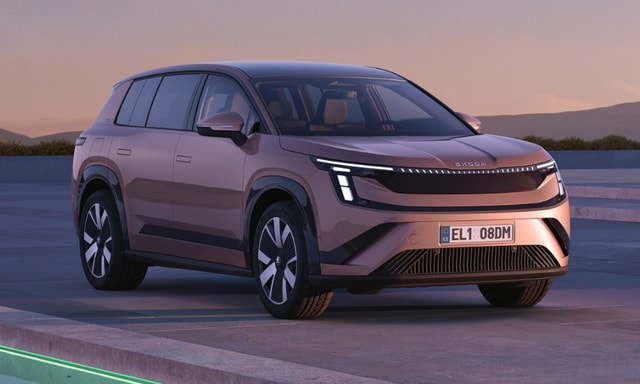 Jaiveer Mehra | Jun 24, 2026Skoda Peaq Electric SUV Revealed: Skoda’s Largest SUV Seats 7, Offers 640 km RangeThe Peaq measures nearly 4.9 metres long and is offered in five- and seven-seater configurations and with rear and all-wheel drive options.1 min read
 car&bike Team | Jun 23, 2026Hero MotoSports Completes 10 Years; Signs 18-Year-Old For Dakar ProgrammeHero MotoCorp marked 10 years of its global rally-raid programme and announced a Dakar talent programme, signing on 18-year-old supercross sensation Shlok Ghorpade.1 min read
 car&bike Team | Jun 23, 2026Citroen Aircross Comfort Edition Launched; Prices Start At Rs. 9.09 LakhThe Citroen Aircross Comfort Edition will be offered in three variants - You, Plus, Plus Turbo 7S - and they are priced between Rs. 9.09 lakh and Rs. 11.99 lakh (ex-showroom).2 mins read
 Janak Sorap | Jun 25, 2026350cc Bajaj Dominar 400 Review: Same Character, Lower PriceA slightly lower displacement engine, a significantly lower price tag and nearly the same performance — the Bajaj Dominar 400 aims to be smarter rather than faster.6 mins read
 Preetam Bora | Jun 25, 20262026 Bajaj Pulsar NS400Z First Ride Review: Smaller Engine, But Should You Buy It?The Bajaj Pulsar NS400Z won our Two-Wheeler Upgrade of the Year. Then new tax slabs happened. Smaller engine, same badge – but does it still deliver?6 mins read
 Preetam Bora | Jun 25, 2026Triumph Tracker 400 First Ride Review: What's It Really Like?The Triumph Tracker 400 is here, now with a downsized 349 cc engine. We spent a couple of hours with it to share our first impressions. Is it worth your attention?1 min read
 Preetam Bora | Jun 15, 20262026 Yezdi Scrambler Review: The Update That Changes EverythingThe Yezdi Scrambler gets a comprehensive update with an updated engine, revised chassis, reduced weight and proper features list. Does it deliver? Here’s our take.10 mins read
 Preetam Bora | Jun 10, 20262026 BMW F 450 GS Review: A True GS - But Should You Buy It?The GS badge on a BMW means something and always has. Can the new made-in-India BMW F 450 GS truly live up to that legacy? We spent a few days getting familiar with the F 450 GS to see if it’s worth a buy.12 mins read