
Tata Avinya EVs To Be Based On JLR’s Electrified Modular Architecture
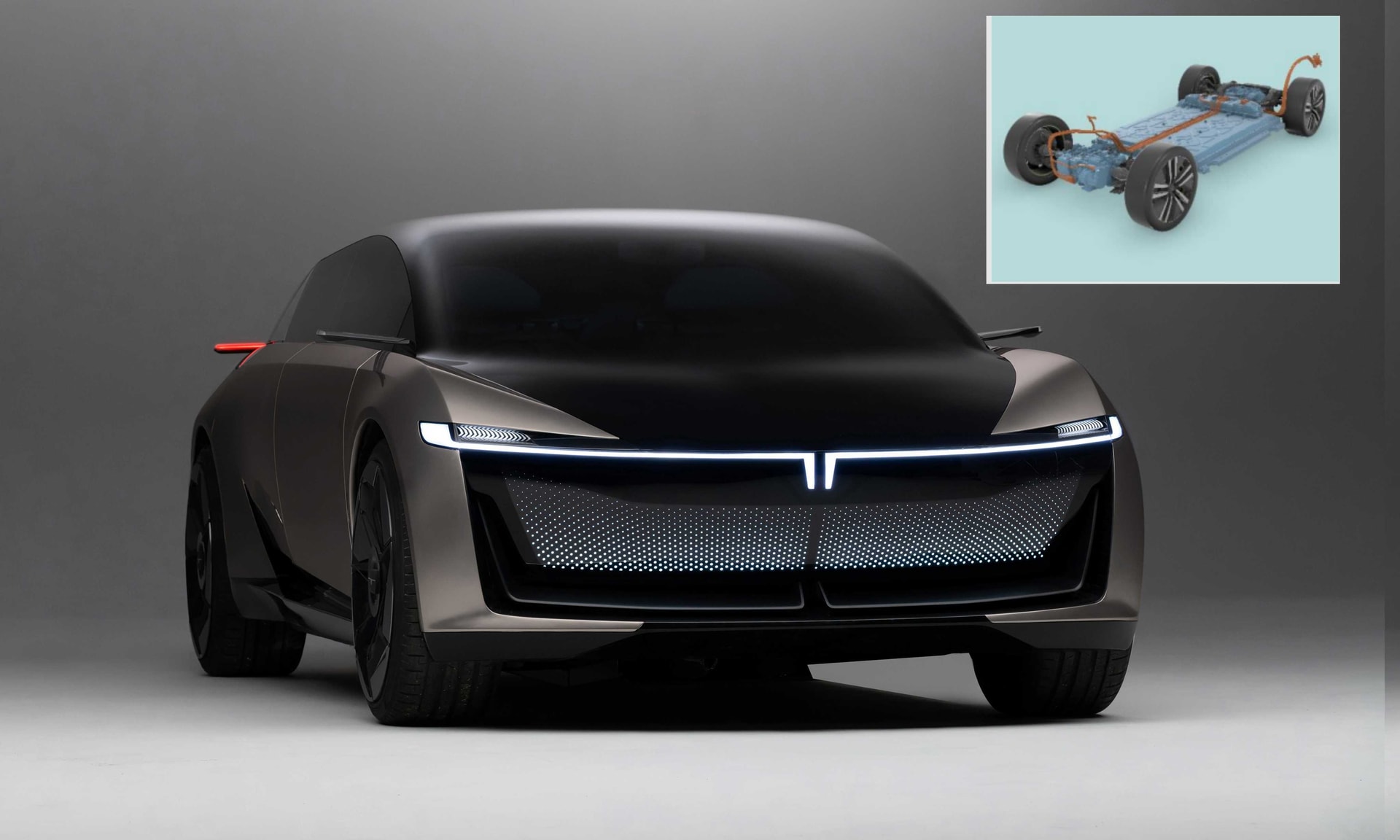
- Tata Passenger Electric Mobility Ltd and JLR enter strategic collaboration for platform-sharing.
- Electrified Modular Architecture (EMA) will underpin the Tata Avinya, which is due in 2025.
- TPEML will pay royalty for access to JLR’s E&E architecture, EDU, battery assembly and manufacturing know-how.
With an eye on accelerating the growth of its electric vehicle (EV) portfolio, Tata Motors’ EV business has entered into a strategic partnership with JLR, formerly known as Jaguar Land Rover. This partnership will result in the upcoming Tata ‘Avinya’ EV models – showcased in a singular concept form in 2022 – adopting JLR’s dedicated Electrified Modular Architecture (EMA). This platform will underpin upcoming battery-powered SUVs from JLR, which are due for introduction starting 2025. Tata Passenger Electric Mobility Ltd (TPEML) and JLR, both of which are Tata Motors’ subsidiaries, have entered into a memorandum of understanding (MOU), which will grant TPEML access to EMA under licence, along with JLR’s electronics and electrical (E&E) architecture, electric drive unit, battery assembly and manufacturing know-how, in exchange of royalty payments.
Also Read: Tata Motors Plans To Open EV-Only Showrooms In India Soon
The production version of the Tata Avinya is expected to arrive in 2025.
As per Tata, this arrangement will accelerate the company’s entry into the high-end EV segment, as it will slash vehicle development time as well as cost. The EMA has an integrated propulsion system that unites cell-to-pack (CTP) battery technology, battery management and charging system to maximise range and efficiency. Tata says JLR’s E&E architecture enables Level 2 autonomous driving capabilities, and will help it quicken the progress of over-the-air software and feature updates, vehicle safety and ultra-fast charging technologies.
Also Read: Tata To Build 40GWh EV Cell Gigafactory In The UK; Batteries To Be Supplied To JLR
Tata had previously confirmed its ‘Gen 3’ EVs – under the family name ‘Avinya’ – will employ lightweight materials and optimised structures for electric-only powertrains. These vehicles are expected to deliver a range of at least 500 kilometres on a full charge. Avinya models have also been confirmed to support ultra-fast charging, and when plugged into a powerful enough DC fast-charger, will be capable of gaining 500 km of range in just 30 minutes. This marks a clear step up from the Gen 2 Tata EVs, which will be based on a heavily modified internal combustion engine (ICE) platform. The Gen 2 Tata EVs will arrive starting 2024, with the Curvv coupe-SUV and Harrier EV both expected to debut next year.
Also Read: JLR To Procure Battery Cells From Tata's Agratas; Targets Range Of Up To 730 KM For Future EVs
Tata Group’s Agratas Energy Storage Solutions will design, develop, produce and supply lithium-ion cells to JLR for its upcoming EVs.
The partnership follows a few months on from Tata Sons committing £4 billion (over Rs 42,000 crore) towards constructing a new battery cell gigafactory in the United Kingdom, with JLR confirmed to be one of its ‘anchor’ customers. JLR will source battery cells for its upcoming EVs from Tata Group’s Agratas Energy Storage Solutions. As part of the alliance, Agratas will handle securing the raw materials as well as design and development of the lithium-ion cells and their testing and validation.
JLR is in the midst of a complete transformation as it readies an all-electric line-up of vehicles. It has said it will invest more than £1.4 billion (over INR 14,232 crore) over next five years in its Halewood plant, in Merseyside, Solihull plant, in the West Midlands, UK, as well as its Nitra plant, in Slovakia, to produce EVs. The company has also made a £250 million (over INR 2,542 crore) investment in the JLR Future Energy Lab at Whitley Engineering Centre, Coventry, UK, to develop electric drive units and partnered with Wykes Engineering to develop one of the UK's largest second life battery energy storage schemes. JLR's first EVs – a Land Rover SUV and a Jaguar four-door GT – are currently being readied for a 2024 debut.

With the automotive universe on the cusp of a once-in-a-lifetime transformation, Amaan believes that the present is the most exciting of times for a motoring enthusiast. Having spent nearly a decade covering the auto sector for several leading publications including BBC TopGear and Firstpost, he is now deeply invested into the electric vehicle space, as the learnings to be made are immense. Amaan also enjoys sport nearly as much as he enjoys cars, bikes, and hopes to be at the Isle of Man TT someday.
Read all latest news and reviews from Amaan Ahmed →


Related News


Popular Models


Latest Cars


Upcoming Cars


Latest News


 Jafar Rizvi | Oct 1, 2026New Porsche 911 GT3 To Debut In India By Early 2027The 992.2-generation 911 GT3 made its global debut in October 2024.2 mins read
 Seshan Vijayraghvan | Oct 1, 2026New BMW 3 Series Unveiled: Performance-Oriented M350 And Plug-In Hybrid Models AnnouncedThe new BMW 3 Series family will include a performance-oriented M350 xDrive, a regular petrol model, and a PHEV as well.3 mins read
 car&bike Team | Oct 1, 2026Bajaj Pulsar NS400Z Gains TFT Screen: Priced At Rs 1.90 LakhThe 5-inch TFT screen gets Google Maps mirroring among other features.1 min read
 car&bike Team | Oct 1, 2026Honda Elevate Facelift Teased Ahead Of October 6 Launch, Bookings OpenHonda has released the first teaser of the facelift of its compact SUV Elevate which confirms a lot of new features on the SUV2 mins read
 Amaan Ahmed | Oct 1, 2026India To Get Its First-Ever BMW Estate: M5 Touring '100 Jahre Nurburgring' Edition Launch SoonFor the first time in its near two-decade-long journey in India, BMW is introducing a station wagon to its portfolio as part of a limited-series launch paying tribute to the famed circuit in Germany.3 mins read
 Jafar Rizvi | Oct 1, 2026Aprilia SXR GT 175, SXR GT 125 Revealed Ahead Of Launch In OctoberBookings for both the maxi scooters are now open across India.2 mins read
 Janak Sorap | Oct 1, 2026Yamaha YZF-R2 Track Review: New TerritoryYamaha's all-new YZF-R2 brings 200cc performance, lightweight construction and R-series DNA to a new generation of riders, but its true track potential is held back by one crucial component.1 min read
 Bilal Firfiray | Sep 28, 2026Renault Triber 1.0 Turbo Review: Was It Necessary?With the new RGEP platform, the Triber has received a much-awaited turbocharged petrol engine. It makes more power now, but was it necessary for this seven-seater MPV's fitness to purpose?5 mins read
 Girish Karkera | Sep 26, 2026Mahindra Thar OG Review: An Ode To The Past But Aimed At The FutureOn the surface, the new Mahindra Thar OG might look like a facelift, but that is more than meets the eye.7 mins read
 Jafar Rizvi | Sep 28, 2026TVS Orbiter Long-Term Review (Report 2): Slow But SmoothAfter nearly three months with the TVS Orbiter, its relaxed performance remains its biggest weakness, but easy handling, comfort and usable real-world range make it a capable city commuter.1 min read
 Bilal Firfiray | Sep 19, 2026MG Hector Tomahawk EV Review: Play It SafeMG’s new electric SUV has one of the coolest names ever, and the coolest temperament amongst its peers. But is it worth buying?7 mins read