
Tips For Motorcycle Brake Maintenance


Brakes are an essential component of every vehicle, including your cruiser. They're vital for assisting you with slowing down and halting your bicycle while you're out riding. However, poor or insufficient support can reduce brake performance and increase the risk of a crash. As a result, brakes should be at the top of your bike maintenance list, especially in the spring.
Many modern bicycles include circle brakes, which are less prone to overheating and require less adjustments. Twin plate brakes in the front and a single circle or drum brake in the back are common modern braking models.

Each brake will be supported by a caliper powered by up to six cylinders, and the brake pads will be clipped to the plate. Your brake is usually housed in the wheel and contains anti-lock brake system (ABS) technology to adjust to temperature variations as you ride.
Like brakes on automobiles, brakes on bicycles wear out and need to be changed. It's good to examine the brakes before each ride because the framework's fluids may be low, or the clutch may have garbage and wetness.

BRAKE FLUID
Brake fluid decreases wear on the structure's mechanical elements. However, fluid volume in the system diminishes over time, trapping moisture or flotsam and jetsam. Therefore, depending on how often you ride, it's advised that you drain the old brake fluid and replace it with a new stockpile every one to two years.
If you've never done it before, you may need to hire an expert to complete the work to avoid air bubbles in the braking fluid. Also, if the material spills outside the supply, it might eat through the paint or plastic on your bike, destroying it.
Don't start inspecting the brake fluid unless you suspect it must replenish. Rather, riders should check the fluid level and variety at least once a month.
It should be flushed out if the fluid is brown or black in hue rather than clear. Delaying fluid refill depletes brake oil, slowing performance.
There are two brake fluid reservoirs on cruisers, one near the handlebars and the other behind the seat. Both should be open while you monitor the fluid levels.

BRAKE PADS
The brake pads are responsible for the framework's performance. Traditional circle brakes use cylinders to transfer pressure from the calipers to the brake pads. As a result of this interaction, rubbing occurs, generating heat energy.
Nonetheless, this activity wears down the brake pads. When a brake cushion is insufficient, it might impair your mobility in three ways:
You won't be able to stop smoothly, increasing your chances of being involved in an accident. In addition, the brake fluid lines generate air, which can cause structural damage.
Brake pads that are too thin might cause damage to the rotors and circle, necessitating additional repairs. In addition, they may prevent your bicycle from coming to a complete stop, which would be the worst-case scenario.
Because of their importance, begin inspecting the brake pads regularly. First, examine the brake pads for wear and thickness; they should be roughly 1/8 inch thick. You'll need to replace them if they've worn out beyond this point. While riding, listen for crushing, squeaking, or screeching sounds from the wheel area.
Related News


Latest Cars


Upcoming Cars


Latest News


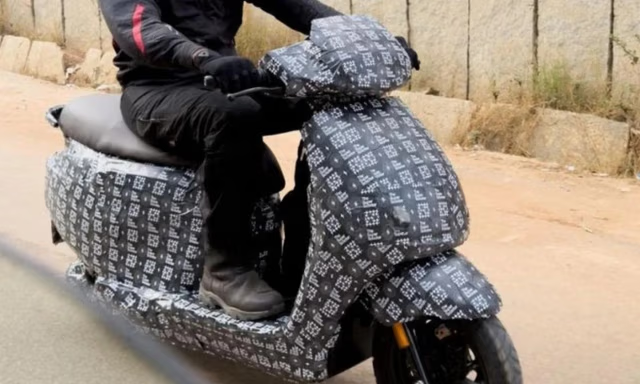 car&bike Team | Jul 22, 2026Simple Energy To Unveil Its First Family Electric Scooter On September 2Simple Energy is set to enter India's family electric scooter segment with the debut of an all-new model on September 2.1 min read
 car&bike Team | Jul 22, 2026MG Windsor EV Prices Hiked By Up To Rs 60,000The price hike affects all variants of the Windsor EV.2 mins read
 car&bike Team | Jul 22, 2026New Yamaha Electric Scooter Design Revealed; Could Get Swappable BatteryA newly filed design registration in Japan has revealed a production-ready Yamaha electric scooter with an all-new platform and a unique mechanical layout.1 min read
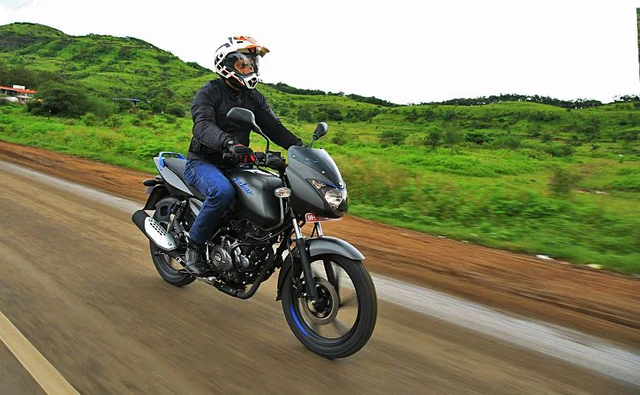 car&bike Team | Jul 22, 2026Bajaj Pulsar 125-160 cc Range To Be UpdatedOver the next six weeks, Bajaj Auto is planning to introduce 10 “substantially new motorcycles” in the 125 cc and 160 cc Pulsar segments.1 min read
 Amaan Ahmed | Jul 22, 2026Range Rover GT Debuts As All-Electric Fastback Ahead Of World PremiereFifth member of the Range Rover family is JLR's take on a coupe-SUV; will debut in BEV form later this year.1 min read
 car&bike Team | Jul 21, 2026Maruti Suzuki To Hike Prices By Up To Rs 30,000 In August 2026This marks the second price hike in three months for the company, which previously increased prices in June.1 min read
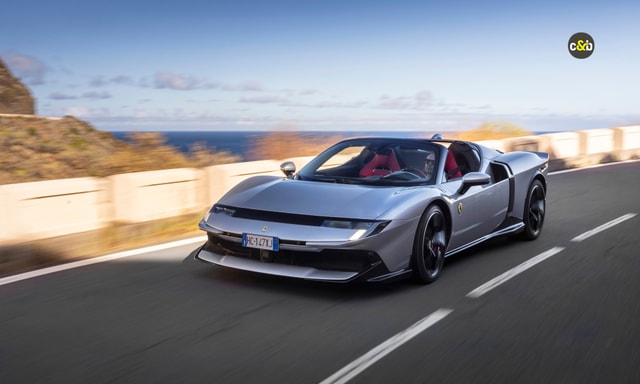 Shams Raza Naqvi | Jul 15, 2026Ferrari 849 Testarossa Spider Driven: Rs. 11.25 Crore Meets 1,000 bhpWe got behind the wheel of the most powerful convertible from Ferrari. What makes the 849 Testarossa Spider Special? We tell you.1 min read
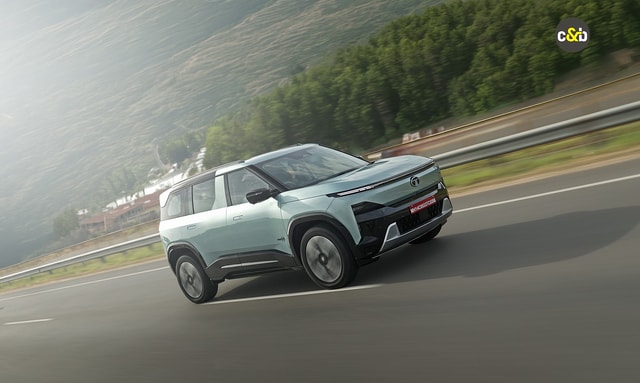 Bilal Firfiray | Jul 12, 2026Tata Sierra EV Review: Reborn In The Electric AgeThe Tata Sierra EV isn’t drastically different from its ICE counterpart when it comes to design. But being the seventh electric offering from the Indian brand, it has gotten a few things right, and very few things wrong. But is it a compelling package to buy?5 mins read
 Jafar Rizvi | Jul 13, 2026TVS Orbiter Long-Term Review (Report 1): Settling In Takes TimeFirst impressions weren't the strongest, but the Orbiter has made a mark in its first month in the car&bike garage.5 mins read
 Seshan Vijayraghvan | Jul 7, 2026Tata Altroz Petrol DCA Long-Term Review: Intercity & Highway Driving ReportWe tested the Tata Altroz Petro DCA’s highway manners, intercity performance, and real-world fuel efficiency.1 min read
 Seshan Vijayraghvan | Jun 29, 2026Renault Kiger vs Toyota Urban Cruiser Taisor: Which Underdog Deserves Your Money?Both the Kiger and the Taisor promise strong performance, solid features, comfortable cabins and everyday usability, all without breaking the bank. But which of these underrated subcompact SUVs deserves your money? Let's find out.1 min read