
TVS Apache RTR 200 4V: 7 Things You Need to Know

TVS Motor Company has just launched the Apache 200 4V, the flagship bike of the Hosur-based two-wheeler manufacturer. The TVS Apache 200 4V is the top-of-the-line model in the Apache series. It will be available in two basic variants - carburetted and fuel-injected, as well as with two different tyre options - with TVS tyres and with Pirelli tyres.
ABS will also be available as an option sometime in March 2016. It's got an all-new engine and TVS says the bike is designed with TVS Racing heritage and keeping the racing enthusiast as a part of the target consumer group. Here's a look at all you need to know about the new TVS Apache 200 4V.
The TVS Apache 200 4V is powered by a four-valve 198cc single-cylinder, oil-cooled engine which makes 20.2bhp power at 8,500rpm and 18.1Nm of peak torque at 7,000rpm. The 4V in the name stands for the four valves in the cylinder head. The engine gets a unique TVS-patented oil-cooled combustion chamber - which is essentially an oil jacket around the combustion chamber for the oil to aid in better and more effective cooling of the engine. The result is an engine which is 10 per cent cooler with this technology.
The piston also gets what's called Nano FriKs coating - a combination of nano particles, binder, solid lubricant and additives. This helps improve wear resistance and make it less prone to wear and tear of the piston and cylinder walls, leading to better engine life and smoother operation. The combustion chamber is one of the major contributors of engine noise and this coating helps greatly reduce engine noise and harshness.
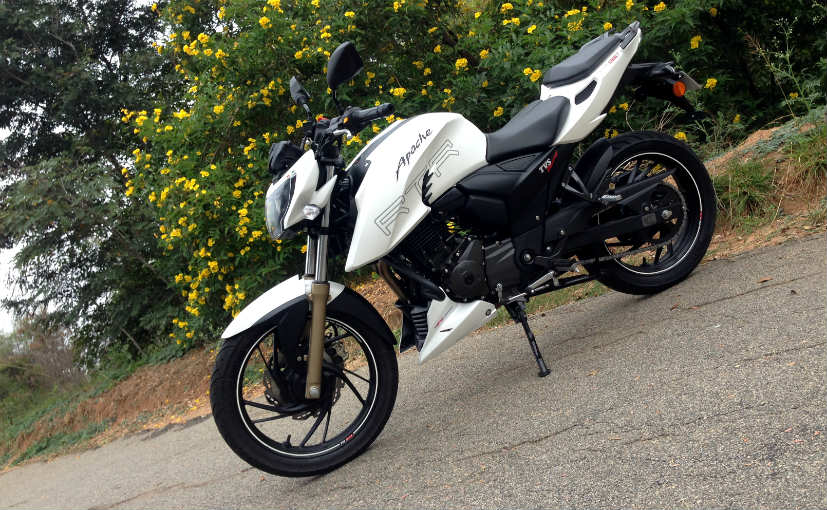
TVS says the Apache 200 4V gets more usable power - that is, maximum power and peak torque are both achieved at lower engine revs than the competition. What this means is - the Apache 200 4V feels peppy, and the grunt of the engine is achieved without opening the throttle wide open - and that is how most riders will ride their bikes most of the time in everyday situations. So, pick up and acceleration will be impressive in every day riding conditions, from 0-60km/h and even 0-90km/h. Of course, on the flip side, if you are into track riding, the Apache 200 4V will feel a little out of breath at high revs.
2. Fuelling - Carburetted and Fuel Injected
The Apache 200 4V will be available in two different versions - carburetted and fuel-injected. The engines on both variants are the same, and make the same torque and near identical power. The carburetted Apache 200 4V makes 20.2bhp at 7,000rpm while the fuel-injected one makes 20.7bhp at 8,500rpm. Top speed for the carburetted bike is a claimed 127km/h, and for the fuel-injected one is 129km/h.

The numbers may not make much of a difference on paper, but when we rode both bikes back to back at the TVS test track, the difference is obvious, if not earth shattering. For one, the induction noise; if you are looking for aural pleasure, then the induction sound of the carburetted version will certainly please you. It's old school and subtle, yes, but the difference is there and very obvious once you ride the bike, lap after lap. On the other hand, the fuel-injected version gets more linear power delivery and throttle control. Of course there's marginal improvement in the top end as well. Again, it's subtle but obvious. We, for one, quite liked the fuel-injected version and that is the version to go for.
Also Read:undefined undefinedTVS Apache RTR 200 4V Review
3. Multi-information Race Diagnostics Display

The TVS Apache 200 4V gets an all-digital black-on-white multi-information display panel. It's aspirational and informative, and what TVS describes as "emotive racing diagnostics". So, apart from the usual speedometer, tachometer, odometer, trip meter and fuel level indicator, what you also get is gear position indicator, gear shift indicator telling you when to upshift, service reminder and low battery indicator. For track use, there's lap timer, top speed clocked and even shortest time displays. It's a neat and useful read-out and there's even alpha numeric message display with start-up message and system health messages.
4. Chassis and Suspension
TVS says the Apache 200 4V has been designed and made keeping in mind the expectations of the target customer in mind. So, along with performance and aggressive design, the 200 4V also gets what is described as "emotive racing ergonomics". Marketing spiel apart, what we can vouch for is that the Apache 200 4V actually has very friendly ergonomics and plenty of room in the saddle to move around as you attack corners after corners at high speed. For most of us who rode the bike for the first time, the bike feels very familiar and takes practically no time to get used to.

That apart, TVS has also designed the Apache 200 4V keeping in mind the riding dynamics most people would expect from the machine. So, there's optimum mass distribution and layout for both city and highway use. Cycle parts are high quality too, so the chassis, a double cradle Synchro Stiff Frame, allows for superior riding dynamics - both on street and on the track. Suspension is high quality precision tuned from KYB, to get the perfect balance between stability and comfort.
5. Tyres - TVS Remaro and Pirelli Sport Angel

The Apache 200 4V is available in two different tyre options. The standard tyres are TVS, but with a brand new compound developed in-house, and offering better grip and reduced rolling resistance. The TVS Remaro tyres are not bad at all, and offer decent grip. But the ones to really choose are the optional race-spec Pirelli Angel tyres that are also on offer. The Pirellis offer great grip, whether under hard cornering or under emergency braking.
6. Petal Disc Brakes, ABS with RLP

Braking on the Apache 200 4V is handled by petal discs at both ends - a 270mm disc at the front and a 240mm at the rear. Brakes are progressive and offer good bite too, offering confident and sure-footed stopping power. The Apache RTR 200 4V will also be available with a dual-channel ABS variant, but that is in the making and will take a month or two to make it to the market - that is sometime around March 2016. The ABS system will also have rear lift-off prevention, meaning the ABS system will automatically disengage when it senses the rear wheel getting lifted under hard braking.
7. Variants and Pricing
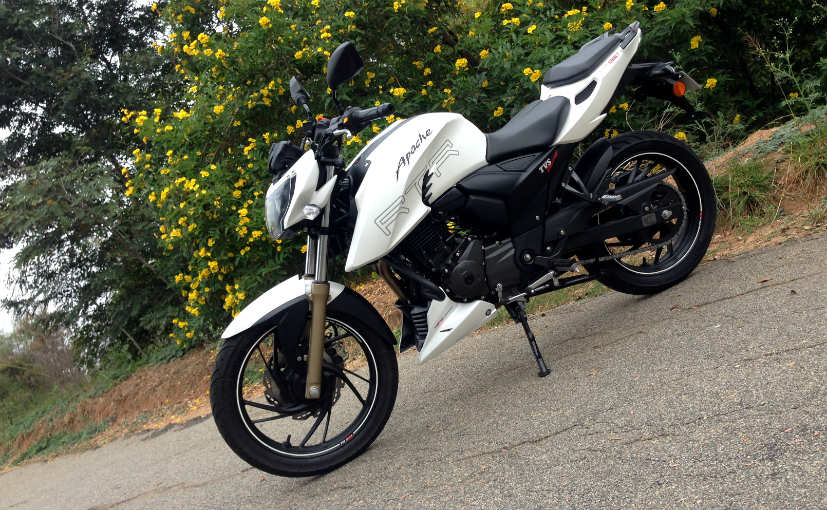
The base variant carburetted TVS Apache 200 4V starts at Rs. 88,990 for the carburetted version. Add to that the Pirelli tyres and the price goes up by around Rs. 7,000. The fuel-injected variants cost between Rs. 12,000-14,000 more, going up to Rs. 1,07,000 for the fuel-injected version with Pirelli tyres. The ABS version is expected to be priced around Rs. 1,15,000. (All prices ex-showroom, Delhi). TVS will offer the Apache 200 4V in seven exciting colour options: White, Black, Matte Red, Matte Yellow, Matte White, Matte Grey and Matte Black.
Related News


Learn more about TVS Apache RTR 200 4V


Popular TVS Models


Latest Cars


Upcoming Cars


Latest News


 Sarthak Mahajan | Oct 27, 2026India Clears Pathway For Introduction Of E100 Flex-Fuel VehiclesThe government has approved the inclusion of E100 fuel in the rules, specifying E100 and E85 for compatible flex-fuel vehicles.1 min read
 Amaan Ahmed | Oct 27, 2026Land Rover Defender 110 Local Assembly Begins In India, Prices Drop By Up To Rs 34 LakhPreviously sold in India as a completely built-up (CBU) model, the incredibly popular Defender is now being built at Jaguar Land Rover's Pune facility.3 mins read
 car&bike Team | Oct 27, 2026Honda To Launch Mitsubishi Triton-Based Pickup Truck In ASEAN By 2028Honda and Mitsubishi Motors have signed an MoU for a new pickup truck based on the Mitsubishi Triton, marking their first complementary vehicle supply agreement as part of a wider strategic partnership involving Nissan1 min read
 Sarthak Mahajan | Oct 27, 2026Hyundai Bayon Colour Options ReveleadHyundai Bayon is available in 10 colour options.2 mins read
 Jafar Rizvi | Oct 26, 2026Royal Enfield Himalayan 750 Teased Ahead Of Global DebutThe Himalayan 750 will likely make its global debut at the EICMA Motor Show in Milan, Italy, next month.2 mins read
 Sarthak Mahajan | Oct 26, 2026Hyundai Bayon: In PicturesThe company said Bayon will receive a CNG option next year.4 mins read