
U.S. Automakers To Say They Aspire To Up To 50 Per Cent Of EV Sales By 2030: Reports

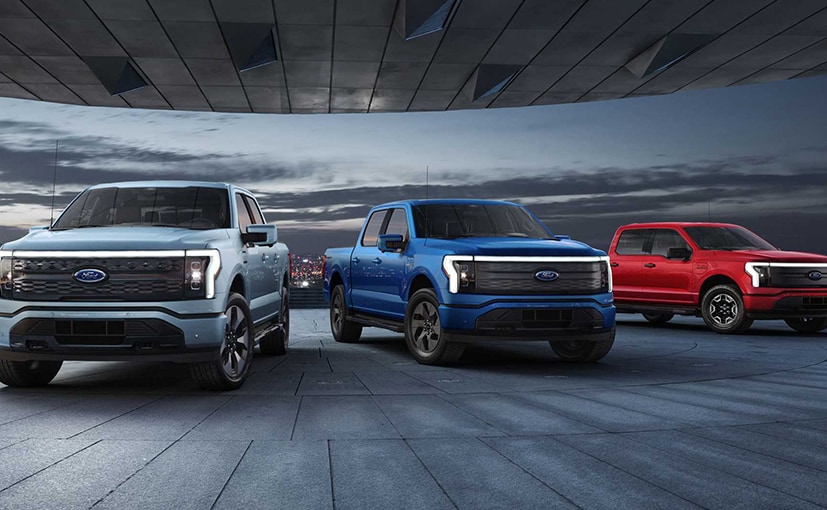
Detroit's Big Three automakers plan to announce on Thursday that they aspire to have 40% to 50% of new vehicle sales by 2030 be electric models as they call for billions in U.S. government assistance to meet aggressive targets, sources briefed on the matter said. The White House is planning an event on electric vehicles and fuel economy standards with President Joe Biden and chief executives from General Motors Co, Ford Motor Co and Chrysler parent Stellantis NV. The administration this week plans to propose revisions to fuel economy requirements through the 2026 model year.
Biden will deliver remarks at 3 p.m. EDT (1900 GMT) on Thursday on the steps his administration is taking to strengthen American leadership on clean cars and trucks, the White House said. It did not say who would attend the event.
"When I say electric vehicles are the future, I'm not joking. Tune in for big news tomorrow," Biden wrote in a Twitter post on Wednesday.
The three automakers declined to comment on Wednesday, as did the White House. Some major foreign automakers are also expected to support the aspiration target.
The administration has been pressing automakers to back a voluntary pledge of at least 40% of new vehicle sales being electric by 2030 as it works to reduce greenhouse gas pollution, Reuters reported last week.
Automakers are spending tens of billions of dollars to speed EV adoption, even though U.S. EV sales remain small, with the exception of Tesla Inc's.
Consulting firm AlixPartners in June said investments in electric vehicles by 2025 could total $330 billion, a 41% increase from the firm's comparable five-year investment outlook a year ago. As of now, electric vehicles represent about 2% of total global vehicle sales, and will be about 24% of total sales by 2030, the firm forecast.
Biden has resisted calls from many of his fellow Democrats to set a binding target for EV adoption or to follow California or some countries in setting 2035 as a date to phase out the sale of new gasoline-powered light duty vehicles.
Some environmental groups have been calling for enforceable requirements and tough vehicle emissions rules through 2026.
Automakers' target includes full-battery electric, plug-in electric hybrid vehicles, which also have gasoline engines, and hydrogen fuel cell models, sources said.
The automakers will make clear in a joint statement that the aggressive EV targets are contingent on additional government support for EVs and the charging industry. The sources said the wording of the statement could still change before Thursday.
Biden has called for $174 billion in government spending to boost EVs, including $100 billion in consumer incentives. A bipartisan Senate infrastructure bill includes $7.5 billion for EV charging stations but no money for new consumer incentives.
Last month Stellantis said it was targeting over 40% of U.S. vehicles be low-emission by 2030.
GM has said it aspires to end sales of new U.S. gasoline-powered light duty vehicles by 2035, and said on Wednesday it is focused on full electric vehicles rather than plug-in hybrid vehicles. Ford has said it plans "at least 40% of our global vehicle volume being all-electric by 2030."
The United Auto Workers union, which has been involved in White House and automaker discussions in recent weeks, has opposed EV mandates, warning it could put jobs at risk.
In a statement on Wednesday, UAW President Ray Curry said the union supports Biden's efforts to expand EV production, but its focus "is not on hard deadlines or percentages, but on preserving the wages and benefits that have been the heart and soul of the American middle class."
This week, U.S. regulators plan to propose revising former President Donald Trump's March 2020 rollback of fuel economy standards. Trump required 1.5% annual increases in efficiency through 2026, well below the 5% yearly boosts set in 2012 by President Barack Obama's administration.
Biden's proposed rules, which would cover 2023-2026, are expected to be similar in overall vehicle emissions reductions to California's 2019 deal with some automakers that aims to improve fuel economy 3.7% annually through 2026, sources told Reuters.
The 2026 requirements are expected to exceed the Obama-era 5% annual improvements.
The United States pledged at a global climate summit this year to reduce emissions 50% to 52% by 2030, compared with 2005 levels.
In March, a group of 71 Democrats in the U.S. House of Representatives urged Biden to set tough emissions rules to ensure that 60% of new passenger cars and trucks sold are zero-emission by 2030.
(This story has not been edited by NDTV staff and is auto-generated from a syndicated feed.)
Related News


Latest Cars


Upcoming Cars


Latest News


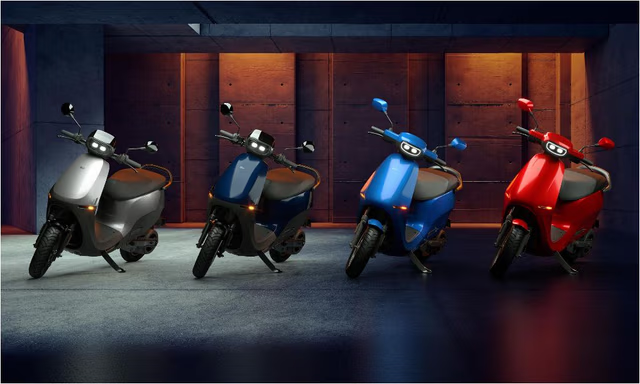 car&bike Team | Aug 6, 2026Ola Electric Shifts To Dealer-Led Retail Model After Five Years Of Company-Owned StoresOla Electric has announced a strategic shift to a dealer-led retail model, while retaining its company-owned outlets as brand experience centres.2 mins read
 car&bike Team | Aug 6, 2026E3 Trion Electric Scooter Launched In India At 1 LakhAvailable in three variants, the scooter's biggest talking point is its AI-backed software ecosystem, which promises to monitor the health of the scooter.3 mins read
 car&bike Team | Aug 6, 2026Production-Spec Royal Enfield Himalayan 750 Spotted Testing Ahead Of Global DebutRoyal Enfield's upcoming Himalayan 750 has been spotted testing in near-production form in the UK, ahead of its expected debut at EICMA 2026.2 mins read
 Jafar Rizvi | Aug 6, 2026Audi Confirms New Q3 For India This Year; A5, Q9 To Arrive By 2027Audi has confirmed three new launches for India by 2027. The Q3 is expected to debut around the festive season, followed by the A5 and Q9 in 2027.3 mins read
 Sarthak Mahajan | Aug 6, 2026Tata Nexon Camo Edition Launched At Rs 9.99 LakhAvailable in petrol, diesel, and CNG variants; prices start at Rs 9.99 lakh.2 mins read
 car&bike Team | Aug 6, 2026SIAM Downplays Letter To Govt Citing Chloride-Related Concerns In E20 PetrolThe original letter cited increased cases for part replacements in cars and SUVs due to high chloride-related wear or corrosion while a second letter shared with the public said that the data still required to be authenticated.1 min read
 Bilal Firfiray | Aug 1, 2026Toyota Hilux Review: The InvincibleMarking it as the ninth generation, the Hilux comes with a major cosmetic overhaul. But is it still relevant enough for the current times or is it getting too long in the tooth?5 mins read
 Bilal Firfiray | Jul 30, 2026Kia Syros EV Review: Best EV To Buy Under Rs 20 Lakh?The Kia Syros EV comes into the game with a modern design, spacious cabin, strong performance, decent range and an aggressive pricing. But could it become the new benchmark under Rs 20 lakh?5 mins read
 Jaiveer Mehra | Jul 27, 20262026 Maruti Suzuki Brezza Facelift Review: Bestseller Joins The Turbo ClubWhile Maruti’s facelifts have always tended to bring subtle updates over the outgoing models, the latest Brezza brings some heavy updates under the skin, including a new 6-speed manual gearbox and, for the first time, a turbocharged petrol engine option.1 min read
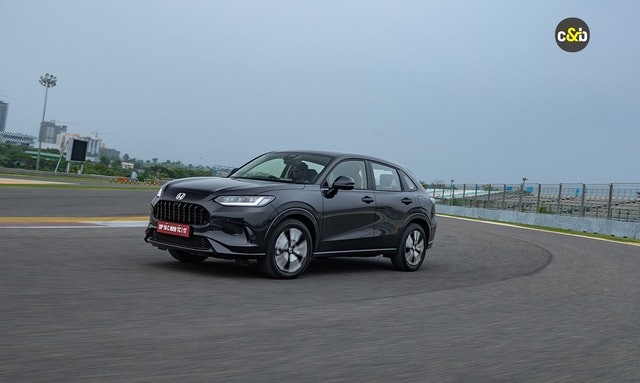 Bilal Firfiray | Jul 24, 2026Honda ZR-V Review: Who Is It For?Honda has brought the new ZR-V to India as their current flagship offering. It’s a CBU, it’s a hybrid, and it’s here for a limited few. Who is it for though?1 min read
 Girish Karkera | Jul 29, 2026Mercedes-AMG E53 4MATIC+ PHEV First Drive Review: Just What The Doctor OrderedThere are luxury cars and there are high-performance cars. But what if you want both for the price of one? Mercedes-Benz has a recommendation that promises to tread a fine line between the two – the second generation E53 with a twist.7 mins read