
Uber Wants To Resume Self-Driving Tests in Pennsylvania

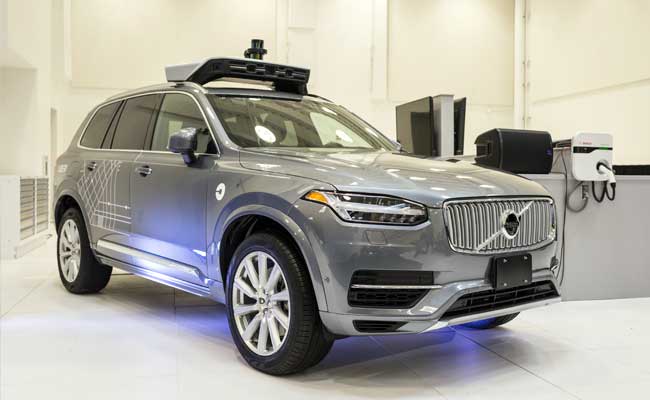
Uber Technologies Inc has asked Pennsylvania for permission to resume self-driving car testing on public roads and has improved the autonomous vehicle software, the company said on Friday, more than seven months after it suspended testing following a deadly crash in Arizona. The company disclosed in a report to the U.S. National Highway Traffic Safety Administration that it would resume testing with two employees in the front seat, enable an automatic braking system at all times, and more strictly monitor safety employees. Uber has been testing self-driving cars in manual mode on public streets.
In June, police in Tempe, Arizona, said a back-up driver behind the wheel of a self-driving Uber was distracted and streaming a television show on her phone right up until about the time the car struck and killed a pedestrian walking across a street, deeming the crash that rocked the nascent industry "entirely avoidable."
The crash was the first death attributed to a self-driving vehicle and was seen as a significant setback for the industry, which is racing to get vehicles into commercial use.
Uber Chief Executive Dara Khosrowshahi said in a statement Friday the company would resume road tests only after implementing "improved processes."
Uber said it now has real-time third party monitoring of back-up safety drivers, sets limits on the time drivers can work per day and has improved training. In July, Pennsylvania's Department of Transportation said it was issuing new guidelines asking companies to submit details about testing, and that it expected companies would comply. A spokeswoman for the agency said Friday it had received the application and would review it.
The state said it would send companies an authorization letter after approving their submissions. Uber said it would not resume testing in Pittsburgh until it received that letter. Alphabet Inc's Waymo unit plans to launch a commercial ride-hailing service in Arizona this year, while General Motors Co is on track to roll out a similar service next year with vehicles without steering wheels or brake pedals.
Authorities in Pittsburgh, where Uber debuted its self-driving vehicles in 2016, have said they welcome the cars back on city streets.
"I think we have increased confidence," said Karina Ricks, director of the city's Department of Mobility and Infrastructure, citing the addition of a second employee in cars being tested and more transparency from Uber. Following the Tempe accident, Pittsburgh Mayor Bill Peduto balked at allowing Uber to resume autonomous driving before a full federal investigation of the crash.
"One of the problems with Uber was they appeared to be moving just a bit too fast," Ricks said. "They got a little cocky about their technology."
The crash raised significant questions about the performance of Uber's software.
Uber said a key recommendation of an internal review after the Tempe crash was to improve the self-driving vehicles' "overall software system design." Uber said in its safety report released Friday the vehicle had improved "system latency," allowing it to detect objects and actors sooner and execute safe reactions faster.

The NTSB said the vehicle had registered the pedestrian who was walking a bike across the road first as an unknown object
The National Transportation Safety Board, which has an ongoing investigation, said in May that Uber registered observations of the pedestrian about six seconds before impact, but the system did not determine that emergency braking was needed until 1.3 seconds before impact.
The NTSB said the vehicle had registered the pedestrian who was walking a bike across the road first as an unknown object, then a vehicle and lastly a bicycle. Uber said it had a new approach to "handling uncertainty within the self-driving system." Uber also has a new separate systems engineering testing team and plans a self-driving safety advisory board of outside experts. If a vehicle is uncertain about something in its view the software is now better positioned to "reason over many possible outcomes to ultimately come to a safe response," it added.
The NTSB also said Uber had disabled an manufacturer-installed automatic emergency braking system in the 2017 Volvo XC90 while the car was under computer control in order to "reduce the potential for erratic vehicle behavior."
That braking system is now active whenever Uber is testing on public roads, it said on Friday. It has also filed a voluntary safety assessment with the National Highway Traffic Safety Administration on its self-driving efforts and made public a report from an outside law firm that reviewed the safety culture at Uber. The agency has an ongoing probe of the Tempe crash.
(This story has not been edited by NDTV staff and is auto-generated from a syndicated feed.)
Related News


Latest Cars


Upcoming Cars


Latest News


 car&bike Team | Aug 1, 2026Maruti Suzuki Sells More Than 2 Lakh Vehicles In July, Sets New Domestic RecordThe brand sold a total of 2,41,421 units last month which also included exports of 30,056 cars1 min read
 car&bike Team | Aug 1, 2026India-UK FTA: Aston Martin Announces Revised PricesAlong with the revised pricing, the British marque has refreshed its lineup by replacing the Vantage, DB12 and DBX with more powerful 'S' derivatives.4 mins read
 car&bike Team | Aug 1, 2026BMW 7 Series, i7 Facelift Bookings Open In India Ahead Of LaunchThe facelifted models were unveiled globally in April 2026 and are set to arrive in India.3 mins read
 car&bike Team | Aug 1, 2026Auto Sales July 2026: Growth For Tata, Mahindra And Hyundai; Nissan Jumps 218%July 2026 turned out to be a strong month for several carmakers in India. Tata Motors, Mahindra, Hyundai, MG Motor and Nissan all reported healthy year-on-year growth, with new model launches, exports and growing EV demand.4 mins read
 car&bike Team | Jul 31, 2026Hero Vida VX2 Now Available With Fixed 3.1 kWh Battery, Priced At Rs 1.13 LakhUnlike the existing removable-battery variants, the new VX2 variant comes with a fixed battery and direct-plug charging.1 min read
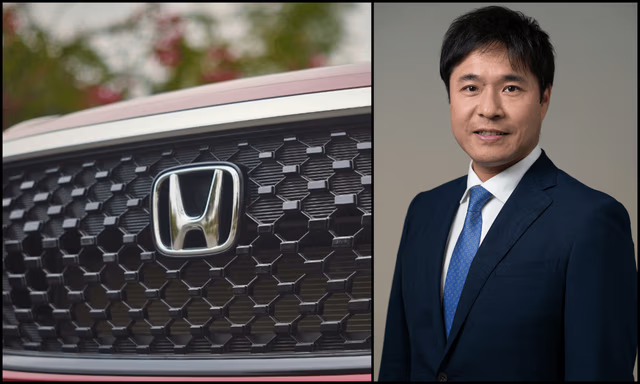 car&bike Team | Jul 31, 2026Honda Cars India Appoints Toshiyuki Yanagisawa As New President And CEOYanagisawa replaces Takashi Nakajima, who is set to move to Honda's regional headquarters after completing his stint in India.1 min read
 Bilal Firfiray | Aug 1, 2026Toyota Hilux Review: The InvincibleMarking it as the ninth generation, the Hilux comes with a major cosmetic overhaul. But is it still relevant enough for the current times or is it getting too long in the tooth?5 mins read
 Bilal Firfiray | Jul 30, 2026Kia Syros EV Review: Best EV To Buy Under Rs 20 Lakh?The Kia Syros EV comes into the game with a modern design, spacious cabin, strong performance, decent range and an aggressive pricing. But could it become the new benchmark under Rs 20 lakh?5 mins read
 Jaiveer Mehra | Jul 27, 20262026 Maruti Suzuki Brezza Facelift Review: Bestseller Joins The Turbo ClubWhile Maruti’s facelifts have always tended to bring subtle updates over the outgoing models, the latest Brezza brings some heavy updates under the skin, including a new 6-speed manual gearbox and, for the first time, a turbocharged petrol engine option.1 min read
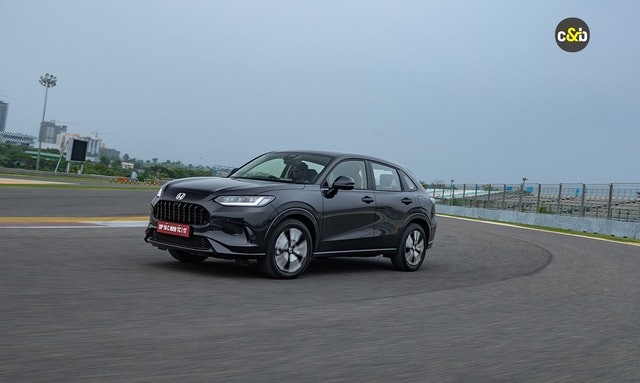 Bilal Firfiray | Jul 24, 2026Honda ZR-V Review: Who Is It For?Honda has brought the new ZR-V to India as their current flagship offering. It’s a CBU, it’s a hybrid, and it’s here for a limited few. Who is it for though?1 min read
 Girish Karkera | Jul 29, 2026Mercedes-AMG E53 4MATIC+ PHEV First Drive Review: Just What The Doctor OrderedThere are luxury cars and there are high-performance cars. But what if you want both for the price of one? Mercedes-Benz has a recommendation that promises to tread a fine line between the two – the second generation E53 with a twist.7 mins read