
Google Glass May Cause 'Blind Spots' While Driving
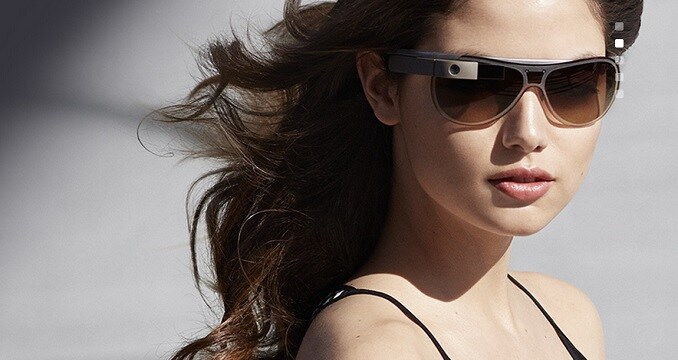
Wearing Google Glass may partially obstruct peripheral vision, causing blind spots that could interfere with daily tasks such as driving, a new study has found. Peripheral visual field is a main component of vision and essential for daily activities such as driving, pedestrian safety and sports.
Conventional spectacle frames can reduce visual field, sometimes causing absolute blind spots, and head- mounted devices have even more pronounced frames, researchers said.
Tsontcho Ianchulev of the University of California, San Francisco, and colleagues compared performance on visual field tests with a head-mounted device vs regular eyewear to quantify their effect on visual function.
Three healthy individuals with 20/20 best-corrected visual acuity and normal baseline visual fields were tested in April 2014.
Participants used a wearable device (Google Glass, Google Inc), following manufacturer's instructions, for a 60-minute acclimation period.
Perimetric visual testing (a measurement of the field of vision) was conducted first with the device, followed by a control frame (regular eyewear) of similar colour and temple width.
In addition, to assess how the devices are worn by general consumers, photographs of people wearing the product and facing the camera, obtained from an Internet search, were analysed. Photographs were assessed for prism position relative to the pupil.
Visual field testing demonstrated significant scotomas (blind spots) in all three participants while wearing the device, creating a clinically meaningful visual field obstruction in the upper right quadrant.
Defects were induced by the Google Glass frame hardware design only and were not related to a distracting effect of software-related interference.
An analysis of 132 images indicated that many people wear the device near or overlapping their pupillary axis (a line perpendicular to the surface of the cornea, passing through the center of the pupil), which may induce scotomas and interfere with daily function.
The authors noted that the study is limited by the small number of participants, who may not be representative of all users, and that a larger sample is needed to identify factors that influence scotoma size and depth.
"Additional studies are needed to understand the effects of these devices on visual function, particularly as their use becomes increasingly common," the authors concluded in the study published in the journal JAMA.
Related News


Latest Cars


Upcoming Cars


Latest News


 Sarthak Mahajan | Oct 12, 2026Volvo EX90 Electric SUV Launched In India At Rs 1.26 CroreThe EX90 is Volvo's new flagship model in India; features a 106 kWh battery.1 min read
 Sarthak Mahajan | Oct 12, 2026Volvo EX90 And ES90 India Launch Today; What To ExpectThe flagship Volvo ES90 electric sedan will feature specifications similar to those of the global model.2 mins read
 Sarthak Mahajan | Oct 11, 2026Honda ADV 160 Fuel Tank Capacity, Kerb Weight RevealedHonda has released the brochure for the ADV 160, revealing its full specifications and features.1 min read
 Sarthak Mahajan | Oct 11, 2026VLF Strada Launched At Rs 1.20 Lakh; Claims 250km RangeThe VLF Strada will be available in two variants: City and Max.2 mins read
 car&bike Team | Oct 10, 2026Porsche Mission S Concept Teased Ahead Of October 15 DebutPorsche will unveil the Mission S Concept on October 15, previewing a new mid-engined sports car platform planned to sit above the 911.2 mins read
 car&bike Team | Oct 10, 2026Triumph Bonneville T40, Bonneville T4 Colour Options RevealedThe T40 is offered in three dual-tone and an all-black version while the T4 gets three monotone shades.2 mins read