
All You Need To Know About A Formula 1 Pit Stop

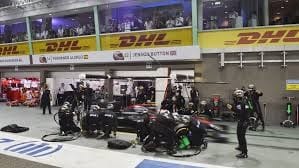
- F1 pit stops are hubs of activity with several things taking place
- The pit stops have several activities going on simultaneously.
- Heres us taking a closer look at the same.
Pit stops are crucial and integral parts of Formula 1 races. They take place in a lightning-fast manner with mechanics syncing with each other to change tyres, adjust aerodynamic components, and more. Let's learn more about the same.

Timing
Even a fraction of one second is important in Formula One and the pit crew remains under tremendous pressure whenever drivers enter the pit lane. They have to quickly change four tyres and get other minor adjustments done Red Bull Racing has the record for the quickest time at a pit-stop. They achieved a timing of 2.05 seconds at the beginning of the season in 2013. The team even improved this record in the same year at the USA Grand Prix, achieving a pit stop of 1.923 seconds. This has remained as the record ever since that day!
Losing Precious Time
Pit stops may even be longer if certain components are required to be changed or if there are issues with the wheel nuts, if there are adjustments needed for the angle in the front wing or if under-steer or over-steer must be fixed. The time also goes up if there is a puncture or debris needed to be removed. The longer pit stops are problematic for F1 drivers although the sport has often witnessed stoppage at times of seven seconds or even higher!
There is a team at work
While the driver is the one racing on the track, F1 is a team sport. More than 20 people work as crew members for pit stops. Every tyre will need three mechanics, i.e., one running the wheel gun, one person taking the tyre off and also another one to put a new tyre on.

There are two individuals for car stabilization while two other people take care of running the front and rear jacks for lifting the vehicle once it comes to the pit lane. There are also two other mechanics who work to adjust the front wing while also removing nosecones if a replacement is needed. There are also two back up rear and front jack crew persons and a few other people running the lighting-based systems.
Lollipop men and their status now
F1 cars would earlier be guided by lollipop men into the pit lane, and they would hold responsibility of informing drivers about when they could safely exit the pit box as well. Lollipop men would first tell drivers to brake on a side, choose the first gear on another side and then get moving after it was lifted up once again.
However, the job was phased out in the year 2008 when Ferrari began using the traffic light-based system. The lollipop man came back after a costly mistake at the Singapore Grand Prix earlier. However, traffic lights made a comeback at Ferrari while many other teams started using the system as well.
Hitting pit marks
The pit crew remains in position to get the task executed swiftly although drivers have to stop at a particular mark. If they miss this, it may require many other seconds for the mechanics to again change positions and adapt. This is a vital component in F1 pit stops.
How pit stops have evolved
When the Formula One championship first began, pit stops only happened when drivers retired from races. From the 1970s, this became more common with tyre changes becoming more frequent. Pit stops were earlier more chaotic and longer, while refueling came into being in the year 1994. However, it got banned by the end of -2009, with teams now focusing primarily on changing tyres.
Possible Penalties
Teams and drivers may get penalties during pit stops for mistakes. Ten second and five second penalties may be given with mechanics required to wait for passing the time until they begin work. Mistakes still happen with drivers being released at times in an unsafe manner.

Available equipment
Very little equipment is needed for pit stops. The rear and front jacks are present along with a swivel feature as well. Jacks come with sift release levers and powered devices are not used. Every corner has two pneumatic wheel guns if any one fails, functioning with compressed air. The system has evolved over the years. Mechanics also get wheel gun buttons for signaling stops although hands are often raised as well. There is a light system hanging from the pit gantry as well. This also accommodates the air lines, CCTV cameras and trigger wiring applicable for the wheel guns.
Related News


Latest Cars


Upcoming Cars


Latest News


 Jaiveer Mehra | Jul 2, 2026Hyundai Creta Electric Launched With Battery-As-A-Service; Prices Start At Rs 10.99 lakhThe battery rental price starts at Rs 3.9 per km.2 mins read
 car&bike Team | Jul 2, 2026Revolt RVX Launched in India at ₹1.30 Lakh; Replaces the RV400The new Revolt RVX comes with a more powerful mid-drive motor, a claimed 160 km IDC range, fast charging, and a host of connected features at an introductory price of Rs. 1.30 lakh, ex-showroom.3 mins read
 Jaiveer Mehra | Jul 2, 2026All-New BMW iX5 Debuts With 141 kWh Battery, 800+ km RangeFirst generation of the all-electric iX5 is expected to replace the current BMW iX, with global sales commencing in 2027.1 min read
 car&bike Team | Jul 2, 2026Skoda Kodiaq RS Launched In India At Rs 66.99 LakhAll 50 units allocated in the first batch of the Kodiaq RS have been spoken for.2 mins read
 car&bike Team | Jul 1, 2026BYD eMax 7 Comfort Launched At Rs 27.90 LakhNew mid variant slots in between the Premium and Superior trim and comes with the 71.8 kWh battery.1 min read
 car&bike Team | Jul 1, 2026BYD Cars Prices Hiked By Up To Rs 1 LakhBYD India has revised prices across select variants in its electric passenger vehicle line-up, with increases ranging from Rs 50,000 to Rs 1 lakh.1 min read
 Seshan Vijayraghvan | Jun 29, 2026Renault Kiger vs Toyota Urban Cruiser Taisor: Which Underdog Deserves Your Money?Both the Kiger and the Taisor promise strong performance, solid features, comfortable cabins and everyday usability, all without breaking the bank. But which of these underrated subcompact SUVs deserves your money? Let's find out.1 min read
 Seshan Vijayraghvan | Jun 29, 2026Skoda Kodiaq RS Review: The Best Kodiaq Yet?The Skoda Kodiaq RS is finally here, and it's every bit as exciting as I expected. But was it worth the wait?7 mins read
 Bilal Firfiray | Jun 28, 2026BMW X6 M60i Review: It’s Back And HOW!The BMW X6 M60i blends a 530bhp twin-turbo V8, with its unmistakable coupe-SUV styling. There’s plenty of character, but is it worth your money?6 mins read
 Janak Sorap | Jun 25, 2026350cc Bajaj Dominar 400 Review: Same Character, Lower PriceA slightly lower displacement engine, a significantly lower price tag and nearly the same performance — the Bajaj Dominar 400 aims to be smarter rather than faster.6 mins read
 Preetam Bora | Jun 25, 20262026 Bajaj Pulsar NS400Z First Ride Review: Smaller Engine, But Should You Buy It?The Bajaj Pulsar NS400Z won our Two-Wheeler Upgrade of the Year. Then new tax slabs happened. Smaller engine, same badge – but does it still deliver?6 mins read