
Bumpy Ride For Auto Ancillaries: Report

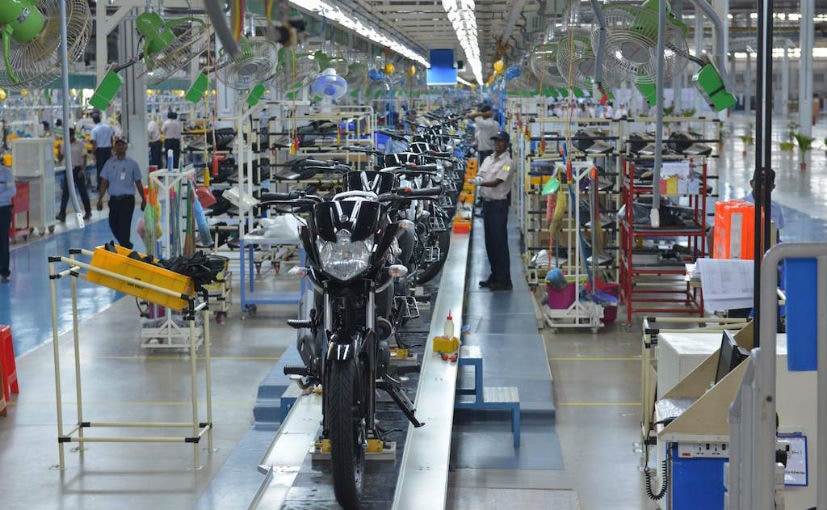
Domestic and global downturn in the automobile industry, uncertainty in government policy and aggressive play by the Chinese in the international markets are impacting the $57 billion auto ancillary industry in India, said a top official of the Automotive Component Manufacturers Association of India (ACMA).
He also said the trade war between the US and China should have resulted in increased businesses for Indian players, but that has not happened till now.
"The Indian auto component industry rests on the tripod of sales to vehicle makers in India, after/replacement market and exports. All the segments are facing pressures," Ram Venkataramani, President, ACMA, told IANS.
"In the domestic OEM (original equipment manufacturers) market, all the vehicle manufacturers are under severe pressure. For the past 10-12 months their sales are on the decline," Venkataramani said.
According to him, the after market or the replacement market in India is also down post the introduction of Goods and Services Tax (GST).
"People are buying what is necessary and are not going for additional items," he added.
On the export front too, the auto component makers are under pressure as their clients in the overseas markets are also feeling the pinch due to declining sales.
Did the industry not benefit from the trade war between the US and China as India exports mainly to Europe and the US?
"The trade war between the US and China should have benefited Indian players. Though enquiries from North America has gone up, the Chinese have turned aggressive by effecting supplies to the US from their plants in other countries. Even in Europe, the Chinese have turned aggressive," Venkataramani said.
Last fiscal, the Indian auto components industry grew by 14.5 per cent to log a turnover of Rs 395,902 crore ($57 billion). The exports last fiscal grew by 17.1 per cent to Rs 106,048 crore ($15.16 billion).
According to ACMA, in 2018-19, Europe accounted for 33 per cent of exports followed by North America and Asia at 29 per cent and 26 per cent, respectively.
According to Venkataramani, the crisis in the automotive industry this time is unprecedented. The cut in 15-20 per cent production by vehicle makers has led to a crisis like situation in the auto component sector.
"If the trend continues, an estimated 10 lakh people could be laid-off," he said.
While industry players agree that the downturn is not something new, they say that the pressure this time is different and more severe than the earlier ones.
"There seems to be no end to the downward spiral in the industry this time around. It is like falling into a bottomless pit. During earlier tough times, one or two segments would continue to perform well so that the companies could manage. But this time, all the segments -- commercial vehicles, passenger cars, two and three wheelers -- are facing sales decline," a senior official of an auto component industry told IANS preferring anonymity.
"In the past, the auto industry was able to decide whether to invest in an existing technology. Now with regulatory changes, it is difficult to decide where to invest and where not to," Venkataramani said.
During the earlier downturns, the excise duty was cut to boost vehicle demand while the Central government implemented the Jawaharlal Nehru National Urban Renewal Mission (JNNURM) which focused on improvement of urban transportation apart from other things.
Under the scheme, state transport undertakings bought buses which in turn helped the commercial vehicle sector that was facing a downturn then.
"We recently met Finance Minister Nirmala Sitharaman. Our request is to reduce the GST on vehicles to 18 per cent from the present 28 per cent and introduction of a vehicle scrappage policy. Also, the availability of loans for purchase of vehicles should be increased and the cost of loans should be cut," Venkataramani said.
According to him, the reduction in GST is important as it will increase the demand for vehicles now and also after the implementation of the BS-VI emission from April 1, 2020.
With nearly 55 per cent of the existing auto component industry's products going into vehicles powered by internal combustion engines, electric vehicle (EV) is a major challenge for the industry.
Pressing for a stable policy for electric mobility, the ACMA has welcomed the government's FAME 2 (Faster Adoption and Manufacturing of Hybrid and Electric Vehicles) scheme and the Phased Manufacturing Programme.
The ACMA has said that any changes in targets for roll out of electric vehicles would damage the auto components manufacturing ecosystem and increase the nation's import bill.
According to ACMA, a stable e-mobility policy is needed for the creation of a strong local supply base and also for smooth transition.
Meanwhile, the industry players have started austerity measures and money is being spent on essential items alone so as to cut down costs.
The companies are also looking at non-auto sectors such as aerospace, railways and others for orders.
"We are also looking at getting into new technology space. The Amalgamations Auto Component Group is looking at new avenues. The auto component group revenue is about Rs 1,600 crore," said Venkataramani, who is also a Director in India Pistons Ltd, a part of the Amalgamations group.
Related News


Latest Cars


Upcoming Cars


Trending News





Latest News


 car&bike Team | Dec 14, 2025Top-Spec Tata Sierra Accomplished, Accomplished+ Prices RevealedRegardless of the powertrain combination chosen, all Tata Sierra Accomplished+ trims cost upwards of Rs 20 lakh (ex-showroom).2 mins read
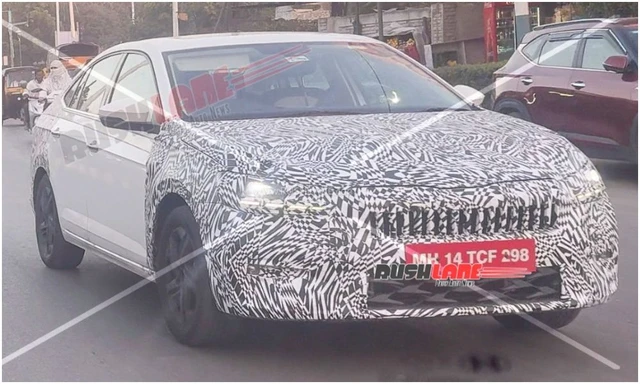 car&bike Team | Dec 13, 2025Skoda Slavia Facelift Spied Testing Again Ahead Of DebutThe facelifted Slavia is expected to debut in 2026 as Skoda-VW India looks to refresh its India 2.0 range.1 min read
 car&bike Team | Dec 13, 20252026 MG Hector Facelift Interior Previewed Ahead Of DebutLatest teaser video of the upcoming Hector facelift suggests minimal cosmetic changes to the interior as well as reveals a new alloy-wheel design.1 min read
 Jaiveer Mehra | Dec 13, 2025Passenger Vehicle, Two-Wheeler Sales Surge In November 2025: SIAMBoth segments reported a growth in the region of 20 per cent, though year-to-date sales growth in FY2026 was notably flatter at around 3 per cent.1 min read
 car&bike Team | Dec 12, 2025Nissan Entry MPV Design To Be Unveiled On December 18New MPV to be the first of three new models for India by Nissan, alongside the Tekton and a three-row SUV.1 min read
 Jaiveer Mehra | Dec 12, 2025New Mini Convertible Launched At Rs 58.50 LakhDrop-top variant of the iconic Cooper hatchback available in a single Cooper S spec.1 min read
 Janak Sorap | Dec 11, 2025Harley-Davidson X440 T First Ride Review: Smarter and SharperHarley-Davidson has taken the X440 and given it a more focused and engaging twist. The result is the X440 T—essentially the same platform but updated in areas that give the motorcycle more appeal and riders more thrill.5 mins read
 Shams Raza Naqvi | Dec 10, 20252025 Mini Cooper Convertible Review: More Colour On Indian RoadsThe updated Mini Cooper Convertible is set to be launched in the Indian market in the next few days. We drive it around Jaisalmer for a quick review.1 min read
 Bilal Firfiray | Dec 8, 2025Tata Sierra Review: India’s New Favourite?Marking its return after a few decades, the reborn Sierra has made everyone sit up and take notice. But is it worth the hype?10 mins read
 Girish Karkera | Dec 4, 20252026 Honda Prelude First Drive: Domesticated Civic Type RA sporty-looking coupe built to give customers a taste of performance but not at the expense of everyday practicality.5 mins read
 Seshan Vijayraghvan | Nov 29, 2025Mahindra XEV 9S First Drive Review: Big Electric SUV, Bigger ExpectationsThe XEV 9S lands at a time when the EV crowd is growing fast. It’s a big, born-electric, three-row SUV that starts under 20 lakh. It sits close to the XUV700 in size, but the brief is very different. Here’s what it’s like on the road.11 mins read