
Daimler And Nvidia Team Up To Close Tech Gap To Tesla


Having pulled ahead in the race to develop a software-based vehicle operating system, U.S. electric car pioneer Tesla faces a new challenge from an alliance of German luxury carmaker Daimler and U.S. computer graphics specialist Nvidia. Daimler and Nvidia unveiled a deal on Tuesday to develop and equip the German company's Mercedes-Benz cars with a next-generation chip and software platform that could eventually be used to help vehicles drive by themselves. The move is a response to Tesla's ability to integrate custom-designed chips with thousands of lines of code, which has allowed the Silicon Valley-based company to develop new features faster than its competitors.
Also Read: Daimler India Offers Free Vehicle Check-Up Sanitisation Drive To BharatBenz Customers

Daimler and Nvidia will equip Mercedes-Benz cars with a next-generation chip and software for automated driving
While Daimler and German rivals Volkswagen and BMW have criticised Tesla's aggressive marketing of its "autopilot" features, they have struggled to match the speed with which the U.S. carmaker brings innovations to market.
Thanks to instantly upgradeable software, Tesla's cars boast a longer operating range and more entertainment options than rivals, even as it struggles to ramp up production. According to Volkswagen, Tesla is a decade ahead of the competition.
In a bid to narrow the gap, Mercedes, the world's oldest carmaker, has taken the unprecedented step of sharing its intellectual property with an outside tech company in exchange for access to Nvidia's computer processors and its software engineers specialised in artificial intelligence.
That's a big change from established automakers' traditional approach of trying to go it alone, or partnering with existing suppliers and manufacturers, and marks an attempt to keep up with Tesla, and deep-pocketed tech firms like Amazon and Apple.
Mercedes, Volkswagen and Audi have so far used a patchwork approach, combining vehicle platforms originally designed for combustion engine drives with electric vehicle software and components largely developed by third party suppliers.
Rather than designing a new vehicle from the ground up, German carmakers have attempted to stitch together software from suppliers of camera and radar sensors, which has made it harder to upgrade their vehicles than if they had used a comprehensive, upgradeable vehicle operating system.
Software and processing power is gaining in importance thanks to automated driving, which requires radar, ultrasonic, camera and lidar sensors to talk to each other as well as to manage competing demands for battery power.

Software and processing power is gaining in importance thanks to automated driving
With zero-emission cars, electricity is not just consumed through acceleration, but also by cooling the battery, running air conditioners, seat heaters, in-car infotainment, image recognition and semi-autonomous driving functions.
Although Tesla started out with a similar patchwork approach, it has since adopted a strategy akin to Apple with its iPhone - it now designs computer chips and software in-house.
Like Apple, Tesla has redefined the way technologies are packaged, leaving analysts wondering whether the car sector will follow the phone industry, where profits moved from device manufacturer to producers of high-tech components and software. Spooked by Tesla's advance, German carmakers and major supplier Robert Bosch are retooling their businesses to accommodate "software first" operating systems, which rely on fewer, more powerful chips and computers. Traditional carmakers have struggled to attract software engineering talent, in part because of a reticence to pay big salaries for projects without a defined business case, allowing Tesla to sustain an advantage which some analysts say is getting bigger thanks to the company's "fleet learning."
Tesla collects data about battery depletion rates and driving styles from all its cars, and uses this to design new software algorithms. Prioritising energy consumption has allowed Tesla keep battery capacity above 90% even after 200,000-300,000 kilometres, or four to five years, UBS analysts said in a March 2019 report, attributing this to Tesla-designed software, batteries and semiconductors.
Teaming up with Nvidia could allow Daimler to take a short cut to state-of-the-art technology. The results won't be immediate - jointly developed Mercedes-Nvidia vehicles are not expected to hit the road until 2024. Nvidia will help Daimler develop assisted and self-driving functions, which will form part of a Mercedes-designed overall vehicle system.
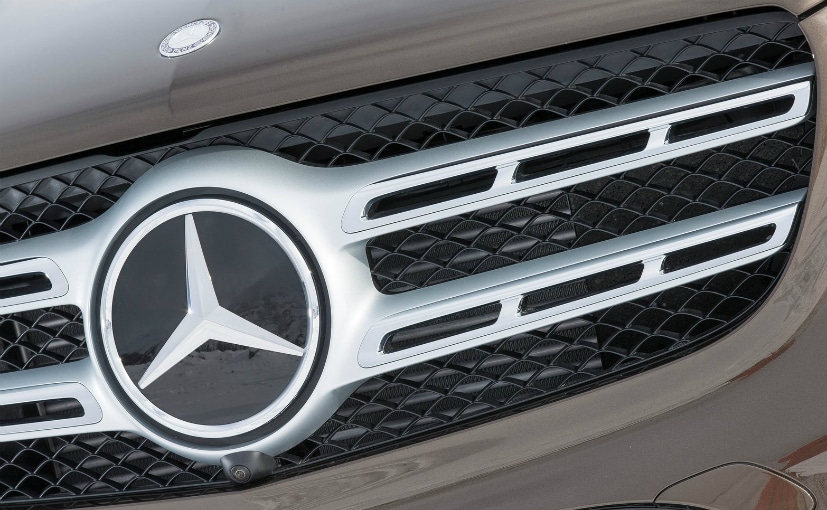
Teaming up with Nvidia could allow Daimler to take a short cut to state-of-the-art technology.
Chips and processors will only become more critical as automakers race to build self-driving cars. Just one video sensor, such as Bosch's stereo video camera, generates 100 gigabytes of data in only one kilometre of travel, making efficient processing vital to optimising vehicle range and training vehicle reflexes.
That makes fewer, more powerful processors a must, according to Harry Kroeger, a former head of development of electronics at Daimler, a former director of Tesla and now a management board member at Bosch overseeing automotive electronics.
"You no longer install one small box for every single function; instead you install a bigger smart box that can do many things simultaneously,” he said. "The computing power you need for climate control is ridiculously low compared to functions that prevent the car from crashing. A smart box prioritises the safety functions and uses its 'down time' to focus on things like climate regulation."
Related News


Popular Mercedes-Benz Models


Latest Cars


Upcoming Cars


Latest News


 Sarthak Mahajan | Aug 18, 20262027 Skoda Slavia Facelift: Top 5 ChangesGets first-in-segment rear-seat massager, 360-degree cameras and much more.1 min read
 Jafar Rizvi | Aug 18, 20262027 Skoda Slavia Facelift Makes India Debut; Bookings OpenThe updated Slavia gets a new automatic gearbox for the 1.0 litre TSI, more equipment and a few styling changes.3 mins read
 Amaan Ahmed | Aug 18, 2026Skoda Superb Diesel Confirmed For India Launch In 2027First showcased at the 2025 Auto Expo in New Delhi, the current-gen Superb diesel will finally be launched in India next year as a full import.3 mins read
 Jaiveer Mehra | Aug 18, 2026Skoda Octavia RS Pre-Bookings Reopen; Only 50 Units AvailableSkoda says that deliveries of the second lot of Octavia RS will happen during the festive season.1 min read
 Sarthak Mahajan | Aug 18, 2026Royal Enfield Classic 350 Gorkha Edition Launched At Rs 2.11 LakhGets a legendary crossed Khukris insignia on the tank and side panels.1 min read
 Bilal Firfiray | Aug 18, 2026Mercedes-Benz C-Class Facelift Revealed; India Debut Next YearComes with newer plug-in hybrid powertrain, newer cabin themes, AI-based MB.OS and rear wheel steering. New family design makes it way as well.1 min read
 Janak Sorap | Aug 17, 2026Bajaj Pulsar N160 SS First Ride Review: The Most Tech-Loaded Pulsar Yet?The Bajaj Pulsar N160 SS brings more power, new-age electronics and sharper styling to the familiar 160cc Pulsar formula.5 mins read
 Jaiveer Mehra | Aug 16, 2026Honda Amaze CVT Long Term First Report: 1800 Km InThe Amaze is the first sedan to join our long term feet in a year, and while on paper it lacks some of the features offered in its rivals, there’s plenty of promise in the package.1 min read
 Preetam Bora | Aug 12, 2026Royal Enfield Himalayan 440 Custom Review: Beating RE to the PunchDelhi-based custom motorcycle shop TNT Motorcycles introduces packages to convert existing Himalayan 411 adventure bikes to Himalayan 440. Is it worth the expense?8 mins read
 Seshan Vijayraghvan | Aug 11, 20262026 Nissan Tekton 700 km Review: Can It Conquer The Himalayas?We drove the newly launched Nissan Tekton from Chandigarh all the way up to Leh, covering over 700 km with the new SUV. From exploring the Tekton’s capabilities in the Himalayas to setting an India Book Record, here’s how the trip unfolded.8 mins read
 Preetam Bora | Aug 11, 20262026 Aprilia Tuono 457 Special Edition First Ride Review: Should You Buy It?The 2026 Aprilia Tuono 457 delivers an engaging, everyday riding experience with strong performance. At its price point, the Tuono 457 is a brilliant motorcycle, but not quite the complete package. Why is that, and should you still buy it? Read on.8 mins read