
Foreign Carmakers In Deep South Face Questions In Trump Era

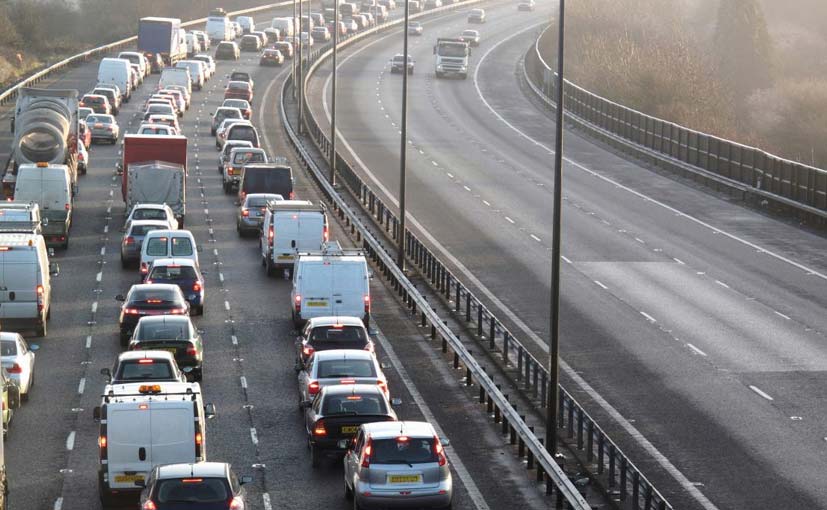
- The industry, including auto suppliers, employs 279,620 in the region
- Automakers have been successful in keeping big plants union free
- Tesla also has signaled plans to expand its plant in Fremont, California
But they now face new challenges amid threats of trade wars and the rising influence of Silicon Valley in the auto industry.
In a region of the United States more often identified with the legacy of racism and evangelical Christianity, German and Asian cafes today dot the landscape in Alabama, where Mercedes-Benz, Honda, Hyundai-Kia and Toyota all have plants.
"Lives are being changed," said Republican Senator Bob Corker of Tennessee, where Volkswagen opened a plant in 2011 that now employs more than 3,200 people.
Veronica Curtis was one of the first 700 people hired when Mercedes started production at its Tuscaloosa, Alabama plant in 1997, joining just five days after giving birth.
"I've never built a car, I didn't know anything about cars," Curtis told AFP. But 20 years later, Curtis, who is African-American, is a group leader for a team of 60.
"My husband wanted more, and I did too," she said, recounting trips for the company to India, South Africa and Europe. "If you are good enough, you can move on and I kept moving on."
Such is the influence of the foreign car manufacturers, that colleges in the South have adjusted their curricula to prepare students for jobs in this sector, including the University of Alabama, which trains engineers for the auto industry.
"We work with schools in our state to make sure that they are working with and they are listening to the companies," said Alabama commerce secretary Greg Canfield. "It takes a lot of coordination."
Incentives and subsidies
Just about every major foreign brand that sells cars in America has a factory in the southeast. The industry, including auto suppliers, employs 279,620 in the region, about one-third of the sector's nationwide workforce, according to 2015 US Labor Department data.
Battered by the decline of the coal and textile industries, states such as Kentucky, Mississippi, Tennessee, Alabama, South Carolina and Georgia started to target automakers at the end of the 1980s with an array of entircements including subsidies and deregulatory measures.
Former Kentucky governor Martha Layne Collins was the first to employ incentives with Toyota, said consultant Maryann Keller, whose husband had represented Toyota in the talks.
Collins "was roundly criticized," Keller said, but "By today's standards, she gave very little."
Canfield said, "The biggest concern for companies is that the regulatory environment is friendly. We want to make sure that we offer the lowest tax rate . . .that we have the right tax reform."
But South Carolina also modernized its road and rail infrastructure so that BMW could export cars built at its Spartanburg factory through the port of Charleston, 200 miles away.
Absence of unions
Another big selling-point to the region has been the virtual absence of labor unions in the region, where most states have "right to work" statutes making it difficult to unionize.
"You look at Detroit and California and you see that union employment has been detrimental," Mississippi Governor Phil Bryant said. "It drives the cost of manufacturing above what we need to compete with foreign manufacturing."
Automakers have been successful in keeping big plants union free, turning back campaigns by unions.
Jason Hoff, chief executive Mercedes-Benz US International, described his company's strategy: "We pay very competitive wages, and we offer a very competitive benefits package."
But politics poses a medium-term risk to the industry, especially if the fear Trump will follow through on threats to impose tariffs of imports prompts automakers to slow their investments in the region.
Another question mark concerns the rise of autonomous driving and electric-car technology, which is advancing rapidly in Silicon Valley.
"The new electric vehicle plants are being built in the West, not in the South," said Dennis Cuneo, an attorney at Fisher Phillips, law firm specializing in labor and employment law.
Tesla has signaled plans to expand its plant in Fremont, California, where it already employs 6,000, in addition to the construction of a new battery plant in Reno, Nevada.
Faraday Future expects to build electric cars near Las Vegas and Lucid Motors is investing $700 million in an electric car plant in Arizona.
(This story has not been edited by NDTV staff and is auto-generated from a syndicated feed.)
Related News


Latest Cars


Upcoming Cars


Latest News


 Jaiveer Mehra | Aug 3, 2026Michelin Launches First India-Made Passenger Car Tyres; New Primacy 5 Range Prices Start at Rs 10,000The company unveiled plans last year to launch India-made passenger car tyres.4 mins read
 car&bike Team | Aug 3, 2026Two-Wheeler Sales July 2026: TVS, Honda, Suzuki, Royal Enfield And Bajaj Report Strong GrowthJuly 2026 remained good for India's two-wheeler industry, with most manufacturers reporting healthy year-on-year growth.3 mins read
 Preetam Bora | Aug 3, 2026Opinion: Norton Needs More Than World-Class MotorcyclesTVS is betting big on Norton Motorcycles. The strategy seems to be a product onslaught led by a V4 superbike, a middleweight adventure tourer, and more in the pipeline. Should TVS have also focussed on Norton’s legacy and history?7 mins read
 car&bike Team | Aug 3, 2026Kia Sorento Bookings Open Ahead Of India LaunchKia has also teased the Sorento for the first time, though the first teaser reveals precious little about the hybrid SUV.1 min read
 Janak Sorap | Aug 3, 2026New Bajaj Pulsar 125 Leaked Ahead Of August 12 LaunchThe next-generation Bajaj Pulsar 125 has started arriving dealerships ahead of its official debut, revealing significant updates to its design and underpinnings.1 min read
 car&bike Team | Aug 1, 2026Maruti Suzuki Sells More Than 2 Lakh Vehicles In July, Sets New Domestic RecordThe brand sold a total of 2,41,421 units last month which also included exports of 30,056 cars1 min read
 Bilal Firfiray | Aug 1, 2026Toyota Hilux Review: The InvincibleMarking it as the ninth generation, the Hilux comes with a major cosmetic overhaul. But is it still relevant enough for the current times or is it getting too long in the tooth?5 mins read
 Bilal Firfiray | Jul 30, 2026Kia Syros EV Review: Best EV To Buy Under Rs 20 Lakh?The Kia Syros EV comes into the game with a modern design, spacious cabin, strong performance, decent range and an aggressive pricing. But could it become the new benchmark under Rs 20 lakh?5 mins read
 Jaiveer Mehra | Jul 27, 20262026 Maruti Suzuki Brezza Facelift Review: Bestseller Joins The Turbo ClubWhile Maruti’s facelifts have always tended to bring subtle updates over the outgoing models, the latest Brezza brings some heavy updates under the skin, including a new 6-speed manual gearbox and, for the first time, a turbocharged petrol engine option.1 min read
 Bilal Firfiray | Jul 24, 2026Honda ZR-V Review: Who Is It For?Honda has brought the new ZR-V to India as their current flagship offering. It’s a CBU, it’s a hybrid, and it’s here for a limited few. Who is it for though?1 min read
 Girish Karkera | Jul 29, 2026Mercedes-AMG E53 4MATIC+ PHEV First Drive Review: Just What The Doctor OrderedThere are luxury cars and there are high-performance cars. But what if you want both for the price of one? Mercedes-Benz has a recommendation that promises to tread a fine line between the two – the second generation E53 with a twist.7 mins read