
Global NCAP Asks For Withdrawal of Datsun Go From India

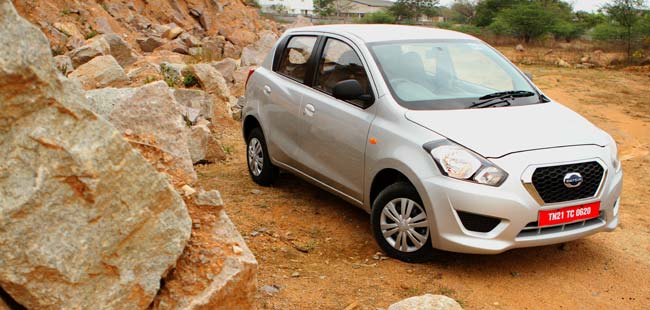
The recent revelations of the second round of crash tests for Indian made cars, Global NCAP - the safety watchdog - created quite a storm in India. Now Global NCAP has decided to ask Nissan Motor CO to withdraw the Datsun Go from the Indian market. In a sensational and unprecedented move, the Chairman of Global NCAP - Max Mosely, has written to Renault - Nissan CEO Carlos Ghosn saying, "As presently engineered the Datsun Go will certainly fail to pass the United Nation's frontal impact regulation. In these circumstances I would urge Nissan to withdraw the Datsun Go from sale in India pending an urgent redesign of the car's body-shell."
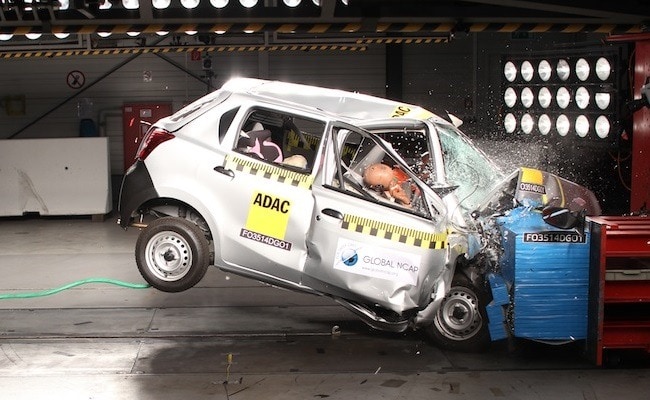
The Datsun Go was crashed in a frontal collision test, at the ADAC crash-testing facility in Landsberg, Germany, where it received a zero-star rating. (Read: NDTV report on the Go test) The Global NCAP test showed the Go as not just having the lack of passive safety equipment like airbags and ABS (anti-lock braking), but also an unstable body shell lacking structural integrity. This according to Global NCAP means that an addition of an airbag would be redundant.
The Go was launched in India earlier this year, as Datsun's first global product when Nissan revived the brand. Datsun is currently positioned as an entry-level and frugal brand with cars made specifically for certain markets only - India, Indonesia, Russia and South Africa. Exports of the made-in-India Go to South Africa, are meant to begin this December.
Global NCAP further believes that it is justified in addressing this directly to Mr Ghosn in his capacity as President of the European Car Manufacturers Association. Max Mosely says, "He (Carlos Ghosn) should now demonstrate leadership both in Nissan and on behalf of the vehicle industry generally that corresponds to the UN's legitimate expectation that automobile safety should be improved during the Decade of Action."
It must be noted that Global NCAP has no jurisdiction or powers - either globally or in India - to demand that the withdrawal of any car model is in fact carried out. It is merely a recommendation it is making to the company. NDTV has sought a direct response from Mr Ghosn's office, however, Nissan India had told NDTV earlier this week that it was studying the results of the crash test. A company spokesperson had added, "Datsun GO meets required local vehicle regulations in India. Datsun GO was developed with a strong intention to deliver the best adapted solutions to the local conditions, from best in class braking and good visibility to durability, seat comfort and reduced motion sickness - all being taken as a package aim to decrease potential risk of road accidents. Safety is important and is a key issue in India. Automotive regulation standards in fast-growing countries are constantly evolving and as a global manufacturer, we are willing to adopt as well as help evolve standards in vehicular safety standards."
It was in January that NDTV had broken the story of the first round of crash testing under the Global NCAP's Safer Cars For India programme. (Watch: The NDTV report on the first crash tests) At the time, 5 popular models - Maruti Suzuki Alto 800, Hyundai i10, Ford Figo, Volkswagen Polo, and the Tata Nano had been tested. All had received zero-star adult protection ratings. VW India then made airbags standard on the Polo, and subsequently earned a four-star safety rating. In November, results of the second round of tests have been released, which gave the Datsun Go and Maruti Suzuki Swift a zero-star rating as well.
Related News


Research More on Datsun Go


Latest Cars


Upcoming Cars


Latest News


 Jaiveer Mehra | Jun 19, 2026Skoda Peaq Electric SUV Interior Previewed Ahead Of Global DebutThe Peaq will be Skoda’s flagship electric SUV in global markets and will be the company’s largest model yet.1 min read
 Jaiveer Mehra | Jun 19, 2026Tata Sierra EV India Launch On June 30Electric derivative of reborn Sierra could feature optional dual-motor all-wheel drive, share battery packs with the Harrier.1 min read
 car&bike Team | Jun 18, 2026Kia Cars To Get Costlier From July 1: Prices Up By Up To 2%Come July 1, 2026, all Kia cars sold in India will become dearer by up to 2 per cent.1 min read
 car&bike Team | Jun 18, 2026Bajaj Pulsar 220F Updated With LED Headlight: Now Priced At Rs 1.36 LakhThe update is accompanied by a price increase of around Rs 8,000, taking the ex-showroom price to Rs 1.36 lakh.2 mins read
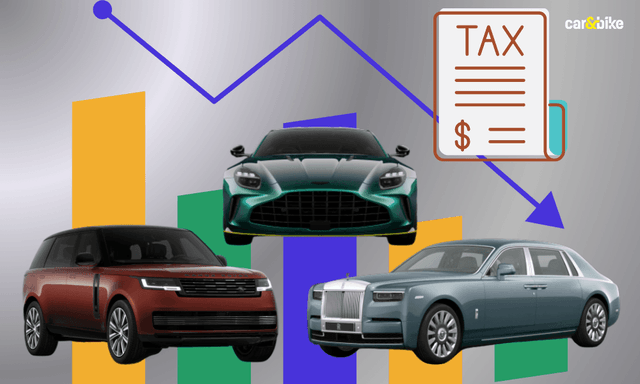 car&bike Team | Jun 18, 2026India-UK FTA To Come Into Effect On July 15; Auto Import Duties To Fall To 10% Under Quota SystemDuties on some internal-combustion passenger vehicles will gradually fall to 10 per cent over five years. Jaguar Land Rover and McLaren have already given us an indication of price revisions.1 min read
 Bilal Firfiray | Jun 17, 2026Porsche 911 GT3 Launched In India At Rs 3.32 CroreConfigurator for the new-gen GT3 has gone live for a base price of Rs 3,32,60,000 without any optional extra.1 min read
 Preetam Bora | Jun 15, 20262026 Yezdi Scrambler Review: The Update That Changes EverythingThe Yezdi Scrambler gets a comprehensive update with an updated engine, revised chassis, reduced weight and proper features list. Does it deliver? Here’s our take.10 mins read
 Preetam Bora | Jun 10, 20262026 BMW F 450 GS Review: A True GS - But Should You Buy It?The GS badge on a BMW means something and always has. Can the new made-in-India BMW F 450 GS truly live up to that legacy? We spent a few days getting familiar with the F 450 GS to see if it’s worth a buy.12 mins read
 Jaiveer Mehra | Jun 10, 20262026 Tata Altroz Long-Term Review: Initial Impressions After 45 DaysTata’s premium hatchback brings a lot to the table, but some rough edges are still apparent.4 mins read
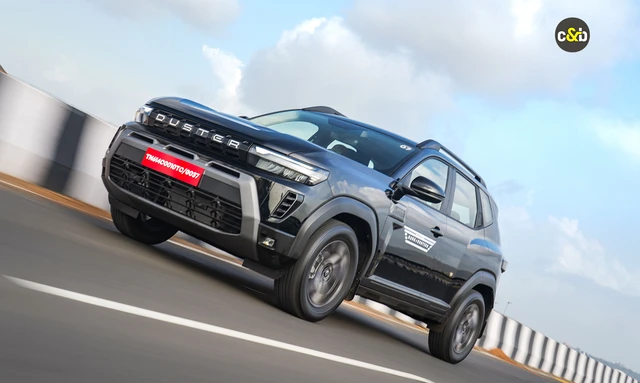 Seshan Vijayraghvan | Jun 9, 2026Renault Duster 1.0-Litre Turbo Review: Small Engine, More Than Enough PerformanceThe Renault Duster's TCe100 engine is the 1.0-litre turbo petrol that makes 99 bhp and 166 Nm of peak torque. And it only comes with a 6-speed manual.6 mins read
 Seshan Vijayraghvan | Jun 8, 20262026 Tata Tiago EV Review: Small EV Gets Big ImprovementsThe 2026 Tata Tiago EV promises a sharper design, segment-first features at sub-Rs. 10 lakh price point, and better real-world range. But does it deliver?1 min read