
Hands free: Automakers Race To Next Level Of Not Quite Self-Driving Cars


Autopilot, ProPilot, CoPilot: Automakers have many names for new systems that allow for hands-free driving, but no safety or performance standards to follow as they roll out the most significant changes to vehicle technology in a generation. Spurred by Tesla Inc's success and eager to start profiting from billions spent on autonomous driving research, automakers are accelerating plans to automate routine driving tasks such as cruising on a highway and make them widely available within five years, industry executives said.
Most traditional automakers until recently had resisted allowing drivers to take their hands off the steering wheel for extended periods, concerned about product liability claims. Now, hands-free driving systems offer a new and sorely needed source of profit for automakers and suppliers such as Aptiv Plc , especially when this technology is packaged with other extra-cost options.
"Consumers are willing to pay extra - sometimes a lot of money - for advanced technology and features that are convenience-oriented rather than strictly focused on safety," IHS principal analyst Jeremy Carlson said.
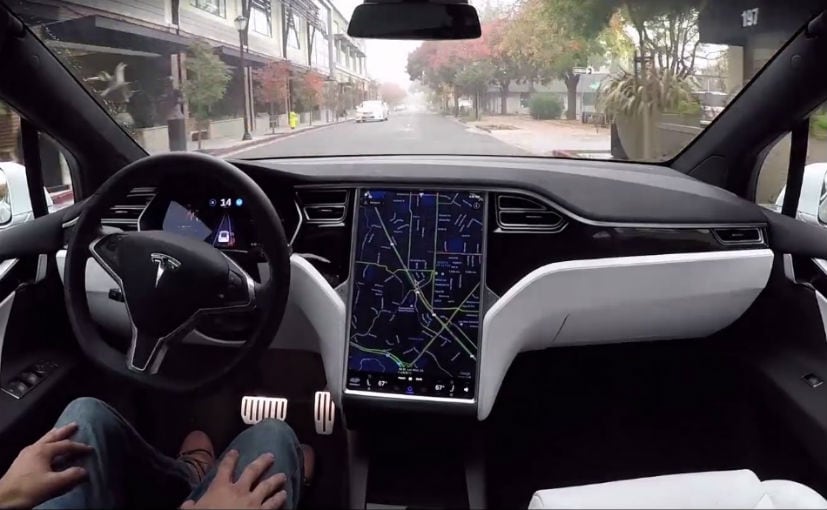
Tesla's Autopilot was one of the industry's first semi-automated driving systems
To address concerns about liability, some automakers are installing cameras inside vehicles, along with warning systems, to ensure drivers remain attentive and ready to take over manual control when necessary.
Critics charge that the technology to automate highway driving, parking and navigation in stop-and-go traffic is being deployed in a regulatory vacuum where an absence of industry-wide standards and common terminology creates confusion about what the systems can safely do.
The U.S. National Highway Traffic Safety Administration, in a written response to Reuters, said it is still conducting research and gathering data on hands-free technologies, which it said are "not sufficiently mature" to require formal federal standards.
Former NHTSA chief Mark Rosekind said the industry may need to further develop the technology before federal mandates are needed, but agreed things are confusing for consumers.
"If people don't know what they've got and how it actually operates, that's a safety issue," added Rosekind, who is chief safety innovation officer at self-driving startup Zoox, which is being acquired by Amazon.com Inc.
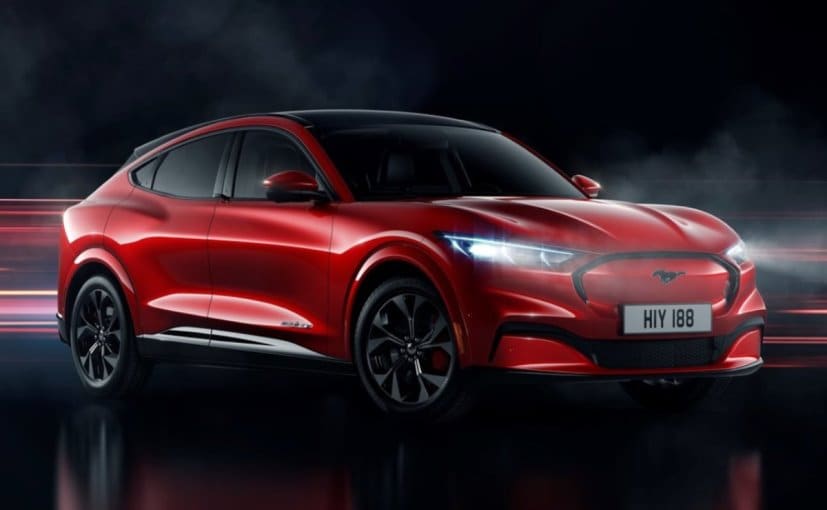
Ford is also set to launch handsfree driving system in 2021 and it will be introduced with the all-electric Mustang Mach-E
Jason Levine, head of the Center for Auto Safety advocacy group, said NHTSA should develop minimum performance standards. "Even if consumers know what the feature is supposed to do, there's no standard to be sure it's even performing as advertised," he said.
Tesla's Autopilot, one of the industry's first semi-automated driving systems, has been criticized by the National Transportation Safety Board for allowing drivers to turn their attention from the road, leading to deadly accidents. NHTSA has investigated 15 crashes since 2016 involving Tesla vehicles equipped with Autopilot.
Autopilot was promoted initially as "hands free," but Tesla quickly shifted that position and now insists that drivers must keep their hands on the steering wheel when Autopilot is deployed. On Tuesday, a German court banned Tesla from repeating misleading claims in advertising about its driver assistance systems, including that its vehicles were capable of autonomous driving.
In the absence of regulations or standards, a group including J.D. Power, Consumer Reports and AAA is trying to convince automakers to agree on standard terminology and definitions, an initiative that has been endorsed by the U.S. Department of Transportation and the Society of Automotive Engineers.
But even top industry research groups do not agree on labels. Rather than "hands free," J.D. Power uses the term "active driving assistance" while IHS Markit prefers "extended hands-off driving."
Detroit automakers have been less aggressive than Tesla in labeling their semi-automated driving systems.
Increasing numbers of consumers are buying or leasing new vehicles with Advanced Driving Assistance Systems, according to J.D. Power's Kristin Kolodge, including such features as automated lane keeping (70% of new vehicles) and adaptive cruise control (77%), two key components of most hands-free driving systems.
Automakers say wider deployment of automated driving technology will lead to fewer crashes and lower auto insurance rates for consumers. So far, insurance providers have been wary, saying they need more data to show that the technology reduces costs related to accidents.
"We're looking at it from a safety standpoint. Do these technologies improve the safety of those that are on the roadway?" said David Harkey, president of the Insurance Institute for Highway Safety, a research arm of the insurance industry.
Related News



Latest Cars


Upcoming Cars


Latest News


 car&bike Team | Jul 7, 2026TVS Apache Range Crosses 70 Lakh Customers GloballyThe milestone comes more than 20 years after the performance-focused lineup was first introduced in 2005.1 min read
 car&bike Team | Jul 7, 2026TVS Leads Electric Two-Wheeler Retail Sales In June 2026According to data released by the Federation of Automobile Dealers Association (FADA), 1.93 lakh electric two-wheelers were sold in June 2026.1 min read
 Jafar Rizvi | Jul 7, 2026Hennessey Venom F5-M Debuts With Gated Manual Gearbox And 2,031 bhpThe Venom F5-M is a manual-equipped version of Hennessey’s flagship hypercar that pairs a six-speed gated shifter with a twin-turbo V8.3 mins read
 Seshan Vijayraghvan | Jul 7, 2026Mercedes-Benz India Posts Record H1 Sales Of 9,768 Units; Q2 Retail Reaches 4,637 UnitsMercedes-Benz India says the strong H1 was propelled by strong Q2, which witnessed double-digit growth of 10 per cent y-o-y, with 4637 units of retail sales.2 mins read
 Jaiveer Mehra | Jul 7, 2026JSW MG Motor India To Launch Two EVs, One Plug-In Hybrid In FY2027The carmaker is set to unveil the first of its new ‘New Energy Vehicles’ for India on July 16.4 mins read
 car&bike Team | Jul 7, 2026Maruti Suzuki Victoris Prices Slashed By Rs 39,000The revision applies to the Victoris ZXi trim, while prices for the CNG and Strong Hybrid variants remain unchanged.2 mins read
 Seshan Vijayraghvan | Jul 7, 2026Tata Altroz Petrol DCA Long-Term Review: Intercity & Highway Driving ReportWe tested the Tata Altroz Petro DCA’s highway manners, intercity performance, and real-world fuel efficiency.1 min read
 Seshan Vijayraghvan | Jun 29, 2026Renault Kiger vs Toyota Urban Cruiser Taisor: Which Underdog Deserves Your Money?Both the Kiger and the Taisor promise strong performance, solid features, comfortable cabins and everyday usability, all without breaking the bank. But which of these underrated subcompact SUVs deserves your money? Let's find out.1 min read
 Seshan Vijayraghvan | Jun 29, 2026Skoda Kodiaq RS Review: The Best Kodiaq Yet?The Skoda Kodiaq RS is finally here, and it's every bit as exciting as I expected. But was it worth the wait?7 mins read
 Bilal Firfiray | Jun 28, 2026BMW X6 M60i Review: It’s Back And HOW!The BMW X6 M60i blends a 530bhp twin-turbo V8, with its unmistakable coupe-SUV styling. There’s plenty of character, but is it worth your money?6 mins read
 Janak Sorap | Jun 25, 2026350cc Bajaj Dominar 400 Review: Same Character, Lower PriceA slightly lower displacement engine, a significantly lower price tag and nearly the same performance — the Bajaj Dominar 400 aims to be smarter rather than faster.6 mins read