
Honda, Suzuki, Yamaha And Kawasaki Form Association To Co-Develop Small Hydrogen Combustion Engines


- Honda, Suzuki, Yamaha and Kawasaki to work on small engines powered by liquefied hydrogen.
- Tech research association named Hydrogen Small mobility & Engine technology (HySE).
- Toyota will leverage HySE’s technical know-how to develop hydrogen engines for larger vehicles.
As it seeks alternatives to a purely electric future for mobility, Japan has greenlit the creation of a hydrogen fuel research association, uniting four of the country’s leading automotive players – Honda, Suzuki, Yamaha and Kawasaki. The four brands have come together to form Hydrogen Small Mobility & Engine Technology (HySE), a technical powerhouse that will specifically work on hydrogen combustion engines for small vehicles, such as two-wheelers and last-mile mobility solutions. With the prospect of full electrification looming large and casting a shadow of uncertainty over jobs in the country’s automotive industry, Japan’s Ministry of Economy, Trade and Industry has approved the creation of HySE to accelerate research on hydrogen in the hope of establishing it as a genuine alternative to battery power.
Also Read: Kawasaki Reportedly Developing Hydrogen Technology For Engines
As per the roles defined for each manufacturer in HySE, Honda has been tasked with the ‘model-based development’ of hydrogen-powered engines, which will entail designing the hardware as well as the software of such engines and the vehicles they will power. Suzuki, meanwhile, will conduct studies on the functionality, performance, and reliability aspects of these engines.
Also Read: Honda To Start Producing New Hydrogen Fuel Cell System Co-Developed With GM
Kawasaki has previously showcased a hydrogen-powered prototype motorcycle using a modified H2 engine.
Fleshing out the requirements for a hydrogen refuelling system and hydrogen tanks for small vehicles is Yamaha’s priority, while Kawasaki will lead the development of auxiliary equipment required for a fuel supply system and tanks, as well as the equipment installed between the fuel tank and the injector. Yamaha and Kawasaki will also come together to study the functionality, performance, and reliability of small hydrogen-powered engines in real-world conditions.
Also Read: How Do Fuel Cell Electric Vehicles Work Using Hydrogen?
Commenting on the announcement, Kenji Komatsu, Chairman nominee of HySE and Executive Officer of Technical Research & Development Center, Yamaha Motor Co. Ltd., said, “We are extremely pleased to announce the planned formation of the association. There are many challenges in the development of hydrogen-powered engines, but we hope to see the association’s activities advance the fundamental research in order to meet those challenges. We are committed to this endeavour with a sense of mission to preserve the use of internal combustion engines, which epitomise the long-time efforts that our predecessors have invested.”
Also Read: Yamaha, Kawasaki Collaborate To Build Hydrogen Engines
However, the association is acutely aware of the technical challenges associated with using hydrogen as a fuel for small vehicles. Some of the obvious hurdles include the fast flame speed of hydrogen, as well as its large region of ignition, which results in unstable combustion. There’s also the issue of storage, and the limited fuel tank capacity available on smaller vehicles in general. HySE is hopeful the expertise and tech developed by its members for gasoline-powered engines over decades will be instrumental in achieving a breakthrough and make hydrogen-powered engines feasible for small vehicles in the future.
Kawasaki showcased a novel canister-based hydrogen storage solution for motorcycles.
As part of a larger push from the Japanese auto industry, car giant Toyota will leverage HySE’s research and developmental work to make further inroads into making hydrogen combustion engines feasible for cars and SUVs.
So far, there have been no meaningful developments relating to hydrogen-powered engines for road-going vehicles. Honda and Toyota have experience with hydrogen fuel cell electric vehicles (FCEV), but have never put a vehicle with a hydrogen combustion engine into production. Kawasaki has previously showcased a hydrogen-powered motorcycle prototype (using a modified Ninja H2 engine) as well as a novel canister-based hydrogen fuel storage solution for motorcycles.
For the last few years, Toyota has trialled hydrogen combustion engines in domestic motorsport competitions, and has tried to highlight the need for alternative zero-emissions solutions by pointing out how millions of jobs would be lost in the country if all vehicle manufacturers made a complete shift to battery electric vehicles.
Related News


Latest Cars


Upcoming Cars


Trending News
 1 min readTriumph Tracker 400 Unveiled in UK


Latest News


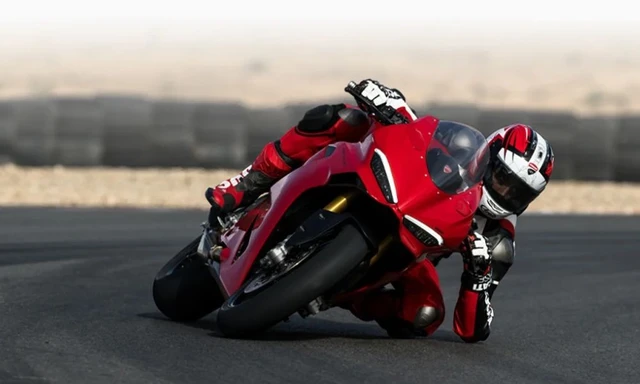 Carandbike Team | Dec 17, 20252025 Ducati Panigale V2, Streetfighter V2 Recalled In The USThe recall states that two ABS fuses may have been inadvertently fitted in the wrong positions during wiring assembly and could increase the risk of a crash.1 min read
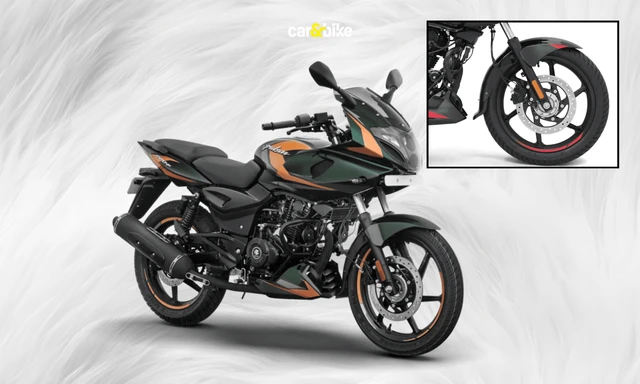 Jafar Rizvi | Dec 17, 2025Updated Bajaj Pulsar 220F Does Not Get Dual-Channel ABS; Company Issues ClarificationBajaj Auto has confirmed that the updated Pulsar 220F does not feature dual-channel ABS, contradicting earlier reports.1 min read
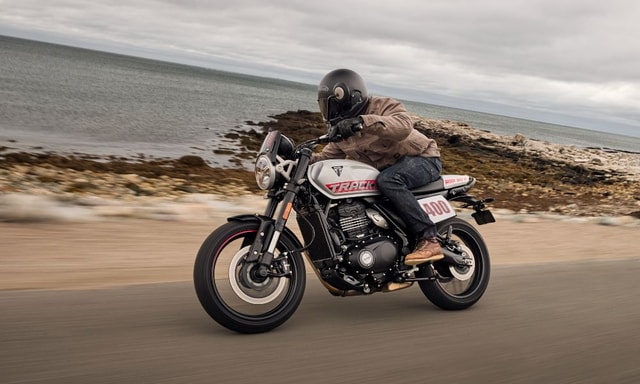 Janak Sorap | Dec 16, 2025Triumph Tracker 400 Unveiled in UKBased on the Speed 400’s platform with the tune from the Thruxton 400.1 min read
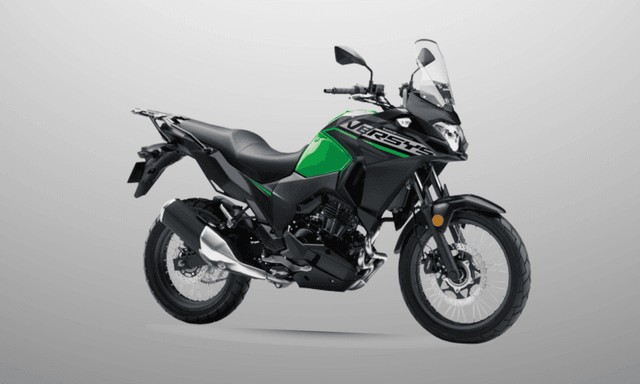 car&bike Team | Dec 16, 2025Kawasaki Versys-X 300 Offered With Rs 25,000 DiscountAfter the discount, the entry-level Kawasaki Adventurer tourer is priced at Rs 3.24 lakh (ex-showroom).3 mins read
 car&bike Team | Dec 16, 20252026 MG Hector Prices, Variant-Wise Features ExplainedThe updated Hector is sold in 5 trim levels - Style, Select Pro, Smart Pro, Sharp Pro, Savvy Pro.2 mins read
 Janak Sorap | Dec 16, 2025Yamaha R3 and MT-03 Discontinued in India; Here’s WhyThe motorcycles had revied around a price revision of more than a lakh earlier this year, followed by additional discounts due to GST reform, and yet have failed to secure any momentum.1 min read
 Janak Sorap | Dec 11, 2025Harley-Davidson X440 T First Ride Review: Smarter and SharperHarley-Davidson has taken the X440 and given it a more focused and engaging twist. The result is the X440 T—essentially the same platform but updated in areas that give the motorcycle more appeal and riders more thrill.5 mins read
 Shams Raza Naqvi | Dec 10, 20252025 Mini Cooper Convertible Review: More Colour On Indian RoadsThe updated Mini Cooper Convertible is set to be launched in the Indian market in the next few days. We drive it around Jaisalmer for a quick review.1 min read
 Bilal Firfiray | Dec 8, 2025Tata Sierra Review: India’s New Favourite?Marking its return after a few decades, the reborn Sierra has made everyone sit up and take notice. But is it worth the hype?10 mins read
 Girish Karkera | Dec 4, 20252026 Honda Prelude First Drive: Domesticated Civic Type RA sporty-looking coupe built to give customers a taste of performance but not at the expense of everyday practicality.5 mins read
 Seshan Vijayraghvan | Nov 29, 2025Mahindra XEV 9S First Drive Review: Big Electric SUV, Bigger ExpectationsThe XEV 9S lands at a time when the EV crowd is growing fast. It’s a big, born-electric, three-row SUV that starts under 20 lakh. It sits close to the XUV700 in size, but the brief is very different. Here’s what it’s like on the road.11 mins read