
Toyota’s Multi-Pathway Strategy Takes Center Stage At Japan Mobility Show

- New-gen hybrid engines to be launched in the future
- EV batteries with longer life and range on the anvil
- Hydrogen and fuel cell vehicles also remain a focus area
The messaging from Toyota is clear: the world’s largest automobile group is embracing all automotive technologies—without abandoning any. This stance was reiterated multiple times at the recently concluded Japan Mobility Show, where top management emphasised that the brand intends to offer every kind of powertrain customers may want. Toyota has now been the world’s highest-selling automaker for five consecutive years, surpassing the 10-million-units mark in 2024.
The Japan Mobility Show was a major stage for Toyota, with several group companies showcasing a wide range of vehicles at the biennial event. Toyota itself led the charge with diverse mobility solutions, but the undeniable star was the Land Cruiser FJ, the smallest member of the Land Cruiser family. It drew significant attention and is also expected to make its way to India in the future. The new Corolla concept was another highlight, previewing a bold design shift for the brand’s global bestseller.
Also Read: Don’t Need To Protect Image And Constraints: Lexus President Takashi Watanabe
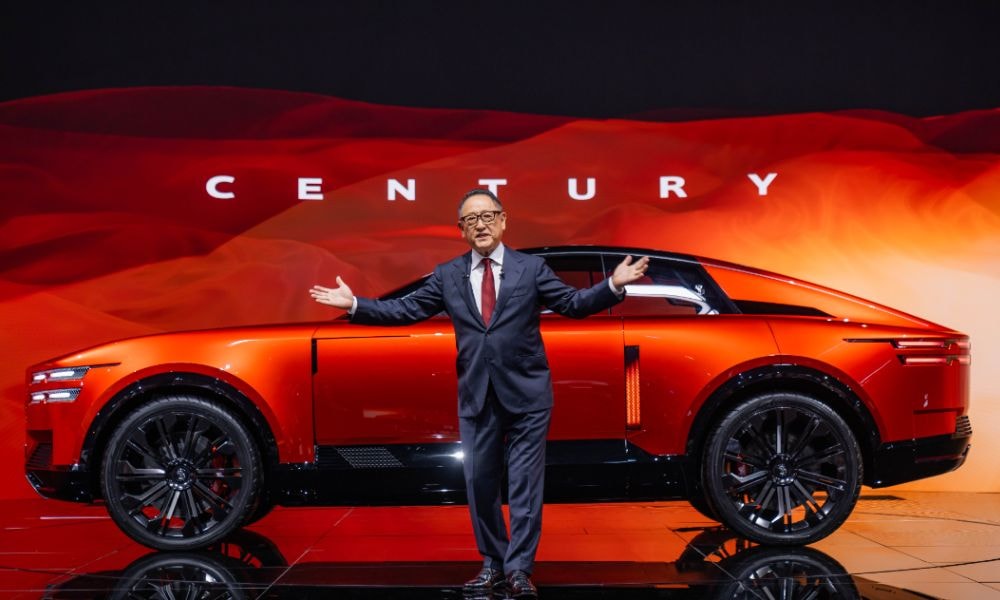
In a significant strategic move, Century has now overtaken Lexus as Toyota’s flagship brand. Century displayed a futuristic coupe concept aimed at competing with ultra-luxury marques such as Rolls-Royce and Bentley. Lexus, meanwhile, showcased several striking concepts of its own, including a unique six-wheel MPV called the LS. Notably, Lexus announced that the “LS” name will no longer refer only to its flagship sedan but will extend across a series of models with various body styles.
Beyond the products, the trip to Tokyo offered valuable insights into Toyota’s ongoing efforts in new technologies, drivetrains, and fuels. Toyota’s multi-pathway approach is grounded in the belief that no two global markets are alike. Each region faces unique challenges, and therefore Toyota plans to offer a full suite of technologies— ICE, electric, hybrid, hydrogen, and fuel-cell vehicles—depending on local needs. The group also remains committed to exploring alternative materials for clean-energy production.
Toyota’s Chief Technology Officer, Hiroki Nakajima, explained, “Toyota is committed to all powertrains depending on markets. In some regions, it makes more sense to use hybrids. If we just focus on CO₂, it will be difficult. We have to look at what is the most optimised car for carbon-footprint reduction. Convenience for customers is also important.” Toyota is also working to decarbonise existing vehicles, of which 97% still rely on internal-combustion engines.
Also Read: Japan Mobility Show 2025: Toyota’s One Of Its Kind Line-up On Home Turf
Nakajima further noted, “We cannot predict what the world will be like, so we need to be prepared. No one talked about hybrids before, but now it is one of the most popular technologies. We need to ensure we make attractive vehicles so we can generate revenue and continue developing a multi-pathway approach.” A recent example is the newly unveiled Hilux Electric, a zero-emission SUV that promises the same capability as its conventional counterpart.
Toyota’s 1.5-litre petrol-hybrid drivetrain, already popular in India through models like the Maruti Suzuki Grand Vitara and Toyota Urban Cruiser Hyryder, is set for a next-generation upgrade in 2027. This future-ready powertrain is being positioned as an optimal engine for electrification, supporting fuel diversification while offering increased power and improved efficiency. Such advancements could significantly accelerate the adoption of strong-hybrid technology in markets like India.
Also Read: All-New Toyota Hilux Unveiled; Gets EV Powertrain For First Time; FCEV Also Confirmed
Akihito Sarada, President of Toyota’s Software Development Centre, reiterated India’s importance in the company’s global strategy: “India is an important market for Toyota, and we want to develop the best cars for Indian people. We will use local engineers and continue to bring peace of mind to Indian customers.” On the subject of ethanol—a major area of focus for India—he added that Toyota is exploring the usage of non-food materials to produce the biofuel, enabling broader global adoption.
Takashi Uehara, President of Toyota’s Powertrain Company, stated, “We have two engines for ethanol compliance. It’s a good fuel for the future. Most engines can handle E20 fuel. In India, we are working on biofuel with the government and stakeholders.” The brand has already taken the lead by showcasing the flex-fuel Innova Hycross, capable of running on up to 85% ethanol. The hybrid MPV relies heavily on its electric system and can deliver up to 35 kmpl.
Another crucial frontier is Toyota’s extensive work on solid-state batteries. The group is developing batteries with side terminals instead of traditional top-mounted terminals, resulting in lighter, lower-profile units with significantly higher energy density. Their future potential includes delivering three times the driving range and four times the lifespan of current EV batteries—a breakthrough that could vastly improve EV affordability, performance, and operating costs.
Hydrogen and fuel-cell technologies also continue to be key pillars of Toyota’s strategy. The company is actively making a case for building a hydrogen ecosystem, with particular focus on commercial vehicles. In India, Toyota previously introduced the Mirai, which runs on this technology for pilot use. The vehicle was used extensively by Union Minister of Road, Transport and Highways Nitin Gadkari. According to Toyota, this technology lowers fuel costs and requires minimal maintenance.
Overall, Toyota is undertaking significant efforts in carbon-neutral and next-generation fuel solutions. Its software-defined-vehicle technologies are also contributing to safer mobility, helping reduce road accidents. Improvements in safety infrastructure are also part of the company’s broader vision. As the world’s largest automotive group, Toyota is living up to its reputation—innovating across all fronts and ensuring no one is left behind.


Latest News


 Seshan Vijayraghvan | Jul 8, 20262026 Land Rover Defender Updated; Gets New Vertex Trim, Accessory Kit And 6-Seat Layout OptionIn addition to the new Defender Vertex trim and the new upgrades, Land Rover has also introduced a special accessory pack for the luxury off-roader.1 min read
 Preetam Bora | Jul 8, 2026Opinion: India’s Ethanol Blending Policy Needs More Clarity & TransparencyIndia needs a clearer, more transparent and consumer-focussed approach to roll out ethanol blends in petrol. The current confusion will only add to less public confidence.6 mins read
 Jafar Rizvi | Jul 8, 2026Yamaha Aerox Electric Launched In India At Rs 2.82 LakhThe Aerox Electric costs nearly twice as much as the petrol-powered Aerox 155.2 mins read
 car&bike Team | Jul 8, 2026Nissan Tekton SUV To Debut Tomorrow: What To ExpectBased on the Renault Duster, the Tekton gets its own design inside and out while sharing the same platform and engine options.3 mins read
 car&bike Team | Jul 8, 2026New Mercedes-Benz GLB EV India Launch ConfirmedSecond-gen electric GLB is underpinned by Mercedes’ new MMA architecture and promises to offer more tech, greater cabin space and more useable range.1 min read
 Bilal Firfiray | Jul 8, 2026One-Off Rolls-Royce Phantom Regatta Unveiled; Inspired By English Sailing HeritageRolls-Royce unveiled the one-off Phantom Regatta, a bespoke Phantom Extended inspired by England's sailing heritage, ahead of its Goodwood Festival of Speed debut.1 min read
 Seshan Vijayraghvan | Jul 7, 2026Tata Altroz Petrol DCA Long-Term Review: Intercity & Highway Driving ReportWe tested the Tata Altroz Petro DCA’s highway manners, intercity performance, and real-world fuel efficiency.1 min read
 Seshan Vijayraghvan | Jun 29, 2026Renault Kiger vs Toyota Urban Cruiser Taisor: Which Underdog Deserves Your Money?Both the Kiger and the Taisor promise strong performance, solid features, comfortable cabins and everyday usability, all without breaking the bank. But which of these underrated subcompact SUVs deserves your money? Let's find out.1 min read
 Seshan Vijayraghvan | Jun 29, 2026Skoda Kodiaq RS Review: The Best Kodiaq Yet?The Skoda Kodiaq RS is finally here, and it's every bit as exciting as I expected. But was it worth the wait?7 mins read
 Bilal Firfiray | Jun 28, 2026BMW X6 M60i Review: It’s Back And HOW!The BMW X6 M60i blends a 530bhp twin-turbo V8, with its unmistakable coupe-SUV styling. There’s plenty of character, but is it worth your money?6 mins read
 Janak Sorap | Jun 25, 2026350cc Bajaj Dominar 400 Review: Same Character, Lower PriceA slightly lower displacement engine, a significantly lower price tag and nearly the same performance — the Bajaj Dominar 400 aims to be smarter rather than faster.6 mins read