
Level 2 ADAS Systems To Be Mainstay Of Auto Industry


- Level 2+ ADAS tech to outsell basic L2 systems by 2035
- Demand for ADAS systems expected to rise with upcoming regulations
- Indian road conditions could require tailoring of systems
At the third edition of the ADAS Show held in recent weeks, it was revealed that Level 2 ADAS looks set to be the most widely used active safety tech going forward. ADAS has been gaining popularity across the globe, with many global safety bodies such as Euro NCAP, Japan NCAP and more requiring the system to be present in vehicles to be able to qualify for full safety scores.
“The projection from 2030 to 2035, which is not very far. We would expect more and more vehicles to be getting into L2 & L2+. And that is across geography. Of course, in North America or Western Europe, they have probably taken a bit of leeway, but this part of the world, which includes Asia Pacific, it's a very different ball game, which is emerging,” Abhijit Sengupta, Senior Director & Head of Business, Southeast Asia and India, HERE Technologies, said during a presentation.
In his presentation, Sengupta previewed the growth of ADAS tech over the next 10 years in graphical format, suggesting that sales of vehicles with Level 2 and Level 2+ ADAS across all markets could cross 7 crore units by 2035. The graphics also pointed to a growth in Level 2+ ADAS system availability going forward, with the system expected to outsell lower-spec L2 systems. Penetration of Level 3 and higher systems was also projected to grow but at a much slower pace.
L2 ADAS systems generally refer to the basic ADAS suits requiring hands-on and eyes-on driving, while L2+ does offer some hands-off driving features. Higher systems call for hands-off and eyes-off driving, all the way to driverless vehicles.
Speaking separately to car&bike on Level 3 and higher safety systems, Sengupta later said, “So Level 3 and above it takes a lot of other sets of information and has to handle lots of variables. Level 3 and Level 3+ is a lot of hands-free driving. The software needs to be ready for similar driving conditions. We do not have this sort of software ready yet for India, maybe at some point of time."
Demand For ADAS Systems Could Rise In India Due To Regulations
Going in line with this projection was the announcement from auto tech firm Mobileye, which said it would start testing its Level 2+ ADAS tech in India from 2027. Speaking to car&bike, Mobileye India Director of Business Development & Strategy Dhairyashil Gaikwad said that the company did see a market for Level 2+ systems in India.
“There is a propensity of customers to buy cars above $25,000 and $30,000, and in cars, the main differentiation is happening specifically in two-three key areas, like the infotainment system and the safety system. And safety is where the differentiation is being provided by the hands-free eyes-on systems,” Gaekwad said.
He added that a core driving factor was also the upcoming regulations, including the updates set to come in under Bharat NCAP 2.0 where ADAS technologies could play a role in receiving a 5-star rating.
ADAS is set to also become mandatory in heavy commercial vehicles by late 2027, which Mobileye projects could potentially increase volumes by over 1 million units. Further regulations in relation to passenger vehicles could further increase demand.
Indian Road Conditions Require Tailoring Of ADAS
A common point brought up by all speakers, however were the challenges faced for ADAS adoption in India - mainly India’s ever-changing and often chaotic road conditions.
Speaking at the ADAS show Nina Roeck, VP Software - Drive and Comfort at Renault Group said that ADAS systems were generally “designed for structured roads for standard road users and also for very predictable traffic with rule-based driving,” though the reality in India was much different where vehicles negotiated tight spaces and “non-standard” road users including load carrying two-wheelers, animals, autorichshaws, pedestrians, merging traffic and more.
“It’s just completely different to what the ADAS system is trained for in other parts of the world,” Roeck commented.
“So when designing ADAS for India, we have to move from theory to trust. First of all, we have to tune the perception for India. We have to detect two-wheelers, pedestrains and all kind of other participants in the traffic in a very robust way. And we have to not only detect them, but we also have to track them,” she added.
Sengupta had a similar viewpoint when talking about ADAS technologies for India. He said, “As we all know, those who have driven in India, they all have similar experiences. There are lots of variables which are on the road. The data set which needs to be analysed is immense - from the animals on the roads to the biggest types of vehicles and pedestrian crossings, there are multiple of those barriers where the data needs to be trained,” he added.


Latest News


 car&bike Team | Jul 25, 2026Jeep Meridian 85th Anniversary Edition Launched At Rs 36.05 LakhLimited to 85 units, the special edition gets cosmetic changes and also features the CARA AI voice assistant.1 min read
 car&bike Team | Jul 25, 2026River Indie Electric Scooter Crosses 50,000 Units Production MilestoneThe milestone comes less than three years after the first unit rolled out of the company's Hoskote manufacturing facility.2 mins read
 car&bike Team | Jul 25, 20262026 Maruti Brezza Facelift Fuel Efficiency Figures RevealedThe updated model returns up to 26.90 km/kg in CNG guise, while the newly introduced turbo-petrol delivers a claimed 20.47 kmpl.2 mins read
 Jafar Rizvi | Jul 25, 2026Honda ZR-V Hybrid SUV Launched In India At Rs 47.99 LakhThe ZR-V is Honda’s first hybrid SUV for India and arrives as a CBU.1 min read
 Jafar Rizvi | Jul 24, 20262026 Maruti Brezza Facelift: Variants, Features, Engine Options ExplainedThe 2026 Maruti Suzuki Brezza is offered in four trim levels: LXi, VXi, ZXi and ZXi+ and with two engine options.5 mins read
 Jafar Rizvi | Jul 24, 20262026 Maruti Brezza Facelift Launches With Three Major FirstsThe 2026 Maruti Suzuki Brezza has arrived, and along with carrying a five-star Bharat NCAP rating, the model brings three firsts for both the Brezza and, in one case, Maruti itself.2 mins read
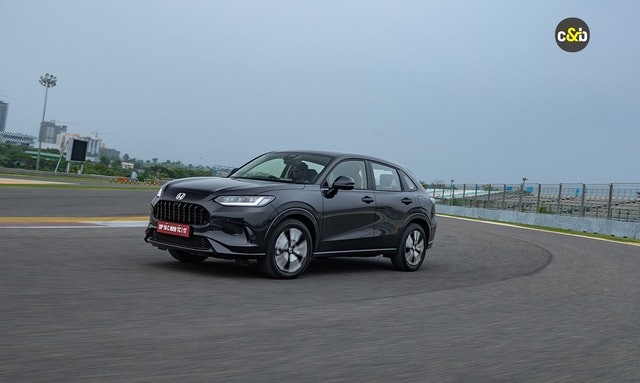 Bilal Firfiray | Jul 24, 2026Honda ZR-V Review: Who Is It For?Honda has brought the new ZR-V to India as their current flagship offering. It’s a CBU, it’s a hybrid, and it’s here for a limited few. Who is it for though?1 min read
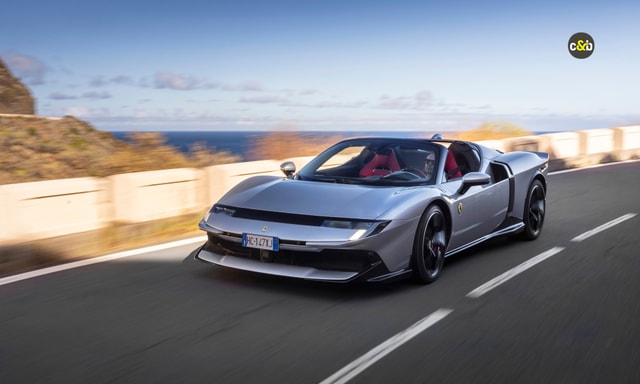 Shams Raza Naqvi | Jul 15, 2026Ferrari 849 Testarossa Spider Driven: Rs. 11.25 Crore Meets 1,000 bhpWe got behind the wheel of the most powerful convertible from Ferrari. What makes the 849 Testarossa Spider Special? We tell you.1 min read
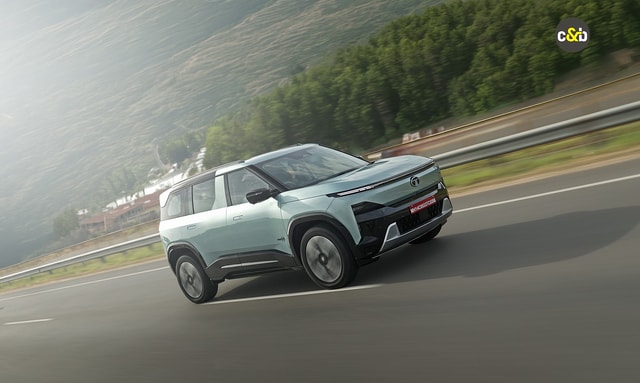 Bilal Firfiray | Jul 12, 2026Tata Sierra EV Review: Reborn In The Electric AgeThe Tata Sierra EV isn’t drastically different from its ICE counterpart when it comes to design. But being the seventh electric offering from the Indian brand, it has gotten a few things right, and very few things wrong. But is it a compelling package to buy?5 mins read
 Jafar Rizvi | Jul 13, 2026TVS Orbiter Long-Term Review (Report 1): Settling In Takes TimeFirst impressions weren't the strongest, but the Orbiter has made a mark in its first month in the car&bike garage.5 mins read
 Seshan Vijayraghvan | Jul 7, 2026Tata Altroz Petrol DCA Long-Term Review: Intercity & Highway Driving ReportWe tested the Tata Altroz Petro DCA’s highway manners, intercity performance, and real-world fuel efficiency.1 min read