
How Auto Supplier Harman Learned To Fight Cyber Carjackers


When researchers remotely hacked a Jeep Cherokee in 2015, slowing it to a crawl in the middle of a U.S. highway, the portal the hackers used was an infotainment system made by supplier Harman International. Harman, now part of Samsung Electronics, has since developed its own cyber security product, and bought Israel-based cyber security company TowerSec for $70 million to help it overhaul manufacturing processes and scrutinize third-party supplier software.
The expensive efforts have prevented another public breach and helped it become a key player in automotive cyber security, but they show the strain suppliers and automakers face in dealing with this new dimension of automotive technology.
"At the end of the day, automotive is a very competitive business with small margins. If a competitor wants to eat the cost to win the business, you have to do the same thing," said Geoffrey Wood, Harman's director of cyber security business development, who joined the company in late 2016.The automotive cyber security market has seen exponential growth. While global revenue was at around $16 million in 2017, it is expected to reach $2.3 billion in 2025, according to IHS Markit, driven by Harman, Garrett Motion Inc, German suppliers Continental AG, Robert Bosch and a range of smaller U.S. and Israeli companies.
Securing cars from hackers is a complex task for these companies. Modern vehicles run on 100 million lines of code, are equipped with hundreds of different technologies and can have up to 150 electronic control units using various operating systems.
Unlike consumer electronics, cars can stay in use for decades, long after operating systems and component software cease being supported through updates that patch vulnerabilities - a challenge the industry is still grappling with.
Automotive cyber security requirements now number in the hundreds of pages from just a page five years ago, according to interviews with a dozen automotive cyber security professionals.For its 2024 vehicles under development at BMW AG, for example, suppliers are required to ensure that driving system control units have no direct connection to customers' internet-connected devices, said Michael Gruffke, head of security system functions at BMW, which sources parts from Harman.
Small auto suppliers with thin profit margins are often the weakest link for hacks, said Rotem Bar, a cyber security professional until recently at Israeli company Cy Motive which has partnered with German automaker Volkswagen AG.
But automakers typically still hand off testing and ensuring the security of data systems to their subcontractors, industry experts said.
"It's really shifting the burden onto the suppliers because the automaker is not able to test and verify everything along the supply chain," said Dennis Kengo Oka, senior solutions architect at Synopsys Inc (SNPS.O), who conducts research on automotive cyber security.
At BMW, more than 70 per cent of the components in its vehicles are manufactured by suppliers. "We therefore must expect our partners to take responsibility for implementing cybersecurity in respective deliveries," the automaker said in a statement.General Motors (GM.N) said in a statement that it handles "a significant amount of work" related to security and testing without passing the expense to its supply chain partners.
Ford Motor Co and Fiat Chrysler did not respond to requests for comment. Volkswagen and Daimler AG declined to comment.
BUILDING CYBER SECURITY BUSINESS
Harman saw its Jeep hack experience as a viable business opportunity: the supplier today sells cyber security software that allows automakers to monitor their fleets and provide over-the-air software updates. Analysts at IHS Markit consider Harman one of the top players in that segment, with some 20 automakers using its over-the-air services.
Harman does not break out revenue for that business. But the company does try to recover some costs by charging higher prices for advanced security."We have to educate our sales people in conversations with carmakers' purchasing departments and say 'don't let this go without adding cyber security to your quote'," said Amy Chu, Harman's senior director of automotive product security.
Asaf Atzmon, the Israel-based vice president and general manager for automotive cyber security, said Harman has come a long way since he joined in March 2016 as part of the TowerSec deal.
At the time, Harman employed only some security architects, and the company later changed its organizational structure, appointing or hiring professionals such as Wood and Chu to oversee cyber security efforts, Atzmon said.
The changes helped Harman consider cyber security issues at every stage of the production process, creating a checklist for engineers that includes scanning third-party software for bugs, increasing Harman's own cyber security defences and creating a risk analysis of potential vulnerabilities for every component.
Instead of simply adding comfort features such as Bluetooth, for example, designers now first have to show how they would secure such a connection.A particular challenge is securing vehicles over their entire lifecycle, said Chu. Cybersecurity professionals are used to simply issuing software patches, but automotive engineers caution that only a fraction of vehicles can receive over-the-air updates.
During the Jeep hack, costly recalls had to be issued for 1.4 million vehicles to fix software flaws at dealerships. Tesla Inc, which offers over-the-air updates as a standard for even safety-critical functions, is so far the exception.
"Things are just not that easy for us in the auto industry," said Chu.
Conscious of the many challenges, the industry over the past years has come together in a rare show of collaboration. Automakers in 2015, soon after the Jeep hack, created a group to share threats and vulnerabilities and companies currently try to define industry-wide cyber security standards that in turn could lower costs to suppliers.
Still, common standards are not expected to be published before next year. And some of the standards might be watered down to protect smaller suppliers and ensure they have the resources to comply, said Victor Murray, a group leader at the Southwest Research Institute, which tests cars and components for cyber security vulnerabilities.
"You want to be careful and not box anybody in because if smaller suppliers get overwhelmed with mandates they're out of business," Murray said.

Latest Cars


Upcoming Cars


Latest News


 car&bike Team | Jul 25, 2026Jeep Meridian 85th Anniversary Edition Launched At Rs 36.05 LakhLimited to 85 units, the special edition gets cosmetic changes and also features the CARA AI voice assistant.1 min read
 car&bike Team | Jul 25, 2026River Indie Electric Scooter Crosses 50,000 Units Production MilestoneThe milestone comes less than three years after the first unit rolled out of the company's Hoskote manufacturing facility.2 mins read
 car&bike Team | Jul 25, 20262026 Maruti Brezza Facelift Fuel Efficiency Figures RevealedThe updated model returns up to 26.90 km/kg in CNG guise, while the newly introduced turbo-petrol delivers a claimed 20.47 kmpl.2 mins read
 Jafar Rizvi | Jul 25, 2026Honda ZR-V Hybrid SUV Launched In India At Rs 47.99 LakhThe ZR-V is Honda’s first hybrid SUV for India and arrives as a CBU.1 min read
 Jafar Rizvi | Jul 24, 20262026 Maruti Brezza Facelift: Variants, Features, Engine Options ExplainedThe 2026 Maruti Suzuki Brezza is offered in four trim levels: LXi, VXi, ZXi and ZXi+ and with two engine options.5 mins read
 Jafar Rizvi | Jul 24, 20262026 Maruti Brezza Facelift Launches With Three Major FirstsThe 2026 Maruti Suzuki Brezza has arrived, and along with carrying a five-star Bharat NCAP rating, the model brings three firsts for both the Brezza and, in one case, Maruti itself.2 mins read
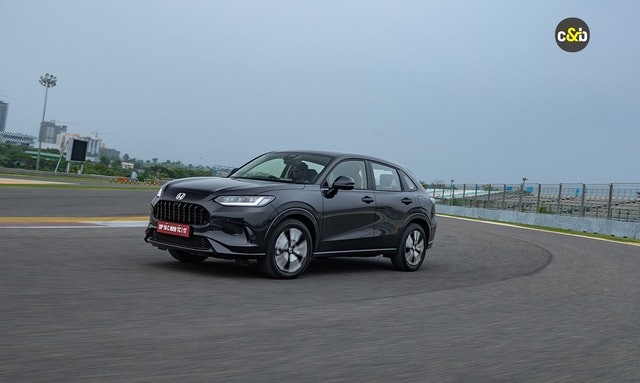 Bilal Firfiray | Jul 24, 2026Honda ZR-V Review: Who Is It For?Honda has brought the new ZR-V to India as their current flagship offering. It’s a CBU, it’s a hybrid, and it’s here for a limited few. Who is it for though?1 min read
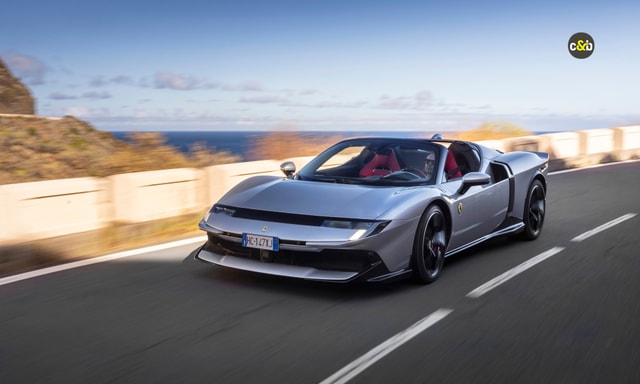 Shams Raza Naqvi | Jul 15, 2026Ferrari 849 Testarossa Spider Driven: Rs. 11.25 Crore Meets 1,000 bhpWe got behind the wheel of the most powerful convertible from Ferrari. What makes the 849 Testarossa Spider Special? We tell you.1 min read
 Bilal Firfiray | Jul 12, 2026Tata Sierra EV Review: Reborn In The Electric AgeThe Tata Sierra EV isn’t drastically different from its ICE counterpart when it comes to design. But being the seventh electric offering from the Indian brand, it has gotten a few things right, and very few things wrong. But is it a compelling package to buy?5 mins read
 Jafar Rizvi | Jul 13, 2026TVS Orbiter Long-Term Review (Report 1): Settling In Takes TimeFirst impressions weren't the strongest, but the Orbiter has made a mark in its first month in the car&bike garage.5 mins read
 Seshan Vijayraghvan | Jul 7, 2026Tata Altroz Petrol DCA Long-Term Review: Intercity & Highway Driving ReportWe tested the Tata Altroz Petro DCA’s highway manners, intercity performance, and real-world fuel efficiency.1 min read