
'Humble And Hidden' Auto Suppliers Driving The EV Revolution


The shift to electric cars may pose an existential threat to suppliers of combustion engines but for auto parts firms such as TE Connectivity the challenge is keeping up with demand. It makes the connectors that link miles of cables in cars to all things electrical, from sensors to fuel injection systems to infotainment - and if there's anything the cars of an electric era will need, it's larger and ever more complex connectors. That's why TE spent $125 million to open a new building in 2020 dedicated to electric vehicle (EV) parts at a factory tucked away in a shallow valley in the small town of Woert in southern Germany.
And that's why it's on the lookout for acquisitions or partnerships to keep expanding its auto business, Chief Executive Terrence Curtin told Reuters: "We're going to continue to add capacity."
As legacy auto parts suppliers figure out if and when to sell combustion engine businesses or buy EV parts makers, TE and rivals in the connectors or sensors businesses such as Sensata Technologies, Amphenol Corp and Molex are looking to supply higher-value components and do more development work with carmakers going through a massive transition.
"All these automakers talking about moving their fleets to electric and making promises about range are incapable of doing that without suppliers like TE," says William Kerwin, an analyst at Morningstar who covers TE, Sensata and Amphenol.
Auto parts account for over 40% of TE's $15 billion in revenue, making it one the biggest car suppliers most people have never heard of. Its $43 billion market value is far bigger than Nissan and Renault combined - and more than three times heavyweight supplier Continental.
TE has a price-to-earnings ratio of about 18, Amphenol and Sensata are in the 20s, while Continental trades at about 10.

TE has a price-to-earnings ratio of about 18, Amphenol and Sensata are in the 20s, while Continental trades at about 10.
EUROPEAN DEMAND EXPLOSION
TE's Curtin said car parts suppliers and automakers alike had been caught out by an explosion in demand for EVs in Europe over the past two years - and with everyone playing catch-up TE's new facility was running at double its planned production.
While a global shortage of semiconductors has hit overall car production, Curtin said automakers have been using the chips they do have to prioritise EVs over fossil fuel vehicles - putting ever more strain on suppliers such as TE.
The challenge TE faces is getting the timing and scale of its expansion right, given the EV transition and shift to self-driving cars could run into speed bumps, such as an end to subsidies or safety concerns, Curtin said.
Because for TE, electrification means going bigger.
The far greater power needed by EVs means TE must develop larger and more complex components to handle the extra current, without causing fires.
TE's conventional parts have up to five components but its newer EV parts have up to 50 components. The supplier also now buys tonnes of aluminium, which is lighter and cheaper than copper, to make up portions of those larger parts.
In the older part of the Woert factory, machines spit out 16 connectors for fossil fuel cars a second. In the new building, more complex and costly machines, some supplied by Germany's Manz, crank out larger copper connectors with welded alloy springs for EV charge ports at a far slower pace.
TE also makes a large connector here that sits atop an EV battery module - an EV has up to 12 modules - and serves as its brain, measuring each battery cell's performance while a tiny semiconductor measures their temperature.
The new facility in Woert can make 2 million such connectors a year but demand continues to soar.
"We're going to need more," said Matthias Lechner, TE's head of Europe, Middle East and Africa, adding that TE planned to manufacture more at a plant in Hungary and elsewhere.
Lechner, who describes TE as "humble and hidden", says its connectors can reduce EV charging time by 10 minutes, an edge carmakers can sell to consumers.
CEO Curtin says EVs and self-driving cars will double the value of the parts TE supplies from about $70 now for the average fossil fuel car. That means the payoff could be huge.
EVs almost doubled their global share of vehicle sales to 6% in 2021, according to research group JATO Dynamics, and that share is only set to rise.
Europe's auto supplier market will grow to 330 billion euros ($359 billion) in 2030 from 216 billion now, driven by software, EVs and electronics, McKinsey estimates, as firms tackle chip bottlenecks and cost pressure while investing in growth.
"We're observing a double transformation," McKinsey partner Timo Moeller said.
TE's Woert site employs 2,200 people and is adding more engineers and technicians, as well as different machines to make connectors for data in self-driving cars - because unlike EV parts, tiny connections are better for moving data.
TE has three auto parts factories in Germany and another five across Europe. Worldwide, it has 29 factories dedicated to its automotive business.
Morningstar's Kerwin said TE faces the same risks as others in a cyclical business such as the auto industry.
But he said TE had a "sticky" relationship with customers and has embedded engineers with carmakers to develop products for vehicles in an electric age.
"The writing is on the wall that you have to play into electrification if you want to succeed," Kerwin said.
(This story has not been edited by NDTV staff and is auto-generated from a syndicated feed.)


Latest News


 car&bike Team | Jul 28, 2026Honda XR 300L & Honda XR300 Rally: What We Know So FarBoth the XR300L and XR300 Rally are based on the same platform and will be part of Honda’s new made in India line-up with prices and full specifications to be announced soon.5 mins read
 car&bike Team | Jul 28, 2026Mahindra Scorpio-N Facelift Interior Spied Undisguised Ahead Of DebutWhile a lot of the switchgear is carried over from the current SUV, the facelifted SUV gets a redesigned centre console with a larger touchscreen and a new digital instrument cluster.1 min read
 Bilal Firfiray | Jul 28, 2026Skoda Slavia Facelift India Debut On 18th August; New Gearbox With Cosmetic ChangesSkoda Slavia facelift will be launched in India on August 18 with newer styling cues, additional features and an expected 8-speed automatic gearbox for the 1.0 TSI engine.1 min read
 car&bike Team | Jul 27, 2026Honda CB500: What We Know So Far – Price, Launch Date, SpecsThe Honda CB500 is expected to be launched just before the festive season this year, possibly around September 2026 with prices beginning at around Rs. 3 lakh (Ex-showroom).4 mins read
 Amaan Ahmed | Jul 27, 2026EXCLUSIVE: River Indie Rival Incoming? E3 Trion Electric Scooter Spied Ahead Of August 6 DebutMaiden scooter from E3 Electric.AI employs 14-inch wheels and a hub motor; new startup spearheaded by former TVS executive.2 mins read
 Seshan Vijayraghvan | Jul 27, 2026Maruti Suzuki Brezza Variant-Wise Prices Revealed: Tops Out At Rs. 13.55 LakhThe 2026 Maruti Suzuki Brezza is offered in four key variants – LXI, VXI, ZXI and ZXI+, and based on powertrain and transmission choices, there are 13 different iterations to choose from.2 mins read
 Jaiveer Mehra | Jul 27, 20262026 Maruti Suzuki Brezza Facelift Review: Bestseller Joins The Turbo ClubWhile Maruti’s facelifts have always tended to bring subtle updates over the outgoing models, the latest Brezza brings some heavy updates under the skin, including a new 6-speed manual gearbox and, for the first time, a turbocharged petrol engine option.1 min read
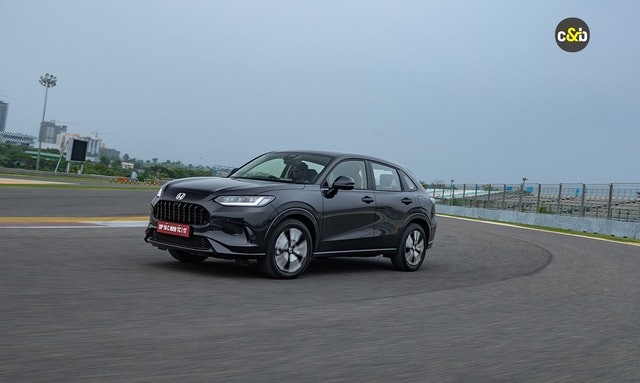 Bilal Firfiray | Jul 24, 2026Honda ZR-V Review: Who Is It For?Honda has brought the new ZR-V to India as their current flagship offering. It’s a CBU, it’s a hybrid, and it’s here for a limited few. Who is it for though?1 min read
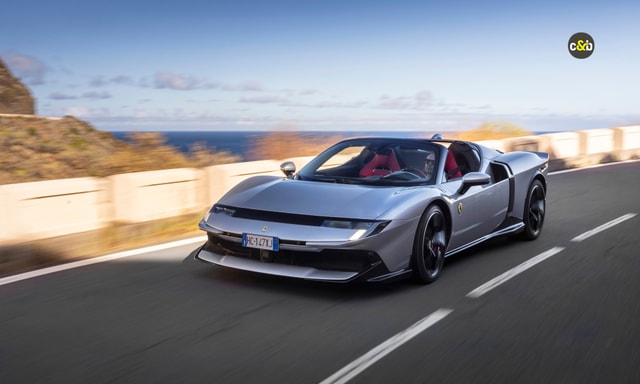 Shams Raza Naqvi | Jul 15, 2026Ferrari 849 Testarossa Spider Driven: Rs. 11.25 Crore Meets 1,000 bhpWe got behind the wheel of the most powerful convertible from Ferrari. What makes the 849 Testarossa Spider Special? We tell you.1 min read
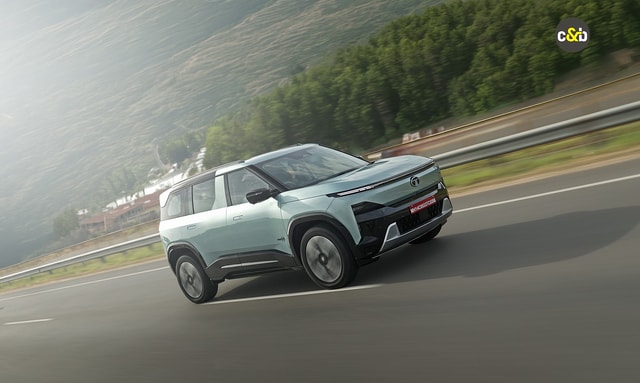 Bilal Firfiray | Jul 12, 2026Tata Sierra EV Review: Reborn In The Electric AgeThe Tata Sierra EV isn’t drastically different from its ICE counterpart when it comes to design. But being the seventh electric offering from the Indian brand, it has gotten a few things right, and very few things wrong. But is it a compelling package to buy?5 mins read
 Jafar Rizvi | Jul 13, 2026TVS Orbiter Long-Term Review (Report 1): Settling In Takes TimeFirst impressions weren't the strongest, but the Orbiter has made a mark in its first month in the car&bike garage.5 mins read