
Jaguar Land Rover Invents A Way To Counter Motion Sickness In Autonomous Cars


- JLR has collected over 20,000 real-world, virtually-simulated test miles.
- To know how -well- a passenger is doing, JLR developed a -wellness score"
- It's also working on to make our societies safer, cleaner and healthier.
Jaguar Land Rover (JLR) is working on ways to prevent self-driving/autonomous cars from making commuters motion sick. The Tata-owned company has come up with the technology which eliminates motion sickness to provide a smooth comfortable drive in their autonomous cars. "Mobility is rapidly changing, and we will need to harness the power of self-driving vehicles to achieve our goal of zero accidents and zero congestion. Solving the problem of motion sickness in driverless cars is the key to unlocking the huge potential of this technology for passengers, who will be able to use the travelling time for reading, working or relaxing," said Dr Steve Iley, Jaguar Land Rover Chief Medical Officer.
Also Read: Jaguar Land Rover Appoints Thierry Bollore As New Chief Executive Officer
Dr Steve Iley and his team at Jaguar Land Rover are not only making self-driving cars that can manoeuvre safely, but also ensuring the most comfortable drive for their passengers. They added another milestone with the motion sickness software that will help 70% of the people who fall prey to their anxiousness while in motion.
Also Read: Jaguar Land Rover's New Contactless Touchscreen Will Help Avoid Bacteria And Viruses

To calculate how “well” a passenger is doing, JLR developed a “wellness score”.
Motion sickness typically happens when the body's inner ear senses motion without the eyes seeing any motion happening on the outside. This typically occurs in a car when the passenger is trying to do some attentive activity like reading a book or do something other than watching the outside view while the car is in motion. To deal with the motion sickness, JLR has developed a software that can detect/sense if the driver/passenger feels unwell while the car is in motion and adjusts the vehicle's driving gesture and seating settings to make the passenger less anxious, hence making them avoid the sickness. The company has collected over 20,000 real-world and virtually-simulated test miles to calculate a set of parameters for driving dynamics to be rated against.
Also Read: Jaguar Land Rover Has Produced 1.5 Million Ingenium Engines
To calculate how "well" a passenger is doing, JLR developed a "wellness score" based on data collected from the sensors. If the system detects a passenger is feeling uneasy, the car's AI will adjust its suspension, cabin comfort and the stability control to make their situation better and calm them down.
Also Read: Land Rover Reveals New Ingenium Diesel Engine Line-Up For 2021
JLR has managed to improve the passengers' wellness scores by 60% using their system. As a result of the project, engineers are now able to develop more refined advanced driver-assistance systems (ADAS) features on future Jaguar and Land Rover models, such as adaptive cruise control and lane monitoring systems. The in-depth knowledge is helping Jaguar Land Rover design and manufacture capable and advanced vehicles, both now and in the future.
Also Read: New-Gen Range Rover Evoque And Land Rover Discovery Sport BS6 Petrol Deliveries Begin In India
JLR is also working on an ambition to make our societies safer, healthier and cleaner through relentless innovation. With the mission of raising the quality of future urban living, Jaguar Land Rover has unleashed Project Vector, an advanced autonomous ready concept mobility for the future.
Also Read: Jaguar Land Rover Raises $705 Million Loan From Chinese Banks
In a post-COVID-19 world, where a 'new normal' is emerging, customer expectations of private transport are changing, and the focus will be on safe, clean mobility where personal space and hygiene will carry a premium. New technologies and materials are being developed to meet these expectations at Jaguar Land Rover with today's vehicles designed to help improve passenger wellbeing, including a Driver Condition Monitor and antimicrobial wireless device charging. Besides, features such as cooling seats, ambient lighting and multiple seat configurations are proven to significantly reduce the likelihood of motion sickness
Also Read: Jaguar Land Rover India Opens New Digital Platforms For Contactless Sales And Service Experience
With the world changing amidst the current pandemic, customers' expectations of private transport are changing as their main focus will be on safe, clean mobility where personal space and hygiene will carry the utmost importance. JLR is developing new technologies and materials to meet these expectations to help improve passenger wellbeing, including a driver condition monitor and antimicrobial wireless device charging. Furthermore, features include cooling seats, ambient lighting and multiple seat configuration to significantly reduce motion sickness.
Also Read: Jaguar Land Rover UK Expands Online Services Amidst Coronavirus Pandemic
Although it might seem like a minor issue, motion sickness could become a real problem in the fight to reach the pinnacle for autonomous vehicles. Passengers will most likely be glaring at their smart devices, playing games or doing a virtual video meeting while in transit instead of looking out their windows or sunroofs which is one of the reasons for the 70% of the people to feel sick.
Related News


Popular Land Rover Models


Latest Cars


Upcoming Cars


Latest News


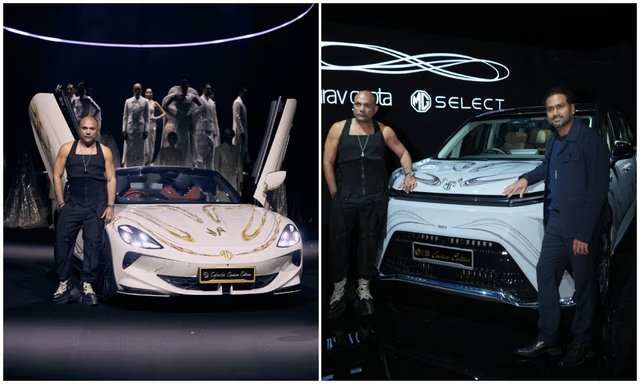 car&bike Team | Jul 20, 2026MG Cyberster, M9 Couture Editions Unveiled: Bookings OpenCouture Editions of the Cyberster and M9 are limited to just 50 units each.1 min read
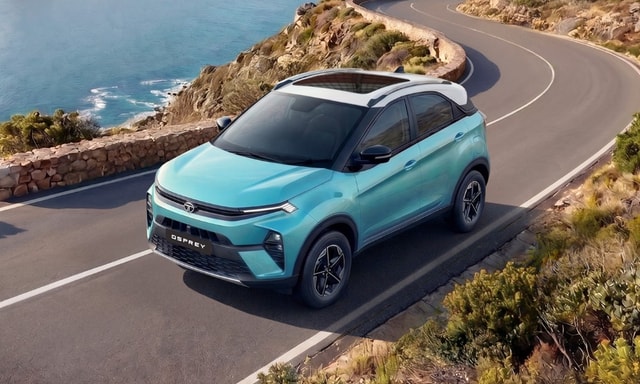 car&bike Team | Jul 20, 2026Tata Nexon To Be Launched In South Africa As ‘Osprey’Tata Motors is adding another model to its South African range, but not with a familiar name. The Nexon will be introduced there as the Osprey, with sales set to begin later this quarter.1 min read
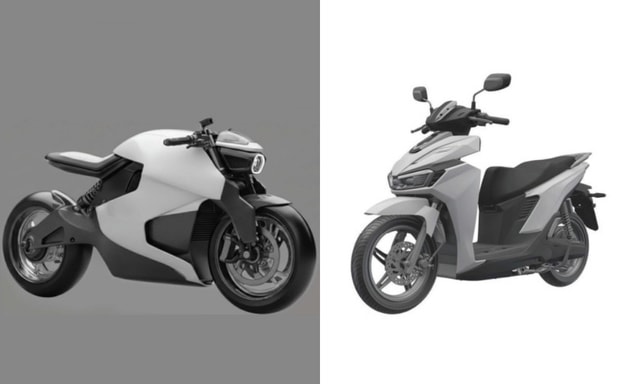 car&bike Team | Jul 20, 2026VinFast Patents Two New Electric Two-Wheelers In India Ahead Of Market EntryFresh patent filings suggest VinFast's India two-wheeler ambitions could extend beyond the electric scooters it has already confirmed.1 min read
 Jaiveer Mehra | Jul 18, 2026Ferrari Amalfi Spider Launched In India At Rs 4.60 CroreDrop-top variant of Ferrari’s entry 2+ Grand Tourer costs a little more than Rs 50 lakh more than the Coupe.2 mins read
 car&bike Team | Jul 17, 2026New CAFE 3 Draft Brings Revised Fuel Consumption Variables, Reduced Derogation Factor For Strong Hybrid & MoreThe latest CAFE 3 draft also opens the door for technologies such as engine start/stop, TPMS & 12/48V mild-hybrid tech to factored into fuel consumption.3 mins read
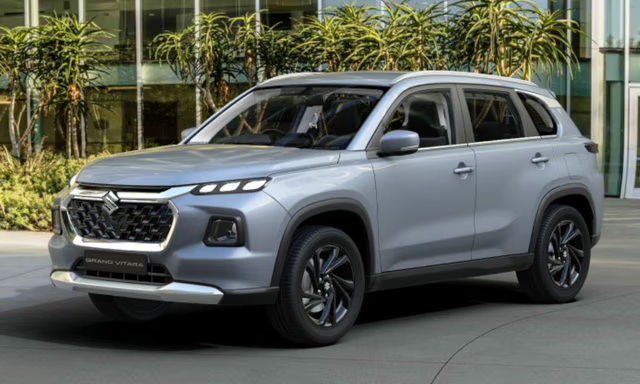 car&bike Team | Jul 17, 2026Consumer Court Orders Maruti Suzuki To Replace Grand Vitara Over E20-Related Damages; Carmaker To Escalate Matters In Higher CourtThe complainant had filed a complaint citing multiple cases of the vehicle developing technical issues due to repeated contamination in the fuel tank.1 min read
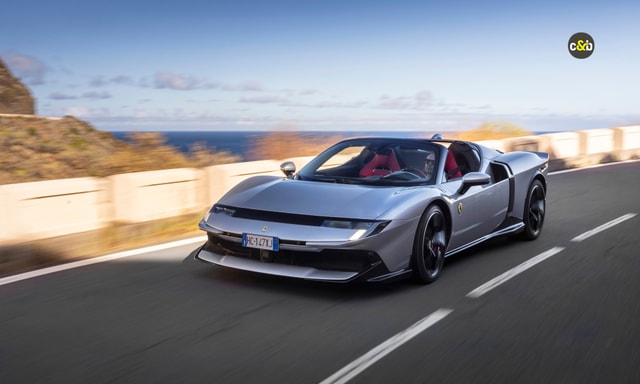 Shams Raza Naqvi | Jul 15, 2026Ferrari 849 Testarossa Spider Driven: Rs. 11.25 Crore Meets 1,000 bhpWe got behind the wheel of the most powerful convertible from Ferrari. What makes the 849 Testarossa Spider Special? We tell you.1 min read
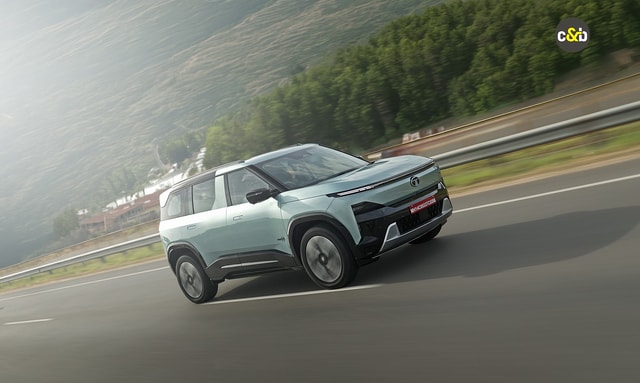 Bilal Firfiray | Jul 12, 2026Tata Sierra EV Review: Reborn In The Electric AgeThe Tata Sierra EV isn’t drastically different from its ICE counterpart when it comes to design. But being the seventh electric offering from the Indian brand, it has gotten a few things right, and very few things wrong. But is it a compelling package to buy?5 mins read
 Jafar Rizvi | Jul 13, 2026TVS Orbiter Long-Term Review (Report 1): Settling In Takes TimeFirst impressions weren't the strongest, but the Orbiter has made a mark in its first month in the car&bike garage.5 mins read
 Seshan Vijayraghvan | Jul 7, 2026Tata Altroz Petrol DCA Long-Term Review: Intercity & Highway Driving ReportWe tested the Tata Altroz Petro DCA’s highway manners, intercity performance, and real-world fuel efficiency.1 min read
 Seshan Vijayraghvan | Jun 29, 2026Renault Kiger vs Toyota Urban Cruiser Taisor: Which Underdog Deserves Your Money?Both the Kiger and the Taisor promise strong performance, solid features, comfortable cabins and everyday usability, all without breaking the bank. But which of these underrated subcompact SUVs deserves your money? Let's find out.1 min read