
Porsche May Ditch Diesel Engines - CEO
last published date : 18 July 2017, 18:52 IST

Highlights
- Porsche's Mission E saloon will be heading to the market in 2019
- Battery-only cars could account for a quarter of Porsche's sales by 2025
- Porsche introduced its first diesel car in 2009 with the Cayenne
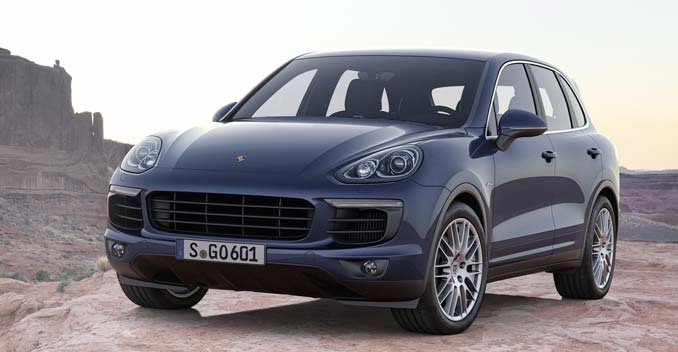
Porsche will decide at the end of the decade whether its latest generation of diesel engines will be its last, Chief Executive Oliver Blume told Reuters, the first time a German carmaker has said in public it could discontinue diesel. Volkswagen's cheating on diesel emissions tests has cast a shadow over its Porsche division and the sports car brand, which first introduced diesel in its Cayenne sports utility vehicle (SUV) in 2009, is considering its options.
"Of course we are looking into this issue," CEO Blume said in an interview at the Nuerburgring motorsports complex in western Germany. "We have not made a decision on it." Blume said Porsche would offer a mix of combustion engines, plug-in hybrid vehicles and purely battery-powered cars over the next 10-15 years and would decide at the end of the decade whether diesel had a future at Porsche.
German prosecutors last month started investigating Porsche staff to see whether they were involved in designing illicit engine-control software and regulators are examining whether the Cayenne was fitted with such a device. A redesign of the Cayenne will be launched in September and it will still offer a diesel version, Blume said, just like the Panamera saloon that hit dealerships last November.
"For the generations that will follow there are different scenarios," Blume said. One scenario has Porsche backing out of diesel altogether, sources at the carmaker said.
Stuttgart-based Porsche still relies on diesels, which account for about 15 percent of its global sales, to help it bring down emissions of carbon dioxide (CO2) as they are more fuel-efficient than petrol engines. At luxury rival BMW, diesel cars make up 35 percent of new registrations while Audi's European diesel sales alone account for two-thirds of deliveries.
But diesel's image has been badly tarnished by the emissions scandal and revelations that some engines pump dangerously high levels of poisonous nitrogen oxides into the air, prompting many carmakers to review their strategies. To tap into growing demand for electric cars, Porsche is spending a billion euros ($1.2 billion) to overhaul its main Stuttgart plant and build its first battery-only model - the four-door Mission E saloon which is due on the market in 2019.
Battery-only vehicles could account for a quarter of Porsche's sales by 2025, give or take 5 to 10 percentage points, Blume said, contradicting a media report that said up to half of its output by 2023-24 could be electric. Earlier this month, Geely's Volvo said all its cars launched after 2019 would be electric or hybrids, making it the first major traditional carmaker to set a date for phasing out vehicles power solely by combustion engines.
Porsche and Audi, which together contribute 60 percent of VW's profits, are targeting "significant savings" in development and material costs for their electric-car programmes by sharing a new production platform code-named PPE, Blume said. The new architecture will allow both brands to save money by sharing components and modules, helping Porsche with a goal of keeping its return on sales at about 15 percent a year, he said.
"Further platforms are conceivable, for instance with SUVs." Porsche sales rose 6 percent to a record 238,000 cars in 2016 and Blume said the carmaker had a guideline for increasing its sales about 5 percent per year through 2025. Counting on growing demand for high-end electric cars, Porsche may spawn another zero-emission model off the Mission E platform, for which it plans an initial capacity of about 20,000 cars at its Zuffenhausen factory, Blume said. An electrified version of the top-selling Macan SUV is also possible.
"We expect the metropolises in China and Asia will switch to pure electric mobility very fast," the CEO said. "I believe there will be few pure combustion engines to be seen in the large cities there in five years time. The development in rural areas will, however, proceed much more slowly."
© Thomson Reuters 2017
(This story has not been edited by NDTV staff and is auto-generated from a syndicated feed.)
AD
Related News
1 min read
Porsche May Ditch Diesel Engines - CEOAD
Popular Porsche Models


Latest Cars


AD
Upcoming Cars


AD
AD
Latest News


 car&bike Team | Nov 8, 2026BYD's Luxury MPV Denza D9 Spied In India Ahead Of November 13 LaunchLatest video to surface on social media shows BYD's biggest car in India till date completely undisguised; set to rival MG's M9.1 min read
 Amaan Ahmed | Nov 8, 2026BYD's Rolls-Royce Fighter Debuts With 1,000+ KM Range, Quad Motor SetupMost luxurious car yet from the house of Build Your Dreams will remind you of a Rolls, but it pairs familiar looks with the most cutting-edge tech in the EV universe.1 min read
 car&bike Team | Nov 8, 2026DigiLocker And mParivahan Vs Physical Documents: When Traffic Police Can (And Cannot) Demand Your Original Driving LicenceValid digital DL, RC, insurance and PUC documents on DigiLocker or mParivahan are accepted in place of physical copies. Screenshots and ordinary phone photos may not be valid substitutes.11 mins read
 car&bike Team | Nov 8, 2026Affordable Riding Jackets, Gloves, And Boots Under Rs. 15,000 In India: CE Level 2 Armour Explained For BeginnersWith a practical budget of Rs. 15,000, you can assemble a complete, three-piece safety setup consisting of a well-ventilated jacket with certified CE Level 2 armour, a pair of reinforced gloves and protective riding shoes.1 min read
 Carandbike Team | Nov 7, 2026Car Cybersecurity In India: Can Connected Cars Be Hacked?The short answer to whether connected cars can be hacked is an unequivocal yes.7 mins read
 car&bike Team | Nov 7, 2026Single-Cylinder vs Twin-Cylinder CNG Cars In India: How Tata, Hyundai And Maruti Solved The Boot Space ProblemWe take an in-depth look at how India's leading carmakers handled the CNG boot space challenge.7 mins read