
Spooked By Monkeys, Bosch Looks To Oysters And Cattle For Profit

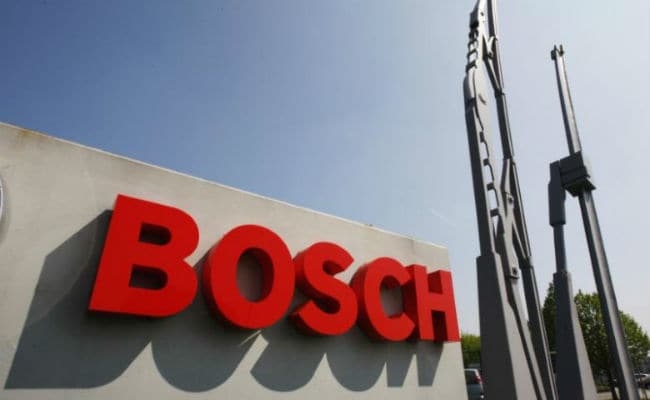
- Auto parts maker Bosch is betting on farming technology to boost profit
- Bosch builds sensors to help farmers measure & calibrate fertiliser use
- Bosch made sensor tech to help farmer cultivate asparagus & manage cattle
Germany's Robert Bosch, the world's biggest automotive supplier, is betting on farming technology to boost profit this year as disclosures about experiments by carmakers on monkeys jeopardise diesel-related jobs. The Stuttgart-based company said it introduced new smart farming solutions last year, including sensor-based technologies to help farmers cultivate asparagus and strawberries, manage cattle or even to farm oysters. "The digital agriculture market is expected to grow more than 70 percent by 2020," Bosch said on Tuesday.
Bosch builds sensors to help farmers measure growth and calibrate fertiliser and pesticide use. It has products to allow ranchers to monitor weight gain in cattle which have significant potential in Brazil and the United States, it added.
In 2017, Bosch posted a 6.7 percent rise in annual revenues to 78 billion euros ($97 billion). Industrial Technology accounted for 6.7 billion euros of the total, while automotive-related business generated 47.4 billion, with the rest coming from consumer goods and energy and building technology.
Adjusted earnings before interest and tax (EBIT) rose 23 percent to 5.3 billion euros, helping to improve the EBIT margin to 6.8 percent from 5.8 percent a year earlier, Bosch said.
Bosch expects to further increase sales and earnings this year, even amid increased geopolitical risks including Brexit negotiations and "unpredictable" U.S. foreign policy.
However, Bosch warned that demand for diesel cars had fallen in Europe, a trend likely to be exacerbated by revelations that a research group conducted experiments that exposed monkeys and humans to toxic diesel fumes.
Revenue in the automotive business saw a 7.8 percent rise thanks to sales of driver assistance and infotainment systems and diesel injection systems for commercial vehicles, Bosch said.
Bosch said it expects automotive revenues to outpace weaker growth in global automotive production, thanks to sales of vehicle electrification components, including a 48-volt battery for hybrid vehicles and an electric axle.
But CEO Denner struck a sceptical tone about the possibility of Bosch producing its own electric car battery cells, saying the company would need to spend 20 billion euros to enter the market.
"Many unknowns as well as technological and especially market developments can only be predicted with difficulty or high degree of uncertainty," Denner said, adding that established players are strong.
"Since materials costs, including raw materials, are responsible for three quarters of the value created, there only remains a narrow scope for creating and exploiting competitive advantages," Denner said.
Whether Bosch enters the battery cell manufacturing business is part of a broader effort by the company to continually review its portfolio of assets, it said.
Related News


Latest Cars


Upcoming Cars


Latest News


 car&bike Team | Aug 1, 2026Maruti Suzuki Sells More Than 2 Lakh Vehicles In July, Sets New Domestic RecordThe brand sold a total of 2,41,421 units last month which also included exports of 30,056 cars1 min read
 car&bike Team | Aug 1, 2026India-UK FTA: Aston Martin Announces Revised PricesAlong with the revised pricing, the British marque has refreshed its lineup by replacing the Vantage, DB12 and DBX with more powerful 'S' derivatives.4 mins read
 car&bike Team | Aug 1, 2026BMW 7 Series, i7 Facelift Bookings Open In India Ahead Of LaunchThe facelifted models were unveiled globally in April 2026 and are set to arrive in India.3 mins read
 car&bike Team | Aug 1, 2026Auto Sales July 2026: Growth For Tata, Mahindra And Hyundai; Nissan Jumps 218%July 2026 turned out to be a strong month for several carmakers in India. Tata Motors, Mahindra, Hyundai, MG Motor and Nissan all reported healthy year-on-year growth, with new model launches, exports and growing EV demand.4 mins read
 car&bike Team | Jul 31, 2026Hero Vida VX2 Now Available With Fixed 3.1 kWh Battery, Priced At Rs 1.13 LakhUnlike the existing removable-battery variants, the new VX2 variant comes with a fixed battery and direct-plug charging.1 min read
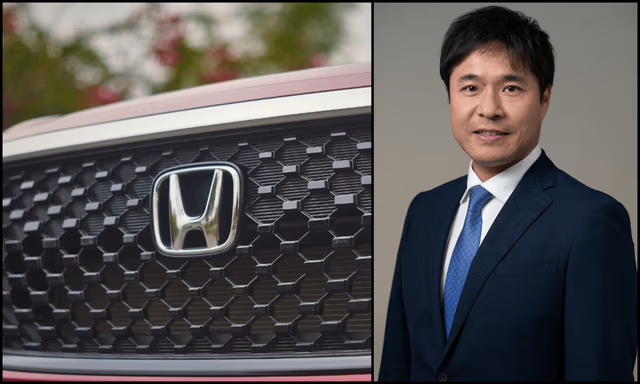 car&bike Team | Jul 31, 2026Honda Cars India Appoints Toshiyuki Yanagisawa As New President And CEOYanagisawa replaces Takashi Nakajima, who is set to move to Honda's regional headquarters after completing his stint in India.1 min read
 Bilal Firfiray | Aug 1, 2026Toyota Hilux Review: The InvincibleMarking it as the ninth generation, the Hilux comes with a major cosmetic overhaul. But is it still relevant enough for the current times or is it getting too long in the tooth?5 mins read
 Bilal Firfiray | Jul 30, 2026Kia Syros EV Review: Best EV To Buy Under Rs 20 Lakh?The Kia Syros EV comes into the game with a modern design, spacious cabin, strong performance, decent range and an aggressive pricing. But could it become the new benchmark under Rs 20 lakh?5 mins read
 Jaiveer Mehra | Jul 27, 20262026 Maruti Suzuki Brezza Facelift Review: Bestseller Joins The Turbo ClubWhile Maruti’s facelifts have always tended to bring subtle updates over the outgoing models, the latest Brezza brings some heavy updates under the skin, including a new 6-speed manual gearbox and, for the first time, a turbocharged petrol engine option.1 min read
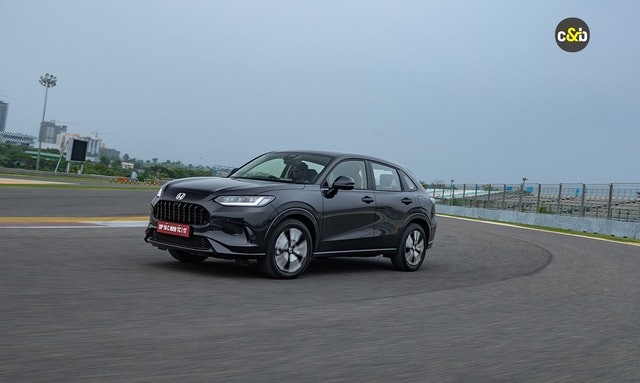 Bilal Firfiray | Jul 24, 2026Honda ZR-V Review: Who Is It For?Honda has brought the new ZR-V to India as their current flagship offering. It’s a CBU, it’s a hybrid, and it’s here for a limited few. Who is it for though?1 min read
 Girish Karkera | Jul 29, 2026Mercedes-AMG E53 4MATIC+ PHEV First Drive Review: Just What The Doctor OrderedThere are luxury cars and there are high-performance cars. But what if you want both for the price of one? Mercedes-Benz has a recommendation that promises to tread a fine line between the two – the second generation E53 with a twist.7 mins read