
Tesla's Rise Made 2020 The Year The U.S. Auto Industry Went Electric


Tesla Inc and Wall Street made 2020 the year that the U.S. auto industry decided to go electric. Tesla's market capitalization surged above $600 billion, making the once wobbly startup founded by billionaire Elon Musk worth more than the five top-selling global vehicle making groups combined. The exclamation point came on Friday when Tesla rose to a record high in frantic trading ahead of the stock's much anticipated entrance into the benchmark S&P 500 index.
For 2021, all signs point toward the industry accelerating its shift toward electrification, a turning point as historically momentous as the launch of Ford Motor Co's moving assembly line for the Model T or General Motors ' 2009 bankruptcy.
Tesla's ascent came the same year that activist hedge funds and other investors ratcheted up pressure on corporations to fight climate change. Evidence is growing that more investors have concluded the century-long dominance of internal combustion engines - "ICE" in industry slang - is headed toward a close within a decade.
From London to Beijing to California, political leaders also embraced plans to start phasing out internal combustion engine-only vehicles as early as 2030. Pressure to cut greenhouse gas emissions undermines the logic for significant new investments in ICE engines. Thousands of manufacturing jobs are currently tied to internal combustion in the United States, Britain, Germany, France, Japan and other countries.

Tesla rose to a record high in frantic trading ahead of the stock's much anticipated entrance into the benchmark S&P 500 index
Other powerful forces also shook the auto industry's status quo this year. The COVID-19 pandemic stripped away the sales and profits that incumbent automakers had counted on to fund methodical transitions to electric vehicles. China's rapid recovery from the pandemic exerted an even more powerful gravitational pull on industry investment.
WILL CONSUMERS PLUG IN?
This was the year GM Chief Executive Mary Barra and other top industry executives began to echo Tesla's Musk, saying electric vehicle battery costs could soon achieve parity with internal combustion technology. Still, it remained to be seen whether consumers, particularly in the United States, are ready to say goodbye to petroleum-fueled pickup trucks and SUVs.
The best-selling vehicles in the United States remain large, petroleum-burning pickup trucks. Demand for these vehicles powered a recovery for Detroit automakers after the pandemic forced factories to shut down in the spring.
The best electric vehicle and battery makers could field models that match internal combustion upfront cost as soon as 2023, brokerage Bernstein wrote in a report.
"ICE game over with BEV - 2030," Bernstein's auto analysts wrote, using the industry's acronyms for internal combustion engine and Battery Electric Vehicle.
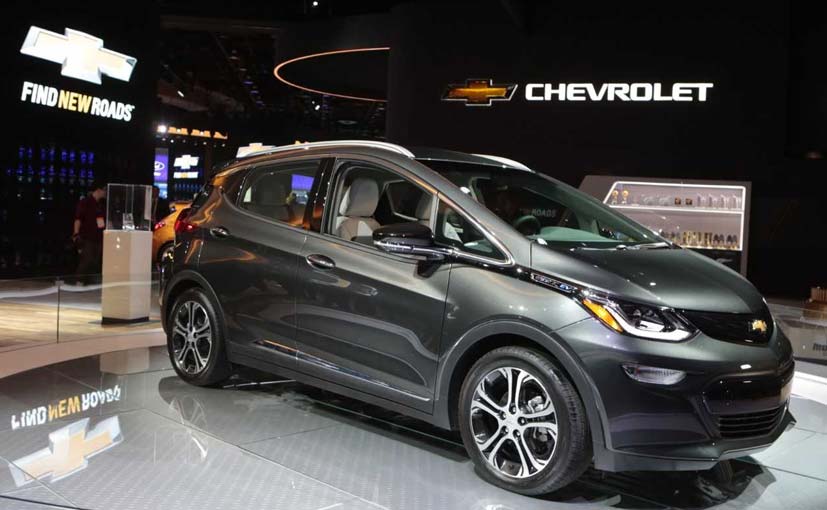
Other top industry executives have begun to echo Tesla's Musk, saying EV battery costs could soon achieve parity with internal combustion technology
The shift toward electric vehicles is speeding a parallel transformation of vehicles into largely digital machines that get much of their value from software that powers rich visual displays and features such as automated driving systems.
Across the industry, century-old manufacturers such as Daimler AG are scrambling to hire programmers and artificial intelligence experts.
The capability of software to manage autonomous driving systems, electricity flows from batteries and data streaming to and from vehicles is replacing horsepower as a measure of automotive engineering achievement.
Tesla's use of smartphone-style over-the-air software upgrades was once a unique feature of the Silicon Valley brand.
In 2020, the best-selling model line in the United States, the Ford F-150 pickup, was redesigned to offer over-the-air software updates, making the technology as mainstream as it gets.
THE PANDEMIC AND CHINA
In the best of times, traditional internal-combustion vehicles would have faced huge costs and disruptions to their workforces to evolve to electric, software-intensive vehicles. But the shock delivered by the coronavirus pandemic gave manufacturers much less money and time to adapt.
Consultancy IHS Markit forecasts that global vehicle production will not match 2019 levels again until 2023. Automakers will have produced 20 million fewer vehicles by 2023 than they could have built had output stayed at 2019 levels.
"Only the most agile with a Darwinian spirit will survive," said Carlos Tavares, the Peugeot SA chief who will lead the combined Peugeot and Fiat Chrysler when that merger is completed.
The pandemic also elevated the importance of China to the industry's future. That country's swift recovery from the pandemic amplified the gravitational pull of its huge market on automotive investment, despite anti-China rhetoric from U.S. and European politicians.
China's drive to reduce dependence on petroleum is compelling automakers to shift investment toward battery electric and hybrid vehicles, and re-center design and engineering activities to Chinese cities from traditional hubs in Nagoya, Wolfsburg and Detroit. Tesla said it will establish a design and research center in China.
Daimler AG Chief Executive Ola Kaellenius put it bluntly in October: "We need to look at our production footprint and where it makes sense, shift our production," he said during a video call. "Last year we sold around 700,000 passenger cars in China. The next biggest market is the U.S. with between 320,000 and 330,000 cars."
(This story has not been edited by NDTV staff and is auto-generated from a syndicated feed.)


Latest News


 Sarthak Mahajan | Aug 10, 2026Top 5 Major Feature Updates On The New Mahindra Scorpio-NMahindra recently launched the updated Scorpio-N. Here are the top five features to look out for.1 min read
 car&bike Team | Aug 10, 2026New Ducati Monster V2 Launched In India At Rs 13.99 LakhThe updated naked Ducati gets a new 890cc V2 engine in place of the outgoing 937cc unit, along with revised ergonomics and more.1 min read
 Abhishek Nigam | Aug 10, 2026TVS Orbiter Electric Scooter Now Costs Up To Rs 4,000 MoreTVS hikes price of its popular urban EV runabout2 mins read
 car&bike Team | Aug 8, 2026Bugatti Destrier Revealed As One-Off Bolide-Based Hypercar With 1,578 BhpBugatti has revealed the Destrier, a one-off based on the Bolide but with a completely different design brief.3 mins read
 car&bike Team | Aug 8, 2026KTM 160 Duke, RC 160 Prices Hiked By Up To Rs 15,000KTM India has revised the prices of its entry-level motorcycles, with both the 160 Duke and RC 160 getting more expensive.1 min read
 car&bike Team | Aug 8, 2026MG Majestor SUV Prices Hiked By Rs 1.50 LakhAfter the hike, prices for the Majestor now start at Rs 42.49 lakh (ex-showroom) for both 4x2 variants.2 mins read
 Bilal Firfiray | Aug 1, 2026Toyota Hilux Review: The InvincibleMarking it as the ninth generation, the Hilux comes with a major cosmetic overhaul. But is it still relevant enough for the current times or is it getting too long in the tooth?5 mins read
 Bilal Firfiray | Jul 30, 2026Kia Syros EV Review: Best EV To Buy Under Rs 20 Lakh?The Kia Syros EV comes into the game with a modern design, spacious cabin, strong performance, decent range and an aggressive pricing. But could it become the new benchmark under Rs 20 lakh?5 mins read
 Jaiveer Mehra | Jul 27, 20262026 Maruti Suzuki Brezza Facelift Review: Bestseller Joins The Turbo ClubWhile Maruti’s facelifts have always tended to bring subtle updates over the outgoing models, the latest Brezza brings some heavy updates under the skin, including a new 6-speed manual gearbox and, for the first time, a turbocharged petrol engine option.1 min read
 Bilal Firfiray | Jul 24, 2026Honda ZR-V Review: Who Is It For?Honda has brought the new ZR-V to India as their current flagship offering. It’s a CBU, it’s a hybrid, and it’s here for a limited few. Who is it for though?1 min read
 Girish Karkera | Jul 29, 2026Mercedes-AMG E53 4MATIC+ PHEV First Drive Review: Just What The Doctor OrderedThere are luxury cars and there are high-performance cars. But what if you want both for the price of one? Mercedes-Benz has a recommendation that promises to tread a fine line between the two – the second generation E53 with a twist.7 mins read