
Volvos Concept Recharge Uses Sustainable Materials


With the Concept Recharge, Volvo Cars demonstrates the steps it will take in all areas of pure electric car development to reduce its cars' and its overall carbon footprint. The company plans to sell only fully electric cars by 2030 and aims to be a climate-neutral and circular business by 2040. By using sustainable materials inside the car, equipping it with tyres from recycled and renewable material, improving aerodynamics and through other measures, Volvo Cars can take huge steps to reduce its carbon impact through the car itself.
When combining those steps with the use of clean energy throughout a decarbonised supply chain, manufacturing process and use phase of the car, Volvo Cars believes it can reduce a car's lifecycle CO2 impact by 80 per cent versus a 2018 Volvo XC60, without losing the inherent premium qualities that Volvo cars have become known for.

The interior design is rich in sustainable materials, both natural and recycled materials
This would mean that the Concept Recharge would have an overall lifecycle CO2 impact below 10 tonnes, when charged with 100 per cent renewable energy.
Volvo Cars is in the forefront when it comes to working with sustainable and natural materials in its cars, and the Concept Recharge is another proof point of its commitment to push forward with this ambition.
The interior design is rich in sustainable materials, both natural and recycled materials - think of responsibly sourced Swedish wool, environmentally responsible textiles and lightweight composites created from natural sources.
Sourced Swedish wool is transformed into fully natural breathable cloth, free from additives. This warm and soft material is used in the seat backrest and instrument panel top. Meanwhile, the floor and lower doors are covered by a rich carpet of 100 per cent wool. The seat cushions and touch surfaces on the door are made from an environmentally responsible material that contains Tencelundefined undefinedfibres from cellulose. This fabric has a great durable strength and is soft to the skin. By using Tencel fibres, which have been produced through a highly water- and energy-efficient process, Volvo designers can reduce the use of plastics in interior parts.

The Concept Recharge feature special tyres made by Pirelli, which are completely free from mineral oil and are made from 94 per cent fossil-free materials
The seatbacks and headrests, as well as part of the steering wheel, use a new material created by Volvo Cars called Nordico. It is a soft material made from bio-based and recycled ingredients that come from sustainable forests in Sweden and Finland, providing a CO2 footprint that is 74 per cent lower than leather.
Elsewhere in the interior, including in the lower storage areas, back of the headrest and the footrest, the Concept Recharge uses a flax composite, developed by Volvo Cars in collaboration with suppliers. It uses fibres from the linseed plant, which are mixed with composites to provide a strong and lightweight, yet attractive and natural, aesthetic.
On the exterior, the front and rear bumpers as well as the sill mouldings also consist of flax composite. Using a flax composite both inside and out in this way results in a significant reduction of plastics used.
With the internal combustion engine making way for the pure electric powertrain, tyres play an even more important role. Not only are they crucial for safety, they also contribute largely to the vehicle's battery range. This means tyres for electric cars always have to be on top of technology development.
Hence the Concept Recharge feature special tyres made by Pirelli, which are completely free from mineral oil and are made from 94 per cent fossil-free materials, including recycled and renewable materials such as natural rubber, bio-silica, rayon and bio-resin. This reflects the circular approach shared by Volvo Cars and Pirelli, with a focus on reducing resource consumption and environmental impact.
Beyond its sustainable materials, electric powertrain and special tyres, Concept Recharge also improves the environmental credibility of SUVs through efficiency and aerodynamics.
With the Concept Recharge, Volvo Cars envisions the future of aerodynamics. It incorporates innovative aerodynamic features such as exterior design details that smooth the airflow, a new wheel design, a lower roof and a more upright rear end.
As such, it takes the classic SUV shape and improves airflow to increase range, while offering the incredible space opportunities that come naturally with an electric car and its lower floor.
Related News



Popular Volvo Models


Latest Cars


Upcoming Cars


Latest News


 Bilal Firfiray | Jul 28, 2026Skoda Slavia Facelift India Debut On 18th August; New Gearbox With Cosmetic ChangesSkoda Slavia facelift will be launched in India on August 18 with newer styling cues, additional features and an expected 8-speed automatic gearbox for the 1.0 TSI engine.1 min read
 car&bike Team | Jul 27, 2026Honda CB500: What We Know So Far – Price, Launch Date, SpecsThe Honda CB500 is expected to be launched just before the festive season this year, possibly around September 2026 with prices beginning at around Rs. 3 lakh (Ex-showroom).4 mins read
 Amaan Ahmed | Jul 27, 2026EXCLUSIVE: River Indie Rival Incoming? E3 Trion Electric Scooter Spied Ahead Of August 6 DebutMaiden scooter from E3 Electric.AI employs 14-inch wheels and a hub motor; new startup spearheaded by former TVS executive.2 mins read
 Seshan Vijayraghvan | Jul 27, 2026Maruti Suzuki Brezza Variant-Wise Prices Revealed: Tops Out At Rs. 13.55 LakhThe 2026 Maruti Suzuki Brezza is offered in four key variants – LXI, VXI, ZXI and ZXI+, and based on powertrain and transmission choices, there are 13 different iterations to choose from.2 mins read
 Bilal Firfiray | Jul 27, 2026BMW X5 And iX5 Long Wheelbase Unveiled With Extra Rear Leg RoomBMW has taken the wraps off the long-wheelbase body style of the new-gen X5, and its all-electric iX5 avatar is exclusively for the Chinese market. Both are Neue Klasse with up to 1,000km of claimed range.2 mins read
 car&bike Team | Jul 25, 2026Jeep Meridian 85th Anniversary Edition Launched At Rs 36.05 LakhLimited to 85 units, the special edition gets cosmetic changes and also features the CARA AI voice assistant.1 min read
 Jaiveer Mehra | Jul 27, 20262026 Maruti Suzuki Brezza Facelift Review: Bestseller Joins The Turbo ClubWhile Maruti’s facelifts have always tended to bring subtle updates over the outgoing models, the latest Brezza brings some heavy updates under the skin, including a new 6-speed manual gearbox and, for the first time, a turbocharged petrol engine option.1 min read
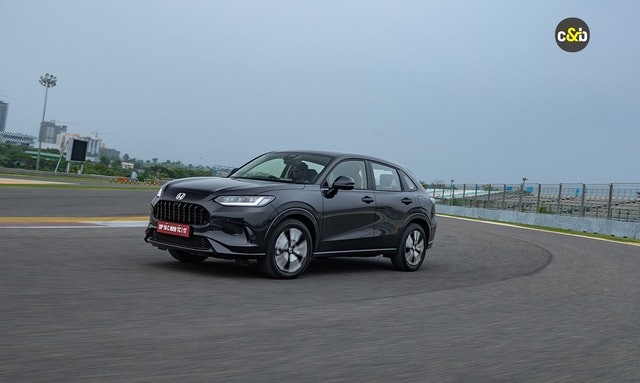 Bilal Firfiray | Jul 24, 2026Honda ZR-V Review: Who Is It For?Honda has brought the new ZR-V to India as their current flagship offering. It’s a CBU, it’s a hybrid, and it’s here for a limited few. Who is it for though?1 min read
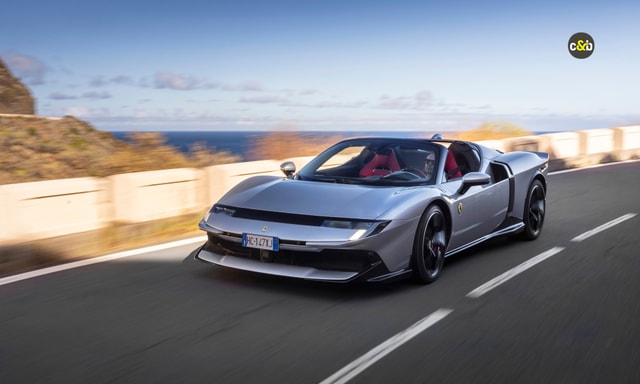 Shams Raza Naqvi | Jul 15, 2026Ferrari 849 Testarossa Spider Driven: Rs. 11.25 Crore Meets 1,000 bhpWe got behind the wheel of the most powerful convertible from Ferrari. What makes the 849 Testarossa Spider Special? We tell you.1 min read
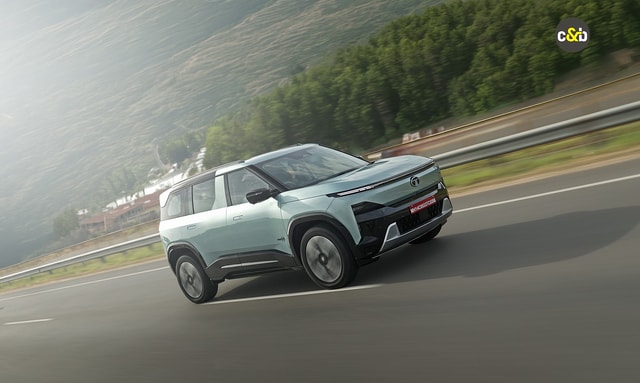 Bilal Firfiray | Jul 12, 2026Tata Sierra EV Review: Reborn In The Electric AgeThe Tata Sierra EV isn’t drastically different from its ICE counterpart when it comes to design. But being the seventh electric offering from the Indian brand, it has gotten a few things right, and very few things wrong. But is it a compelling package to buy?5 mins read
 Jafar Rizvi | Jul 13, 2026TVS Orbiter Long-Term Review (Report 1): Settling In Takes TimeFirst impressions weren't the strongest, but the Orbiter has made a mark in its first month in the car&bike garage.5 mins read