
Drum Brakes vs Disc Brakes: How Different Are The Two And Which Is Better For Cars?

Brakes are among the most critical safety systems in a car, yet they are often one of the least understood. Most buyers focus on engines, mileage and features, while braking hardware is usually buried deep in the specification sheet of a vehicle. However, whether a car uses drum or disc brakes – and where – has a direct impact on safety, maintenance costs, and driving confidence.
In the Indian car market, both drum and disc brakes continue to coexist, each serving a specific purpose depending on the vehicle type, price point and intended usage. Here’s a detailed breakdown of what drum and disc brakes are, how they work, and their pros and cons, keeping cars in mind:
What Are Drum Brakes?
Image credit: Akebono Brakes
Drum brakes are one of the oldest braking systems used in cars and are still widely found today, especially on the rear wheels of mass-market vehicles.
How Do They Work?
A drum brake consists of a brake drum attached to the wheel, brake shoes inside the drum and a wheel cylinder that pushes the shoes outward. When the brake pedal is pressed, hydraulic pressure forces the brake shoes to expand outward and press against the inner surface of the rotating drum. This friction slows the wheel and brings the car to a stop.
Where Drum Brakes Are Used In Cars Today
In India, drum brakes are commonly found on the rear wheels of entry-level hatchbacks and compact sedans, on budget compact SUVs, and in cars where cost efficiency and low maintenance are prioritised over outright braking performance.
What Are Disc Brakes?
Disc brakes are more modern and are now standard on the front wheels of almost every car sold in India, regardless of its price.
How Disc Brakes Work
A disc brake consists of a brake disc (rotor) attached to the wheel, a brake caliper, and brake pads inside the caliper. When you press the brake pedal, hydraulic pressure forces the brake pads to clamp down on the spinning disc. The friction generated slows the wheel quickly and efficiently.
Their Application
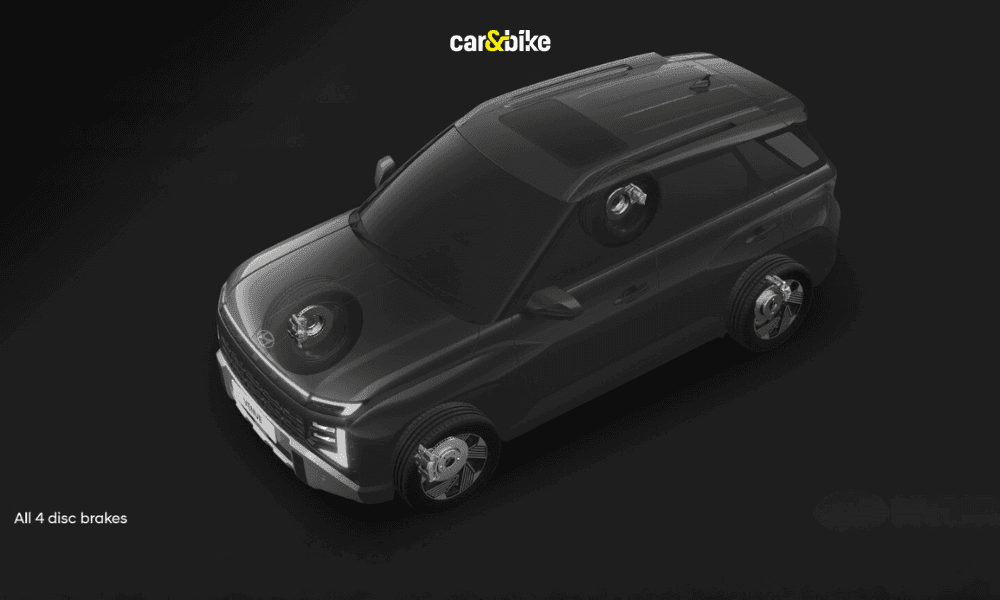
In the Indian market, disc brakes are used on the front wheels of all cars and on all four wheels in higher-end variants, premium cars, SUVs, and performance-oriented vehicles. Some cars now offer front discs with rear disc setups even in mid-range segments.
Differences Between Drum And Disc Brakes In Cars
| Drum Brakes | Disc Brakes |
|
|
|
|
|
|
|
|
Pros Of Drum Brakes
- Lower manufacturing and replacement cost: Drum brakes are cheaper to produce, which helps manufacturers keep entry-level car prices in check. For owners, replacement parts like brake shoes are also more affordable.
- Long service intervals: In typical city driving, rear drum brakes experience less load and can last significantly longer before needing replacement.
- Better protection from dust and debris: The enclosed design helps shield braking components from dirt, stones and road grime, which is useful on rough or poorly surfaced roads.
- Stable handbrake performance: Drum brakes integrate well with mechanical handbrakes, offering reliable holding power on inclines.
Cons Of Drum Brakes
- Weaker braking under heavy load: Drum brakes struggle during hard or repeated braking, especially at highway speeds or on downhill sections.
- Poor heat dissipation: Heat buildup inside the drum can lead to brake fade, reducing stopping power during prolonged use.
- Reduced performance in wet conditions: Water trapped inside the drum can temporarily compromise braking effectiveness.
- More complex servicing: Internal components are harder to access, making inspections and repairs more time-consuming.
Pros Of Disc Brakes
- Stronger and more consistent braking: Disc brakes provide better bite and predictable stopping power, especially at higher speeds.
- Superior heat management: The exposed disc cools faster, reducing the risk of brake fade during aggressive or repeated braking.
- Better performance in rain and waterlogged roads: Water is quickly dispersed from the disc surface, restoring braking efficiency faster.
- Easier inspection and servicing: Brake pad wear can be visually checked, and replacements are quicker compared to drum brakes.
Cons Of Disc Brakes
- Higher replacement cost: Brake pads and discs are more expensive than drum brake components.
- Faster wear rates: Disc brake pads tend to wear out quicker, particularly in stop-and-go traffic.
- Greater exposure to dirt: Open design makes discs more susceptible to dust and surface rust when parked for long periods.
- Marginal real-world benefit at the rear: Rear disc brakes offer limited gains in everyday city driving compared to their cost.
Related News


Latest Cars


Upcoming Cars


Latest News


 Jaiveer Mehra | Apr 2, 2026New Suzuki Burgman Street Launched At Rs 1.02 lakhNew Burgman Street looks to draw some styling inspiration from its larger displacement siblings while also getting updates to the engine and features.2 mins read
 car&bike Team | Apr 2, 20262026 Suzuki Burgman Street Launch Highlights: Images, Price, SpecificationsSuzuki will launch the 2026 Burgman Street today. Watch this space to know all about it.0 mins read
 car&bike Team | Apr 2, 2026Honda CBR650R, CB650R And X-ADV Delisted From India WebsiteHonda has removed the CBR650R, CB650R and X-ADV from its India website, likely after selling out allocated units.2 mins read
 Seshan Vijayraghvan | Apr 2, 2026Hyundai Boulder Concept Showcased At New York Auto Show; Is This The Off-Road SUV Coming To India?This is Hyundai's first ladder-on-frame SUV developed for the US market, and the same platform will be used for a mid-size pickup truck, which will be launched in 2030.1 min read
 Jafar Rizvi | Apr 2, 2026Mahindra Electric SUVs Sales Cross 50,000 MarkMahindra has crossed the 50,000-unit sales milestone for its electric SUV lineup, including the BE 6, XEV 9e and XEV 9S.2 mins read
 car&bike Team | Apr 2, 2026New Suzuki Burgman Street India Launch Today: What To ExpectThe Burgman Street family will grow with the introduction of a new member, which is expected to be a heavily updated version of the existing 125 cc Burgman Street.2 mins read
 Janak Sorap | Mar 31, 20262026 Royal Enfield Guerrilla 450 Apex – First Ride Review: The Update That Changes EverythingAfter riding the updated 2026 Royal Enfield Guerrilla 450 for a round trip of over 140 km from Guwahati to Shillong, the new Apex variant feels like the version of the Guerrilla 450 that should have existed from day one.6 mins read
 Janak Sorap | Mar 25, 2026Ducati Desmo450 MX Review: In PicturesDucati’s first-ever motocross motorcycle, the Ducati Desmo450 MX, promises extreme performance and race-focused engineering, and we recently experienced it at BigRock Dirt Park to find out what it’s really like to ride.1 min read
 Bilal Firfiray | Mar 24, 2026Nissan Gravite Review: Sub-Rs 10 Lakh Seven-Seater That’s PracticalNissan has introduced the Gravite as a practical seven-seater that’s affordable, that’s easy to live with, and value for money. But should you buy it?1 min read
 Janak Sorap | Mar 23, 2026Ducati Desmo450 MX Review: No Road, Only DirtDucati’s first-ever motocross motorcycle promises extreme performance, advanced technology and race-focused engineering, and we got a chance to experience it at BigRock Dirt Park to see what it’s really like.7 mins read
 Seshan Vijayraghvan | Mar 21, 20262026 Renault Duster Review: The Hero Returns, But Does He Deliver?2026 Renault Duster - new design, new platform, modern tech, and most notably, the segment’s most powerful turbo-petrol engine.8 mins read