
Explained: Types Of Automatic Transmissions Available In India and How They Function
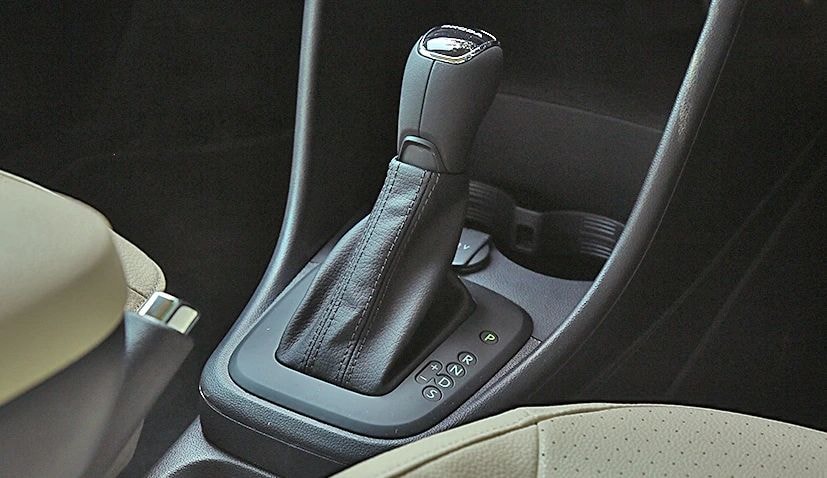
- There are different types of automatic transmissions available in the market.
- Most popular ones in India are AMT, iMT, CVT, DCT and AT.
- Let us explain how are all these gearboxes different from each other.
There is a growing demand for automatic cars in India. More and more manufacturers are introducing fully automatic and semi-automatic gearboxes, be it hatchbacks, sedans, SUVs or even the highly popular subcompact space. Now, there are different types of automatic transmissions available in the market like - Continuously Variable Transmission (CVT), Dual-Clutch Transmission (DCT) and automatic torque converter (AT). And then there are semi-automatics like Automated Manual Transmission (AMT) and Intelligent Manual Transmission (iMT). So, how are these different gearboxes unique from each other? Let us explain.
Also Read: Top 5 Pre-Owned Automatic Compact Sedans To Buy
Automated Manual Transmission (AMT)
Automated Manual Transmission (AMT) a.k.a. Semi-Automatic Transmission is not a conventional fully automatic gearbox. Rather it's very similar to a manual gearbox, but it is designed in a manner where the driver doesn't have to press the clutch lever or shift for different gears. This is why you'll find that AMT cars do not come with a clutch lever or the conventional H-pattern gear lever. An AMT unit's mechanism involves the use of two key parts - a hydraulic actuator system and an electronic control unit that engages and disengages the clutch while executing gear shifts. Basically, it is just a kit that can be added to any regular manual transmission, which makes it a low-cost solution for carmakers.
Intelligent Manual Transmission (iMT)
An Intelligent Manual Transmission or an iMT unit is very similar to an AMT gearbox, the only difference here being the inclusion of a H-pattern gear lever. Like an AMT vehicle, here too you do not get a clutch lever, but you will need to shift gears yourself using the gear lever. So how does it work? Well, the software and actuators combine their abilities to activate the clutch whenever you're manually shifting gears. In a car with iMT, there is an 'intention sensor' on the gear lever, which gets activated when the gears are shifted. The intention sensor on the gear lever sends a signal to the transmission control unit or TCU when the gears are changed. Then, the TCU sends a signal to the hydraulic clutch actuator to engage or disengage the clutch plate when the gear if shifted up or down.
Also Read: Top 5 Pre-Owned Automatic Hatchbacks To Buy
Continuously Variable Transmission (CVT)
The Continuously Variable Transmission (CVT) is the most unique clutch-less gearbox compared to the others we mentioned above. Mind you, it is not the best but only the most unique and I say this because while other transmission units come with a certain number of gears that have to up shifted to keep accelerating, a CVT unit doesn't have different gears like that. Ordinarily, the number of gears in a transmission system, also referred to a speed, have a finite number of gear ratios that are distributed among each gear, and to go faster you need to up shift beyond a point. A CVT unit on the other hand comes with one special gear that's variable across all driving situations and can change effortlessly through a continuous range of effective gear ratios. This allows you to control the engine speed or RPM for accelerating or decelerating based on the level of acceleration. A CVT transmission is also largely used in two-wheelers, especially scooters where acceleration and braking are the key function. Some cars also get the paddle-shifters to make the driving a bit more engaging.
Also Read: 7 Things To Avoid Doing While Driving An Automatic Car
Dual Clutch Transmission (DCT)
A Dual Clutch Transmission (DCT) works on similar principles of an AMT, but a DCT gearbox, as the name suggest, uses two clutches instead of one. One each for odd and even gear sets that makes it more efficient gearbox than an AMT. To simply put it a DCT gearbox is more like two manual gearboxes contained into one single housing. And this how it works: one clutch has an odd number gear engaged, while the car's computer figures out which even number gear you will need next, it has the second clutch ready to engage that gear and simply switch clutches when the time is right. Like any standard automatic gearbox, a DCT unit also comes with a simple P,R,N,and D gear selector and no clutch pedal, shifting gears on its own, or can be manually controlled, via paddle shifters or a separate manual slot on the gear selector.
Automatic Torque Converter (AT)
A torque converter is the more common conventional automatic transmission. It is a completely automated gearbox that can self-change gear ratios as the vehicle moves, freeing the driver from having to shift gears manually. An automatic gearbox uses three main components - fluid/hydraulic coupling, planetary gears train and hydraulic controls. A fluid/hydraulic coupling function quite similar to what a clutch does in a manual gearbox, which changes gear by locking and unlocking a system of planetary gears. Torque Converter is a commonly known hydraulic coupling or fluid coupling used in a number of cars with powerful engines. The second important part of an automatic gearbox is Planetary Gears Train, a system that that provide the various gear ratios, altering the speed of rotation of the output shaft depending on which planetary gears are locked. The third important component used in an automatic gearbox is hydraulic control which acts quite similar to a fluid coupling, but it is typically a gear pump mounted between the torque converter and the planetary gearset and controls various clutches and bands modifying the speed of the output depending on the vehicle's running condition.
Related News


Latest Cars


Upcoming Cars


Latest News


 car&bike Team | Sep 17, 2026Kia Carens Clavis Line-Up Expanded With More Accessible Automatic VariantsThe HTE (O) and HTE (EX) variants of the Kia Carens Clavis will now come with a turbo DCT setup, while the former will also offer a diesel automatic version.2 mins read
 car&bike Team | Sep 17, 2026Petrol Dealers Call For Rs 5 MDR Charge Exemption On UPI Payments; Will Consider Going Cash-Only For Payments Over Rs 2,000Dealers say that the Rs 5 charge on UPI payments of over Rs 2,000 will eat into their earnings.1 min read
 car&bike Team | Sep 17, 2026Royal Enfield Flying Flea C6 Gets New Parachute White ColourRoyal Enfield’s electric motorcycle brand Flying Flea has added a new Parachute White colour to the C6, giving the electric motorcycle a third colour option in India.1 min read
 car&bike Team | Sep 17, 2026MG M9, Cyberster Now Offered With BaaS: Prices Start At Rs 69.99 LakhOpting for the BaaS scheme enables buyers to save up to Rs 10 lakh on the upfront costs.1 min read
 car&bike Team | Sep 17, 2026TVS Apache Range Updated With New Variants And Features Ahead Of Festive SeasonTVS Motor has updated its Apache range with new safety and connectivity features for the RTR 160, RTR 160 4V and RTR 200 4V, while the flagship 310s get new Black Diamond editions.2 mins read
 car&bike Team | Sep 17, 2026TVS Ronin Gets New Variant And Feature Updates Ahead Of Festive SeasonThe neo-retro motorcycle gets a new base variant along with added technology and convenience features on the higher variants1 min read
 Preetam Bora | Sep 16, 2026Royal Enfield Himalayan 440 Review: Better Than the 450?The new Himalayan 440 with an upsized engine and gearbox has certainly improved as a touring machine and at an extremely attractive price of Rs. 2.29 Lakh. Is it the better Himalayan to choose for many riders?9 mins read
 Seshan Vijayraghvan | Sep 15, 2026BMW i5 LWB Review: Not The M60, This Is The Proper Electric 5 SeriesThe BMW i5 LWB takes the electric 5 Series formula and puts a stronger focus on rear-seat comfort and long-distance luxury. With a 669 km claimed range, 268 bhp and a more relaxed character, is this the i5 that makes the most sense for India?7 mins read
 Preetam Bora | Sep 14, 2026Ladakh Uncharted: Himalayan Basecamp Off-Road Ride ExperienceA day-long off-road excursion from Royal Enfield’s Himalayan Basecamp event in Ladakh, the Ladakh Uncharted ride by Alpinestars was all about re-discovery!6 mins read
 Janak Sorap | Sep 12, 2026New Bajaj Pulsar 125 First Ride Review: More Tech, Less Weight, Same Pulsar DNAThe new Bajaj Pulsar 125 retains the familiar Pulsar identity but gets a new engine, lighter construction, more features and a sharper riding experience.5 mins read
 Bilal Firfiray | Sep 10, 2026Mahindra XEV 9S Review: 3 Reasons To Buy It, And 3 Reasons To AvoidEveryone keeps telling me that the Mahindra XEV 9S is not the electric XUV 7XO. I disagree.1 min read