
Personal Mobility To Boost Electric Vehicle Sales In Post-COVID Era: Shailesh Chandra, Tata Motors

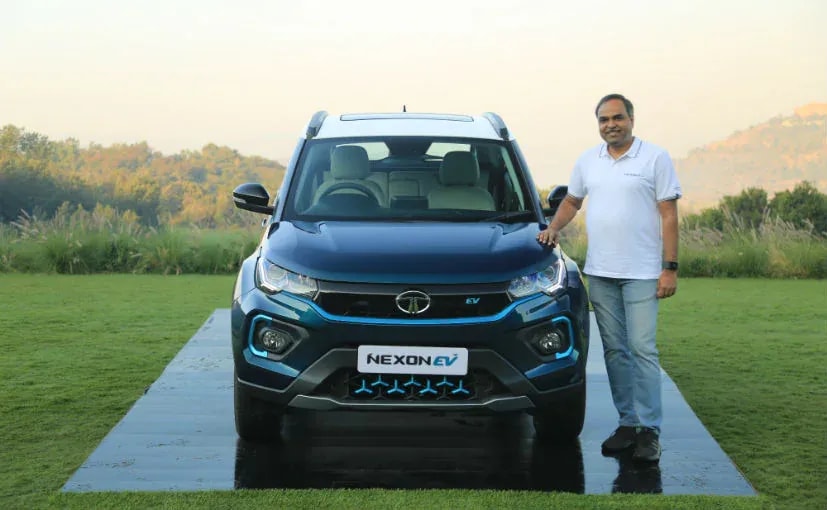
- The need for personal transportation will grow in the post-COVID era
- The personal vehicle segment accounts 85% of the overall PV industry
- Charging infrastructure will play a crucial role in popularising EVs
The auto industry has seen a significant transformation in the past couple of months right from new operating procedures to an unprecedented push for personal mobility. And this push will only help drive sales for electric vehicles in the post COVID-era, says Shailesh Chandra, President - Passenger Vehicle Business Unit, Tata Motors. Chandra responded to a query by carandbike on the future of electric mobility in India. The personal EV segment growth though does come at the cost of falling demand in the fleet segment.
Also Read: Tata Nexon Electric SUV Review
Commenting on EV sales in the post-COVID era and the pandemic's impact, Chandra said, "In pre-COVID era, EV industry grew mainly on account of adoption from fleet segment. However, in post COVID era, fleet segment has seen a significant de-growth, albeit temporarily, on account work-from-home measures adopted by corporates. With personal mobility gaining traction over shared mobility for personal well-being and safety concerns we are also witnessing a shift in mind-set towards after cleaner environment."
Tata Motors sold over 1000 units of the Nexon EV in six months of launch
At present, personal vehicle segment accounts for about 85 per cent of the overall passenger vehicle industry, and electric vehicles are gaining acceptance in the segment. The launch of promising EV options in the market has helped shift the customer mindset towards electric vehicles, added Chandra.
Also Read: Personal Mobility The Way Forward For Consumers: carandbike Survey
The Tata Motors boss' statement echoes with the findings of the carandbike personal mobility survey conducted earlier this year. The survey was conducted to assess the impact of the pandemic on the auto sector and it concluded that the commute by private cars was set to increase by 15 per cent in the times to come. The survey also said that there will be a higher demand for pre-owned vehicles in the times to come, more so, from OEM-backed businesses. That has prompted automakers to more actively enter the used car sector.
Also Read: Tata Motors Roll Out 1000th Nexon EV From Its Pune Plant
Both Volkswagen and Skoda entered in the pre-owned car sales business in the last couple of weeks, while established players like Mercedes-Benz Certified, Maruti Suzuki True Value, Mahindra First Choice among others have seen demand grow. More recently, Mahindra First Choice opened 50 new used car dealerships pan India in a single day, as the brand prepares to address the influx in the times to come.
Also Read: Mahindra First Choice Wheels Opens 50 Dealerships In A Single Day
Tata Altroz EV is the brand's next big launch in the electric mobility segment
Tata Motors has been aggressively looking at establishing dominance in the electric vehicle segment and pooled its resources internally within the Tata Group for a more holistic approach towards the EV space. While the company has been retailing the Tigor EV for fleet operators for a while now, the Tata Nexon EV that was launched earlier this year is the brand's first big bet at reaching out to the masses. The company sold over 1000 units of the Nexon EV in the first six months since its launch, and Chandra says that the extension of FAME II for personal segment cars that meet the subsidy criteria can drive the sales penetration deeper. The company also recently introduced the Nexon EV on a subscription model with prices starting from Rs. 34,900 per month to attract newer customers.
Also Read: Tata Nexon EV Subscriptions Announced At Monthly Rental Schemes
Tata's two new platforms - ALFA and OMEGA - which will underpin the company's all new and future passenger cars, have been designed to accommodate an electric powertrain. The company will also introduce the Altroz EV in the coming months, its next major electric vehicle that will also be slightly more affordable than the Nexon EV, reaching to a larger customer base. With the company looking out for a new partner to grow its passenger vehicle business, we expect electric mobility to be a major part of that plan for the next decade.
Charging infrastructure will play a crucial role in the mass adoption of electric vehicles in the next decade
Tata Motors has also been working with its group companies to set-up a charging infrastructure across the country. Tata Power had previously announced that it intends to have over 700 charging points pan India by the end of 2021. Similarly, companies such as EESL, REIL, Fortum, local DISCOMs are working aggressively on expansion. Pervasive charging infrastructure will be a real enabler for EVs to become a mode of mass mobility in the country, added Chandra.
Also Read: MG And Tata Power Inaugurate First Superfast EV Charging Station In Nagpur
The Indian government had previously announced its aim to see about 30 per cent penetration of electric vehicles in the Indian auto market. Speaking on the same, Chandra said that the dream will require all ecosystem players to work in a collaborative manner to overcome the challenges of EV adoption.
Related News


Popular Tata Models


Latest Cars


Upcoming Cars


Latest News


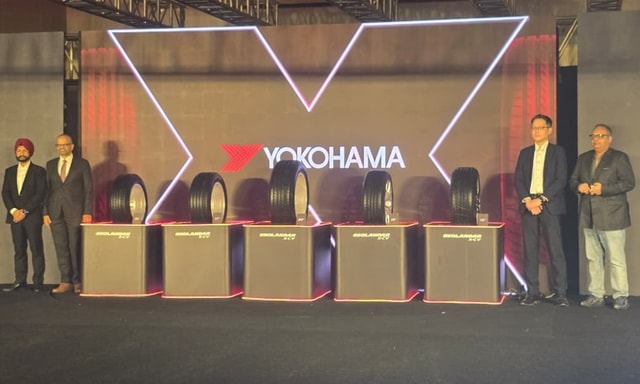 Jaiveer Mehra | Aug 12, 2026Yokohama India Launches New Geolandar X-CV SUV TyresNew variant of the Geolandar series is EV-compatible and offers better grip and longer life compared to conventional tyres.1 min read
 car&bike Team | Aug 12, 2026Mercedes-Benz Introduces India’s First AI-Powered Vehicle Scanner In MumbaiMercedes-Benz has launched India’s first AI-powered vehicle scanner in Mumbai, alongside its largest sales & service facility and Service Select programme for older cars.1 min read
 Sarthak Mahajan | Aug 12, 2026Yamaha R2 Pre-Bookings Commence For Rs.10,000Pre-bookings for the upcoming Yamaha R2 are now open for Rs. 10,000. The highly-anticipated R2 will be launched on August 27, 2026, when prices and specifications will be announced.1 min read
 Sarthak Mahajan | Aug 12, 20262026 Hyundai Exter Knight Edition Launched: Prices Start At Rs 8.13 LakhThe Exter Knight Edition will be available across the HX 6 MT, HX 6 AMT, HX 6 CNG and HX 10 Petrol AMT variants.1 min read
 Sarthak Mahajan | Aug 12, 2026Mahindra Scorpio-N Pick-Up Teased; Unveiling Slated For 14 AugustMahindra has teased the upcoming Scorpio-N Pick-Up, which will be based on the existing Scorpio-N but offered in a pick-up body style.1 min read
 Sarthak Mahajan | Aug 11, 2026PM E-Drive EV Subsidy Extended To March 2028; Incentive For E2Ws Cut To Rs 5,000Even with the extension, incentives for electric two-wheelers have been reduced to Rs 5,000 per vehicle.1 min read
 Preetam Bora | Aug 12, 2026Royal Enfield Himalayan 440 Custom Review: Beating RE to the PunchDelhi-based custom motorcycle shop TNT Motorcycles introduces packages to convert existing Himalayan 411 adventure bikes to Himalayan 440. Is it worth the expense?8 mins read
 Seshan Vijayraghvan | Aug 11, 20262026 Nissan Tekton 700 km Review: Can It Conquer The Himalayas?We drove the newly launched Nissan Tekton from Chandigarh all the way up to Leh, covering over 700 km with the new SUV. From exploring the Tekton’s capabilities in the Himalayas to setting an India Book Record, here’s how the trip unfolded.1 min read
 Preetam Bora | Aug 11, 20262026 Aprilia Tuono 457 Special Edition First Ride Review: Should You Buy It?The 2026 Aprilia Tuono 457 delivers an engaging, everyday riding experience with strong performance. At its price point, the Tuono 457 is a brilliant motorcycle, but not quite the complete package. Why is that, and should you still buy it? Read on.8 mins read
 Bilal Firfiray | Aug 1, 2026Toyota Hilux Review: The InvincibleMarking it as the ninth generation, the Hilux comes with a major cosmetic overhaul. But is it still relevant enough for the current times or is it getting too long in the tooth?5 mins read
 Bilal Firfiray | Jul 30, 2026Kia Syros EV Review: Best EV To Buy Under Rs 20 Lakh?The Kia Syros EV comes into the game with a modern design, spacious cabin, strong performance, decent range and an aggressive pricing. But could it become the new benchmark under Rs 20 lakh?5 mins read