
Electric Bikes Proposal For Indian Market Has Challenges, Say Observers


- Niti Aayog proposes electrification of most two-wheelers by 2025
- Electric technology comes with added costs for consumers
- Mainstream two-wheeler manufacturers yet to launch electric products
Niti Aayog, the Indian government's think-tank has reportedly proposed electrifying most motorcycles and scooters within the next six to eight years to curb pollution and reduce dependency on fossil fuels. Many leading two-wheeler manufacturers are known to be pursuing the development and production of the next generation of electric two-wheelers, but it seems to be early days yet on how manufacturers will actually fast track the development of an entire ecosystem, including charging infrastructure and supply chain. Most leading two-wheeler manufacturers Carandbike reached out to, declined to comment on the policy proposal, choosing to see if actual policy decisions are taken around it. But there's no denying that the future of the two-wheeler industry will be gradually heading towards electicification from the current internal combustion engines.
Also Read: Government Think-Tank Proposes Electrification Of Two-Wheelers In India
If the proposal become policy, the most affected will be the large volumes leaders who currently don't have a single electric two-wheeler product or electric bike which is production ready. Hero MotoCorp sold over 78 lakh two-wheeler in 2018-19, while Honda Motorcycle and Scooter India (HMSI) sold more than 55 lakh two-wheelers. Bajaj Auto, India's largest exporter of motorcycles, also sold more than 50 lakh two- and three-wheelers in 2018-19. TVS Motor Company sold almost 38 lakh two-wheelers in 2018-19, and although the company is pursuing an electric two-wheeler programme, it's still not clear when the first electric TVS will be production ready.
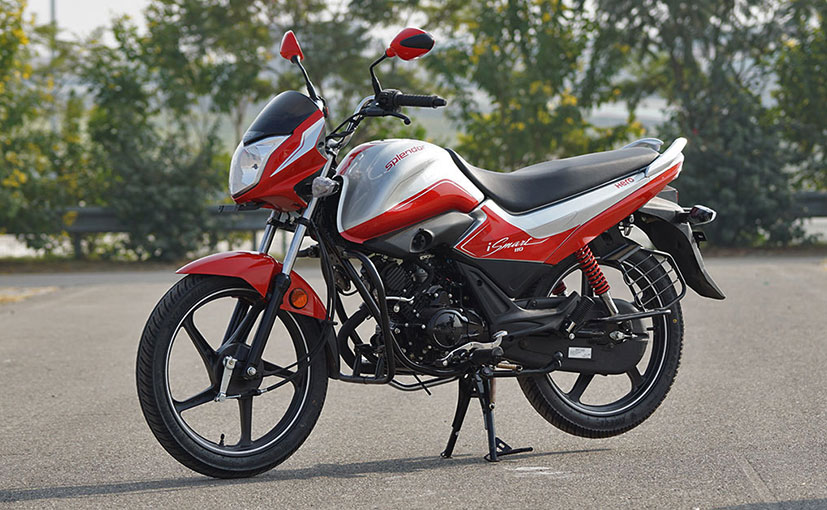
Hero MotoCorp is the undisputed leader in the two-wheeler industry
When contacted, HMSI declined to comment, saying that it's still a draft proposal, and that the company will comment when actual policy is announced. TVS Motor Company too declined to comment, and a spokesperson for Bajaj Auto was unavailable to respond to queries. Market leader Hero MotoCorp said that new products with electric technology are currently under development, but there still remain challenges in charging infrastructure, as well as consumer acceptance of these products, which will come with added costs.
"Hero MotoCorp and the entire automotive industry in the country are currently focussed on transitioning to BSVI emission norms by April 2020, putting India at the forefront of clean emissions, even before the implementation of EuroV norms. At the same time, Hero MotoCorp is constantly engaged in developing innovative and advanced technologies for future mobility, including electric vehicles (EV). The ongoing work on EVs at our world-class R&D facility - the Centre of Innovation and Technology (CIT) - and the strategic investment in Ather Energy bear testimony to our commitment to electric mobility. The scale and timing of adoption of EVs would depend on multiple factors such as nationwide public infrastructure for easy and convenient charging, mass consumer acceptance of products and cost implications," a spokesperson for the world's largest two-wheeler manufacturer by volume, told Carandbike.

Honda Motorcycle and Scooter India (HMSI) is the leader in overall scooter sales
India is the world's largest two-wheeler market, and in the financial year 2018-19, as many as 2.1 crore motorcycles and scooters were sold up to March 2019. There has been a gradual introduction of electric two-wheelers and electric bikes in the country, but electric scooters accounted for only 1.26 lakh units in the past 12 months, although electric scooter sales have doubled in just over a year, from just 54,800 a year ago. But so far, the electric two-wheeler space has only seen smaller and niche players, rather than mainstream two-wheeler manufacturers. New entrants like Ather Energy are far ahead in the game, with advanced technologies like cloud connected diagnostic tools, and smartphone connectivity, in the company's two electric scooter products. And Ather also has a dedicated in-house charging network, called the Ather Grid, which is also offered in cities where the company operates in.
"The policy is in the right direction, pushing the industry towards electrification, and for cleaner technology. But there are still gaps in the supply chain for local capability to develop. Some of the new entrants in the electric vehicle space are from the unorganised sector. The policy with linked incentives to certain levels of localisation of technology and supply chain is good from a local perspective, " says Rakesh Batra, Partner and Sector Leader (Automotive), Ernst and Young.
"But the key issue will also be the cost factor, which is linked to the supply chain and localisation of that supply chain. Whatever products are being offered today, aren't really cost effective, from a consumer point of view. And then if you look at the supply side, there are limited products to meet market demand. Manufacturers will need to allocate resources and focus on accelerated product development, and this means different products for different segments, and also explore all options, including alliances to share costs of development. Today, China is perhaps the most advanced electric two-wheeler market, from a technology, scale and volumes perspective. That makes China a prime candidate for Indian manufacturers to emulate," added Batra.

The Ather 450 from Ather Energy promises more than 80 kmph top speed and 75 km range on a single charge
Clearly, with most manufacturers gearing up to meet the challenges of the Bharat Stage VI emission regulations which will come into place from April 2020, the draft proposal to make most two-wheelers electric by 2025 will be yet another challenge. The common view of many analysts and observers is that most stakeholders will not want to dilute financial performance at the cost of product development, which will likely take more than a year or two, more so, with newer technologies and new segments. There will be increased focus on electric technology, and an increased push in electric product development is expected, whether the draft proposal becomes policy or not.
Related News




Latest Cars


Upcoming Cars


Latest News


 Jaiveer Mehra | Jul 28, 2026Avore EX Electric Motorcycle Launched In India At Rs 1.25 LakhEV start-up is offering its debut electric motorcycle in three variants - EX1, EX2 and EX2 S.1 min read
 car&bike Team | Jul 28, 2026Honda XR 300L & Honda XR300 Rally: What We Know So FarBoth the XR300L and XR300 Rally are based on the same platform and will be part of Honda’s new made in India line-up with prices and full specifications to be announced soon.5 mins read
 car&bike Team | Jul 28, 2026Mahindra Scorpio-N Facelift Interior Spied Undisguised Ahead Of DebutWhile a lot of the switchgear is carried over from the current SUV, the facelifted SUV gets a redesigned centre console with a larger touchscreen and a new digital instrument cluster.1 min read
 Bilal Firfiray | Jul 28, 2026Skoda Slavia Facelift India Debut On 18th August; New Gearbox With Cosmetic ChangesSkoda Slavia facelift will be launched in India on August 18 with newer styling cues, additional features and an expected 8-speed automatic gearbox for the 1.0 TSI engine.1 min read
 car&bike Team | Jul 27, 2026Honda CB500: What We Know So Far – Price, Launch Date, SpecsThe Honda CB500 is expected to be launched just before the festive season this year, possibly around September 2026 with prices beginning at around Rs. 3 lakh (Ex-showroom).4 mins read
 Amaan Ahmed | Jul 27, 2026EXCLUSIVE: River Indie Rival Incoming? E3 Trion Electric Scooter Spied Ahead Of August 6 DebutMaiden scooter from E3 Electric.AI employs 14-inch wheels and a hub motor; new startup spearheaded by former TVS executive.2 mins read
 Jaiveer Mehra | Jul 27, 20262026 Maruti Suzuki Brezza Facelift Review: Bestseller Joins The Turbo ClubWhile Maruti’s facelifts have always tended to bring subtle updates over the outgoing models, the latest Brezza brings some heavy updates under the skin, including a new 6-speed manual gearbox and, for the first time, a turbocharged petrol engine option.1 min read
 Bilal Firfiray | Jul 24, 2026Honda ZR-V Review: Who Is It For?Honda has brought the new ZR-V to India as their current flagship offering. It’s a CBU, it’s a hybrid, and it’s here for a limited few. Who is it for though?1 min read
 Shams Raza Naqvi | Jul 15, 2026Ferrari 849 Testarossa Spider Driven: Rs. 11.25 Crore Meets 1,000 bhpWe got behind the wheel of the most powerful convertible from Ferrari. What makes the 849 Testarossa Spider Special? We tell you.1 min read
 Bilal Firfiray | Jul 12, 2026Tata Sierra EV Review: Reborn In The Electric AgeThe Tata Sierra EV isn’t drastically different from its ICE counterpart when it comes to design. But being the seventh electric offering from the Indian brand, it has gotten a few things right, and very few things wrong. But is it a compelling package to buy?5 mins read
 Jafar Rizvi | Jul 13, 2026TVS Orbiter Long-Term Review (Report 1): Settling In Takes TimeFirst impressions weren't the strongest, but the Orbiter has made a mark in its first month in the car&bike garage.5 mins read