
Tata Motors Says 20% Rise In Battery Cell Costs Increasing Short-Term Pressure

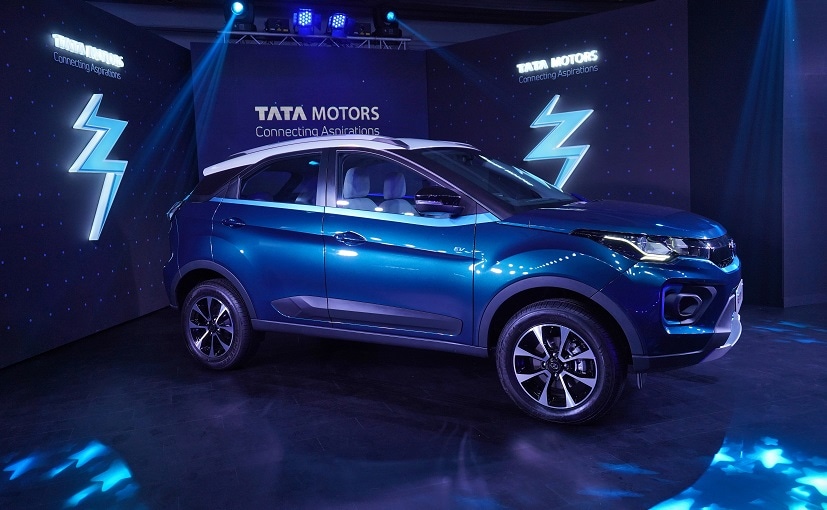
Tata Motors, India's top-selling electric carmaker, said the cost of battery cells had increased by around 20% because of a global surge in raw material prices, mainly lithium, putting pressure on the company in the short-term.
Shailesh Chandra, president of the passenger vehicles business unit, told Reuters that cell prices have been rising over months and he expects them to remain high for about a year.
"Immediate impact seems to be about a 20% kind of an increase which will have short-term pressure. This should moderate within a year and then start coming down," he said.
Chandra did not comment on whether this would affect the company's sales or profitability but said that demand for "green personal mobility" was rising sharply and he expected to offset some of the costs by increasing the use of locally sourced components in its cars.
Automakers globally are facing inflationary pressures due to surging costs of nickel, cobalt and lithium that are used in making batteries - the most expensive part of an electric vehicle (EV) - as demand outstrips supply.
This has been made worse by Russia's invasion of Ukraine, and analysts say it threatens to slow the trend of falling battery prices which could hamper the broader adoption of EVs, especially in price-sensitive markets like India.
In India's nascent EV market, electric cars make up only 1% of total car sales. High battery prices and an insufficient charging network are the main reasons why there are few takers, and why more carmakers are yet to launch electric models.
Spot prices for lithium carbonate, which is typically used to make lithium-ion batteries, surged to over $70,000 per tonne in March 2022 from about $10,000 a year earlier, according to data from industry forecaster Benchmark Market Intelligence.
"Going forward this inflationary impact is expected to continue," said Manish Dua, senior analyst at Benchmark.
Tata recently raised the price of its Nexon electric SUV in India by over $300 - a 2% rise for the base model, following similar moves globally by Tesla Inc and China's BYD.
Even so, Tata, which has over 90% share of India's electric car market, expects sales of its electric cars to grow over four-fold this fiscal year from 4,200 units last year.
The EV maker sources lithium-ion batteries for its cars from Tata AutoComp Systems, which has a joint venture with China's Guoxuan Hi-Tech to produce them locally.
Chandra said as battery recycling gains pace there will be access to raw materials beyond mines and that will offset some of the cost pressures.
"Short term spikes will happen. It is good to focus on the secular long term trend which will keep going down," he said.
(This story has not been edited by NDTV staff and is auto-generated from a syndicated feed.)
Related News


Popular Tata Models


Latest Cars


Upcoming Cars


Latest News


 car&bike Team | Jun 29, 2026Tata Sierra EV Launch Tomorrow: What To Expect?The Sierra EV is expected to share much of its package with the Harrier EV.3 mins read
 Jaiveer Mehra | Jun 28, 2026Nissan Tekton Spied Undisguised Ahead Of July 9 DebutSole image of the SUV showcases the rear design of the SUV.1 min read
 Carandbike Team | Jun 28, 2026Renault Kwid Facelift India Launch On July 3Latest facelift marks the second major update for the entry hatchback since its launch in 2015.1 min read
 Amaan Ahmed | Jun 27, 2026Future Hyundai, Kia Cars May Feature In-Built UVC SanitiserHyundai Motor Group has unveiled 'Plasma Care UVC' technology, which utilises plasma lamps to safely and effectively destroy bacteria and viruses present inside a car.1 min read
 Amaan Ahmed | Jun 27, 20262026 Maruti Suzuki Brezza Facelift To Be Launched On July 23Launched back in 2022, the current generation of the Brezza subcompact SUV is expected to gain a new engine option, along with a longer list of features.2 mins read
 Jaiveer Mehra | Jun 26, 2026New Hyundai Elantra Makes Global Debut: Boxy Styling, Hybrid Powertrain & Pleos InfotainmentNew generation of the Elantra – sold as the Avante in South Korea – adopts Hyundai’s Art of Steel design language.1 min read
 Seshan Vijayraghvan | Jun 29, 2026Skoda Kodiaq RS Review: The Best Kodiaq Yet?The Skoda Kodiaq RS is finally here, and it's every bit as exciting as I expected. But was it worth the wait?7 mins read
 Bilal Firfiray | Jun 28, 2026BMW X6 M60i Review: It’s Back And HOW!The BMW X6 M60i blends a 530bhp twin-turbo V8, with its unmistakable coupe-SUV styling. There’s plenty of character, but is it worth your money?6 mins read
 Janak Sorap | Jun 25, 2026350cc Bajaj Dominar 400 Review: Same Character, Lower PriceA slightly lower displacement engine, a significantly lower price tag and nearly the same performance — the Bajaj Dominar 400 aims to be smarter rather than faster.6 mins read
 Preetam Bora | Jun 25, 20262026 Bajaj Pulsar NS400Z First Ride Review: Smaller Engine, But Should You Buy It?The Bajaj Pulsar NS400Z won our Two-Wheeler Upgrade of the Year. Then new tax slabs happened. Smaller engine, same badge – but does it still deliver?6 mins read
 Preetam Bora | Jun 25, 2026Triumph Tracker 400 First Ride Review: What's It Really Like?The Triumph Tracker 400 is here, now with a downsized 349 cc engine. We spent a couple of hours with it to share our first impressions. Is it worth your attention?1 min read