
Tesla's Value Drops $50 Billion As Musk's Promised Cheaper Battery Three Years Away


Investors slashed $50 billion from Tesla Inc's market value on Tuesday despite CEO Elon Musk's promise to cut electric vehicle costs so radically that a $25,000 car that drives itself will be possible, but not for at least three years. Tesla's market cap dropped $20 billion in just two hours after trading closed Tuesday, as Musk and other Tesla executives presented their new battery and manufacturing strategies. Shares closed down 5.6% and dropped another 6.9% after hours.
"Nothing Musk discussed about batteries is a done deal," said Roth Capital Partners analyst Craig Irwin. "There was nothing tangible."
Investors had expected two significant announcements at Musk's oft-touted "Battery Day": The development of a "million mile" battery good for 10 years or more, and a specific cost reduction target -- expressed in dollars per kilowatt-hour -- that would finally drop the price of an electric vehicle below that of a gasoline car.

Tesla expects to eventually be able to build as many as 20 million electric vehicles a year
Musk offered neither. Instead, he promised over the next several years to slash battery costs in half with new technology and processes and deliver an "affordable" electric car.
"In three years . . . we can do a $25,000 car that will be basically on par (with), maybe slightly better than, a comparable gasoline car," Musk said.
Musk acknowledged that Tesla does not have its ambitious new vehicle and battery designs and manufacturing processes fully complete. Tesla has frequently missed production targets set by Musk.
Tesla expects to eventually be able to build as many as 20 million electric vehicles a year. This year, the entire auto industry expects to deliver 80 million cars globally.
Building an affordable electric car "has always been our dream from the beginning of the company," Musk told an online audience of more than 270,000.
Tesla on Tuesday also introduced a new Model S Plaid, a 520-mile range sedan that can reach top speeds of up to 200 miles per hour (320 km per hour), with deliveries starting in 2021. The Plaid was listed on Tesla's website on Tuesday at a price of nearly $140,000.
RECYCLING BATTERIES
At the opening of the event, Musk walked on stage in a black t-shirt and jeans as about 240 shareholders -- each sitting in a Tesla Model 3 in the company parking lot -- honked their car horns in approval.

Tesla's new larger cylindrical cells will provide five times more energy, six times more power and far greater driving range
To help drive down vehicle cost, Musk described a new generation of batteries that will be more powerful, longer lasting and half as expensive than the company's current cells.
Tesla's new larger cylindrical cells will provide five times more energy, six times more power and far greater driving range, Musk said, adding that full production is about three years away.
To help reduce cost, Musk said Tesla planned to recycle battery cells at its Nevada "gigafactory," while reducing cobalt -- one of the most expensive battery materials -- to virtually zero. It also plans to manufacture its own battery cells at several highly automated factories around the world.
Shares in two battery suppliers to Tesla, South Korea's LG Chem and Japan's Panasonic Corp, fell after the announcement.
Tesla will produce the new battery cells initially on a new assembly line near its vehicle plant in Fremont, California, with planned output reaching 10 gigawatt-hours a year by the end of 2021. Tesla and partner Panasonic Corp now have production capacity of around 35 gWh at the Nevada battery "gigafactory."
Tesla aims to rapidly ramp up battery production over the next years, to 3 terawatt-hours a year, or 3,000 gigawatt-hours -- roughly 85 times greater than the capacity of the Nevada plant. Musk said Tesla could supply batteries to other companies.
As automakers shift from horsepower to kilowatts to comply with stricter environmental regulations, investors are looking for evidence that Tesla can increase its lead in electrification technology over legacy automakers who generate most of their sales and profits from combustion-engine vehicles.
While average electric vehicle prices have decreased in recent years thanks to changes in battery composition, they are still more expensive than conventional cars, with the battery estimated to make up a quarter to a third of an electric vehicle's cost.
Some researchers estimate that price parity, or the point at which electric vehicles are equal in value to internal combustion cars, is reached when battery packs cost $100 per kilowatt hour (kWh).
Tesla's battery packs cost $156 per kWh in 2019, according to electric vehicle consulting firm Cairn Energy Research Advisors.


Latest News


 car&bike Team | Jul 17, 2026New CAFE 3 Draft Brings Revised Fuel Consumption Variables, Reduced Derogation Factor For Strong Hybrid & MoreThe latest CAFE 3 draft also opens the door for technologies such as engine start/stop, TPMS & 12/48V mild-hybrid tech to factored into fuel consumption.3 mins read
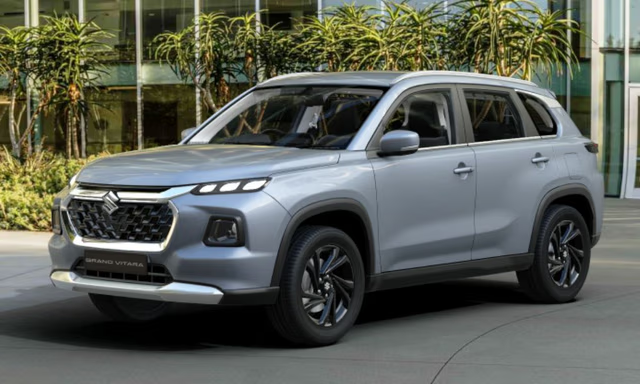 car&bike Team | Jul 17, 2026Consumer Court Orders Maruti Suzuki To Replace Grand Vitara Over E20-Related Damages; Carmaker To Escalate Matters In Higher CourtThe complainant had filed a complaint citing multiple cases of the vehicle developing technical issues due to repeated contamination in the fuel tank.1 min read
 car&bike Team | Jul 16, 2026Studds Trooper Trail Flip-Up Helmet Launched in India at Rs 2,125Studds has expanded its Trooper helmet range with the new Trail edition, featuring fresh graphics and a new colour-shifting paint option.1 min read
 car&bike Team | Jul 16, 20262027 Suzuki Hayabusa Receives Three New ColoursApart from the new liveries, the 2027 Hayabusa retains the same powertrain, electronics, and hardware.1 min read
 car&bike Team | Jul 16, 2026Hero MotoCorp Enters Germany, Expands European Presence to Five MarketsHero MotoCorp has officially entered the German market, strengthening its European presence with the launch of the Euro 5+ compliant XPulse 200 4V range.1 min read
 Jaiveer Mehra | Jul 16, 2026New Kia Syros EV Variants ExplainedThe all-electric derivative of the Syros subcompact SUV will go on sale with two battery options and in five trim levels.3 mins read
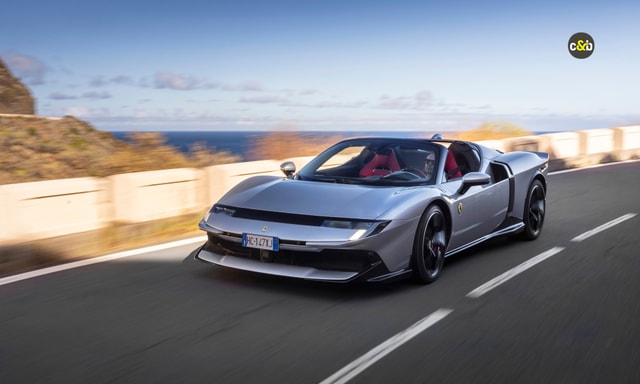 Shams Raza Naqvi | Jul 15, 2026Ferrari 849 Testarossa Spider Driven: Rs. 11.25 Crore Meets 1,000 bhpWe got behind the wheel of the most powerful convertible from Ferrari. What makes the 849 Testarossa Spider Special? We tell you.1 min read
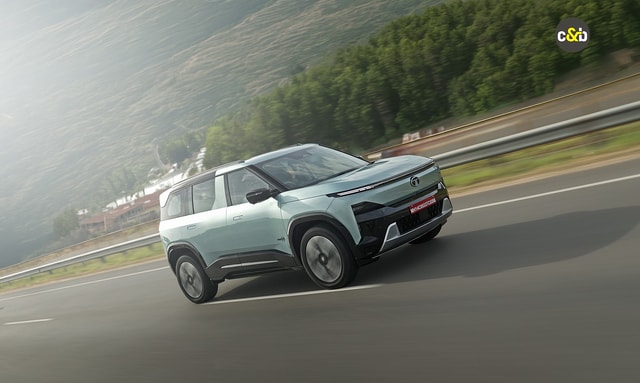 Bilal Firfiray | Jul 12, 2026Tata Sierra EV Review: Reborn In The Electric AgeThe Tata Sierra EV isn’t drastically different from its ICE counterpart when it comes to design. But being the seventh electric offering from the Indian brand, it has gotten a few things right, and very few things wrong. But is it a compelling package to buy?5 mins read
 Jafar Rizvi | Jul 13, 2026TVS Orbiter Long-Term Review (Report 1): Settling In Takes TimeFirst impressions weren't the strongest, but the Orbiter has made a mark in its first month in the car&bike garage.5 mins read
 Seshan Vijayraghvan | Jul 7, 2026Tata Altroz Petrol DCA Long-Term Review: Intercity & Highway Driving ReportWe tested the Tata Altroz Petro DCA’s highway manners, intercity performance, and real-world fuel efficiency.1 min read
 Seshan Vijayraghvan | Jun 29, 2026Renault Kiger vs Toyota Urban Cruiser Taisor: Which Underdog Deserves Your Money?Both the Kiger and the Taisor promise strong performance, solid features, comfortable cabins and everyday usability, all without breaking the bank. But which of these underrated subcompact SUVs deserves your money? Let's find out.1 min read