
West Virginia Engineer Proves to be a David to Volkswagen's Goliath

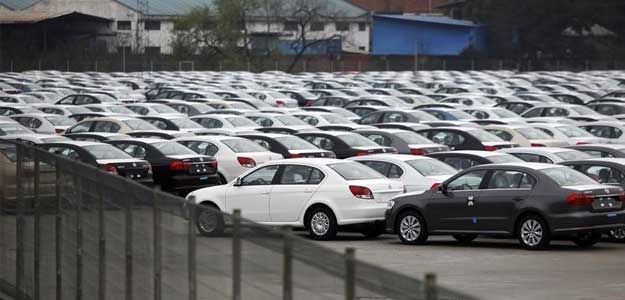
But he and his small research team at West Virginia University may have done exactly that, with a $50,000 study which produced early evidence that Volkswagen AG was cheating on U.S. vehicle emissions tests, setting off a scandal that threatens the German automaker's leadership, reputation and finances.
"The testing we did kind of opened the can of worms," Carder says of his five-member engineering team and the research project that found much higher on-road diesel emission levels for VW vehicles than what U.S. regulators were seeing in tests.
The results of that study, which was paid for by the nonprofit International Council on Clean Transportation (ICCT) in late 2012 and completed in May 2013, were later corroborated by the U.S. Environmental Protection Agency and California Air Resources Board (CARB).
Carder's team - a research professor, two graduate students, a faculty member and himself - performed road tests around Los Angeles and up the West Coast to Seattle that generated results so pronounced that they initially suspected a problem with their own research.
"The first thing you do is beat yourself up and say, 'Did we not do something right?' You always blame yourself," he told Reuters in an interview. "(We) saw huge discrepancies. There was one vehicle with 15 to 35 times the emissions levels and another vehicle with 10 to 20 times the emissions levels."
Despite the discrepancies, a fix shouldn't involve major changes. "It could be something very small," said Carder, who's the interim director of West Virginia University's Center for Alternative Fuels, Engines and Emissions in Morgantown, about 200 miles (320 km) west of Washington in the Appalachian foothills.
"It can simply be a change in the fuel injection strategy. What might be realized is a penalty in fuel economy in order to get these systems more active, to lower the emissions levels."
Carder said he's surprised to see such a hullabaloo now, because his team's findings were made public nearly a year and a half ago.
"We actually presented this data in a public forum and were actually questioned by Volkswagen," said Carder.
The ICCT's research contract to Carder's team was sparked by separate findings by the European Commission's Joint Research Centre, which showed a discrepancy between test results and real world performance in European diesel engines.
The diesel vehicles chosen for the West Virginia study were the VW Passat, the VW Jetta and the BMW X5. Unlike the VW vehicles, Carder said the BMW vehicle "performed very nicely - at, or below, the certification emission levels."
West Virginia University is not new to ground-breaking emissions research, having helped create the first technology to measure vehicle emissions on the road more than 15 years ago.
Carder belonged to a 15-member West Virginia University team that pioneered portable emissions testing as part of a 1998 settlement between the U.S. Justice Department and several heavy duty diesel engine makers including Caterpillar Inc and Cummins Engine Co.
The manufacturers agreed to pay $83.4 million in civil penalties after federal officials found evidence that they were selling heavy duty diesel engines equipped with "defeat devices" that allowed the engines to meet EPA emission standards during testing but disabled the emission control system during normal highway driving.
When the news about Volkswagen broke last Friday, Carder heard from some of the heavy diesel engine manufacturers that were part of the consent decree.
"They saw what had happened and called to say: 'Good job, you guys,'" Carder said. "Some folks said: 'How did they not learn from our mistakes 15 years ago?'"
Regarding his role in unearthing the current scandal, Carder said there was no particular sense of excitement when his team confirmed that the higher VW emission results were real and not a consequence of faulty measurements.
"There's no incentive for us to pass or fail," he said. "Obviously, we don't want to see something spewing emissions and polluting the environment. But we really have no horse in the race, as they say."
Related News


Popular Volkswagen Models


Latest Cars


Upcoming Cars


Latest News


 Jafar Rizvi | Jul 23, 20262026 Maruti Brezza Facelift To Launch Tomorrow With Three Major FirstsThe 2026 Maruti Suzuki Brezza arrives tomorrow, and along with carrying a five-star Bharat NCAP rating, the model is set to bring three firsts for both the Brezza and, in one case, Maruti itself.2 mins read
 Jafar Rizvi | Jul 23, 20262026 Maruti Suzuki Brezza Bags 5 Stars In Bharat NCAP Crash TestsMaruti’s heavyweight has managed to achieve 30.41/32 for adult occupant protection and 43/49 for child occupant protection.2 mins read
 Seshan Vijayraghvan | Jul 23, 2026Kia Syros EV Launched In India; Prices Start At Rs. 13.49 LakhOffered with two battery pack options, the electric SUV delivers a claimed range of up to 526 km and comes with features such as DC fast charging, Level 2 ADAS and Vehicle-to-Load (V2L).5 mins read
 Jafar Rizvi | Jul 23, 2026Mercedes-AMG E 53 Plug-In Hybrid Launched In India At Rs 1.45 CroreThe performance sedan packs a six-cylinder petrol engine paired with an electric motor to deliver nearly 600 bhp.3 mins read
 car&bike Team | Jul 23, 2026Honda To Showcase Multiple Products On July 24; To Be Made in Indiacar&bike has learnt that at least 5-6 new products will be showcased, including the Honda Rebel 300, Honda ADV 160, CRF300L, Honda CB500 Hornet and CB500R. All of these will be made in India, although prices will be announced later.5 mins read
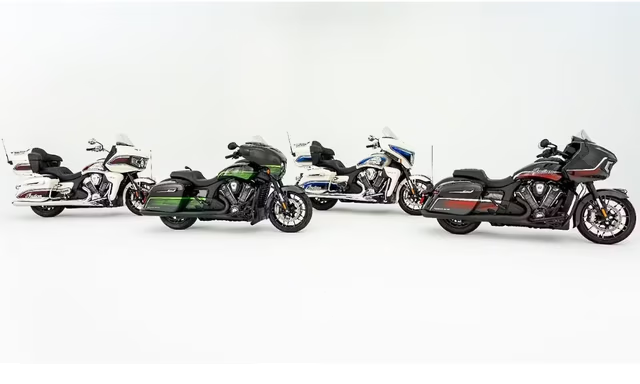 car&bike Team | Jul 23, 2026Indian Motorcycle Unveils Limited-Edition Signature Series For PowerPlus Line-upIndian Motorcycle has introduced the Signature Series, an ultra-exclusive collection of four premium touring motorcycles based on its PowerPlus platform.1 min read
 Shams Raza Naqvi | Jul 15, 2026Ferrari 849 Testarossa Spider Driven: Rs. 11.25 Crore Meets 1,000 bhpWe got behind the wheel of the most powerful convertible from Ferrari. What makes the 849 Testarossa Spider Special? We tell you.1 min read
 Bilal Firfiray | Jul 12, 2026Tata Sierra EV Review: Reborn In The Electric AgeThe Tata Sierra EV isn’t drastically different from its ICE counterpart when it comes to design. But being the seventh electric offering from the Indian brand, it has gotten a few things right, and very few things wrong. But is it a compelling package to buy?5 mins read
 Jafar Rizvi | Jul 13, 2026TVS Orbiter Long-Term Review (Report 1): Settling In Takes TimeFirst impressions weren't the strongest, but the Orbiter has made a mark in its first month in the car&bike garage.5 mins read
 Seshan Vijayraghvan | Jul 7, 2026Tata Altroz Petrol DCA Long-Term Review: Intercity & Highway Driving ReportWe tested the Tata Altroz Petro DCA’s highway manners, intercity performance, and real-world fuel efficiency.1 min read
 Seshan Vijayraghvan | Jun 29, 2026Renault Kiger vs Toyota Urban Cruiser Taisor: Which Underdog Deserves Your Money?Both the Kiger and the Taisor promise strong performance, solid features, comfortable cabins and everyday usability, all without breaking the bank. But which of these underrated subcompact SUVs deserves your money? Let's find out.1 min read