
Tata Punch EV Review: This Packs An Electric Punch

- The Tata Punch EV is the fourth electric car from the brand
- It's the first EV to be built on the company's new Pure EV architecture Acti.ev
- The Tata Punch EV comes in two range options - 315 km and 421 km
Back in 2021, when Tata Motors launched the Punch, the car became a game-changer of sorts. It not only popularised the Micro-SUV segment in India but also impressed a lot of buyers with its optimum size, strong driving dynamics and lucrative pricing. So, when Tata decided to launch an electric version of the Punch, given the company’s EV ambitions, it was a no-brainer. It’s the fourth electric vehicle from Tata Motors, but the first one to be built on the company’s new pure EV architecture Acti.ev (Advanced Connected Tech Intelligent EV). This platform boasts of new powertrains, and chassis, along with electric and cloud architecture. So, has Tata Motors finally managed to make the perfect EV? Let’s find out.
Also Read: Tata Punch EV Launched In India; Prices Start At Rs. 10.99 Lakh
Desing & Dimensions
One look at the Punch EV and you’ll be immediately reminded of the Nexon EV facelift that was introduced a few months ago. And like the Nexon EV, this too comes in Personas. Five to be precise - Smart, Smart + Adventure, Empowered & Empowered+, and I got to experience the range-topping Empowered+, in both the new dual-tone colours - Empowered Oxide and Seaweed.
Like its older sibling, the Punch EV also comes with a sharper-looking face with connected LED daytime running lights, which do this welcome and goodbye animation. Still looks quite cool, and what adds a premium touch to the facia are the sequential LED turn indicators. See a little lower, you’ll find the new LED projector headlamps. However, what sticks out like a sore thumb is the excessive use of plastic cladding that sort of brings down the premium quotient.
Also Read: Tata Punch EV To Be Sent For Bharat NCAP Crash Tests
One big change you’ll see on the Punch EV is that now the charging port is upfront, covered by a panel that houses the new Tata logo. Walk towards the profile and you’ll see that the car looks largely similar to the petrol-powered Punch, however, here you get a set of new 16-inch alloy wheels with EV-specific features like aero inserts and a set of low rolling resistance tyres. The rear section is not too different either, you still get the tri-arrow LED taillamps, a shark fin antenna and an updated rear bumper.
The new design and styling have also contributed to altering the dimensions of the Punch EV. Compared to the regular ICE Punch, the EV is longer by 30 mm at 3857 mm, and taller by 12 mm at 1633 mm.
While the width and wheelbase remain unchanged at 1742 mm and 2445 mm, the ground clearance has gone up to 190 mm. This is despite having a floor-mounted battery pack. The floor height inside the cabin has also slightly risen.
Interior & Cabin Features
Like the exterior, the cabin design too is inspired by the Nexon EV. You get a minimalist design, treated in lighter tones, the two-spoke steering with an illuminated Tata logo, and capacitive buttons for in-car controls like AC, central locking, charging port controls and more. The steering also gets additional buttons for music, telephony and cruise control. Overall and very nice set-up and the fit and finish are also good. The dashboard also housed a new 10.25-inch touchscreen infotainment system, and a 10.25-inch fully digital instrument cluster as well, but more on them a bit later.
In terms of creature comforts, you now get ventilated seats, a very good feature in my books, however, I wish the spread was a little better. You also have the convenience of both Type A and Type C USB ports, along with a wireless phone charger, and rotary dial for selecting gears.
At the rear, you have a relatively flat seat, which can accommodate two adults and possibly a child. The space on offer is decent, and while you do get a central armrest, there are no cupholders in it. That is still a luxury. Tata is also not offering rear AC vents, which is a big miss in my books. Having said that, you do get an electric sunroof, and an air purifier.
The boot continues to offer a modest 366-litre luggage capacity, the same as the regular punch, and that’s because you do not get a spare wheel. However, you do get a puncture repair kit, which as per regulations should be enough. The inner section of the boot also has been compartmentalised to accommodate the portable charger. However, I don’t think it’s the best space for the carger given how frequently you’ll be using it. Is there a solution?
Well, yes. You see, the Punch EV is also the first electric car from Tata to get a frunk, albeit it’s a small space with a weight limit of 5 kg. However, it’s perfect for the portable charger bag, which fits into this space quite snugly. And it’s an ideal spot because the charging port is also now upfront.
Infotainment & Tech
In addition to wireless Apple CarPlay and Android Auto, the 10.25-inch touchscreen infotainment system now also comes with Arcade.ev, Tata’s in-house app store, also picked up from the Nexon EV. These include a web browser, OTT apps and music streaming apps like Amazon Prime Video, Jio Saavn, YouTube and more. While currently Arcade.ev has about 17 applications, Tata says it will be adding more in the future. You also have access to four different voice assistants – Hey Tata, OK Google, Hey Siri, and Alexa.
As for the digital cluster, it offers a tonne of information including range, battery capacity, driving modes, and speed. The system can also mirror navigation maps on the instrument cluster, which is more efficient, however, my car would frequently stop showing the maps and would ask for permission, which after a point became a bit annoying. The cluster also shows tyre pressure, media and other notifications.
Safety
The Punch had scored a 5-star safety rating in the Global NCAP crash test, however, since the Punch EV is built on a new architecture, we will have to wait and see how this one performs in the Bharat NCAP. Having said that, in terms of safety tech, Tata Motors has left no stone unturned.
You get features like ABS with EBD, 6 airbags, Electronic Stability Programme, Hill Hold Assist, ISOFIX, iTPMS, seatbelt reminder and rear parking sensors are offered as standard fitment. The higher variants additionally also get 360-degree view cameras, rain-sensing wipers, blind spot view monitor, and an Electronic Parking Brake with Auto Hold, a very useful feature in my books.
Battery Pack & Range
Again, like the Nexon EV, here too you get two battery pack options – Standard and Long Range. The former comes with a 25 kWh battery that is claimed to offer a range of 315 km on a single charge, at the same time the Long Range model gets a 35 kWh battery pack with an ARAI-certified range of 421 km. That being said, in real-world conditions, the max range you can get from the Punch EV LR should be around 320 to 330 km, on a single charge.
Both battery packs are IP67 certified for dust and water resistance and come with an 8-year/1.6 lakh kilometre warranty. The Punch EV will be offered with a 3.3 kW wall box charger as standard while a 7.2 kW AC fast charger is also available as an option for an additional Rs 50,000.
Performance
Both the Standard and the Long Range Punch EV models come with a Permanent Magnet Synchronous Motor. The former gets a 60 kW or 80 bhp motor that offers 114 Nm of torque, while the Long Range option produces 121 bhp and 190 Nm of torque. Now, I only got to drive the latter, and boy oh boy was I impressed. The one big complaint I had with the petrol-powered Punch was that it was quite underpowered and did not do justice to the car’s name. The Punch EV changes all that. All the power and torque are instant, and available right from the word go. In fact, you’ll be surprised how quickly it attains triple digits on the speedometer, and even more surprised how stable it feels at higher speeds.
Like other Tata EVs here too you get three levels of regenerative braking – 0, 1, 2, and 3. At level 0 there is no regen and the Punch EV is totally free, while at level 3 the regen is at the highest level and this is where the single pedal action works the best. Yes, it does feel a bit intrusive at the start, however, you do get used to it quickly, and that’s a good thing because this way you will be able to attain the most amount of range.
Tata also offers three driving modes – Eco, Comfort and Sport, and while the former has the tightest grip on the car’s performance, in Sport mode the Punch EV feels a lot more spirited and the regen level also drops down to Level 1.
Off-Road Experience
The Punch EV is unlike any other electric car produced by the carmaker, and to prove the EV’s robustness, the company had also arranged for a special track experience. Here, I got to test out both, the Punch EV’s off-road capabilities and handling prowess. The EV performed surprisingly well in gradeability, suspension, and water wading tests. I also got to test the hill decent control function which also worked pretty nicely. If you want this in numbers, the Punch EV has an approach angle of 19 degrees and a departure angle of 28 degrees. At the same time, the micro SUV’s water wading capacity stands at 350 mm.
Ride & Handling
Now I have always liked the ride and handling of the Punch, and I have to say Punch EV has managed to impress me again. The suspension is set a bit on the softer side, and while at low speeds and on bad roads it might feel a tab bouncy. However, give it a nice set of roads and the plush ride quality of the car will certainly impress you.
The car also handles quite well and is quite confidence-inspiring even when you are taking a corner a bit too aggressively. The steering is not too communicative, after all, it’s an electric car, however, it has a nice heft to it and offers good manoeuvrability. You also get a nice commanding view from the driver’s seat, as you would in an SUV.
Price & Verdict
With prices starting at Rs. 10.99 lakh the Tata Punch EV’s pricing game is certainly on point. The range starts from Rs. 10.99 lakh and goes up to Rs. 13.29 lakh for the standard battery version, while prices for the Long Range model start at Rs. 12.99 lakh and go up to Rs. 15.49 lakh. All prices ex-showroom Delhi. Most of the lower variants undercut the price of its closest rival, the Citroen eC3 Electric. And although the top-spec model, with all the bells and whistles, is Rs. 2 lakh more expensive, it still offers great value given all the features and tech on offer.
So, coming back to my question, has Tata managed to make the perfect electric car with the Punch EV? Well, it is almost there. The Punch EV is good-looking, offers a host of creature comforts and smart tech, and most importantly is extremely fun to drive. At the same time, some of the plastic quality is not the best, the innovations on offer are good but Tata needs to work on the execution, and while the parity between the claimed and real word range is still quite high.
Having said that, it is a well-rounded product, and its positives clearly outweigh its flaws. And it seems it can even take on rivals from the ICE category. So yes, the Punch EV is certainly one of the strongest offerings from Tata yet.
Related News


Research More on Tata Punch EV


Popular Tata Models


Latest Cars


Upcoming Cars


Latest News


 car&bike Team | Jul 27, 2026Honda CB500: What We Know So Far – Price, Launch Date, SpecsThe Honda CB500 is expected to be launched just before the festive season this year, possibly around September 2026 with prices beginning at around Rs. 3 lakh (Ex-showroom).4 mins read
 Amaan Ahmed | Jul 27, 2026EXCLUSIVE: River Indie Rival Incoming? E3 Trion Electric Scooter Spied Ahead Of August 6 DebutMaiden scooter from E3 Electric.AI employs 14-inch wheels and a hub motor; new startup spearheaded by former TVS executive.2 mins read
 Seshan Vijayraghvan | Jul 27, 2026Maruti Suzuki Brezza Variant-Wise Prices Revealed: Tops Out At Rs. 13.55 LakhThe 2026 Maruti Suzuki Brezza is offered in four key variants – LXI, VXI, ZXI and ZXI+, and based on powertrain and transmission choices, there are 13 different iterations to choose from.2 mins read
 Bilal Firfiray | Jul 27, 2026BMW X5 And iX5 Long Wheelbase Unveiled With Extra Rear Leg RoomBMW has taken the wraps off the long-wheelbase body style of the new-gen X5, and its all-electric iX5 avatar is exclusively for the Chinese market. Both are Neue Klasse with up to 1,000km of claimed range.2 mins read
 car&bike Team | Jul 25, 2026Jeep Meridian 85th Anniversary Edition Launched At Rs 36.05 LakhLimited to 85 units, the special edition gets cosmetic changes and also features the CARA AI voice assistant.1 min read
 car&bike Team | Jul 25, 2026River Indie Electric Scooter Crosses 50,000 Units Production MilestoneThe milestone comes less than three years after the first unit rolled out of the company's Hoskote manufacturing facility.2 mins read
 Jaiveer Mehra | Jul 27, 20262026 Maruti Suzuki Brezza Facelift Review: Bestseller Joins The Turbo ClubWhile Maruti’s facelifts have always tended to bring subtle updates over the outgoing models, the latest Brezza brings some heavy updates under the skin, including a new 6-speed manual gearbox and, for the first time, a turbocharged petrol engine option.1 min read
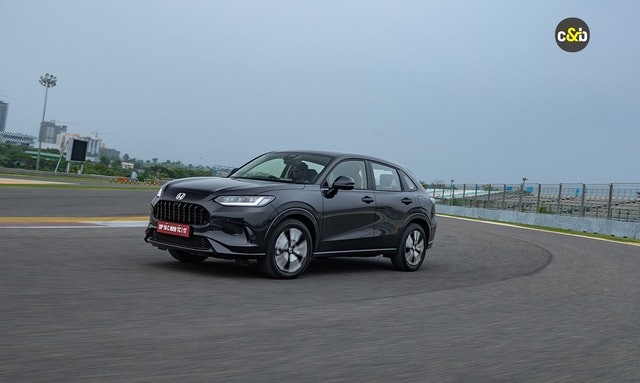 Bilal Firfiray | Jul 24, 2026Honda ZR-V Review: Who Is It For?Honda has brought the new ZR-V to India as their current flagship offering. It’s a CBU, it’s a hybrid, and it’s here for a limited few. Who is it for though?1 min read
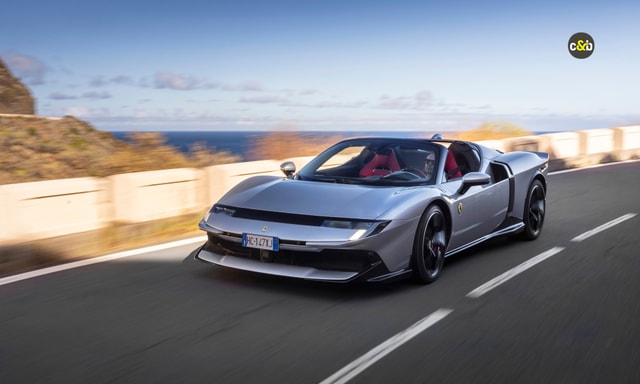 Shams Raza Naqvi | Jul 15, 2026Ferrari 849 Testarossa Spider Driven: Rs. 11.25 Crore Meets 1,000 bhpWe got behind the wheel of the most powerful convertible from Ferrari. What makes the 849 Testarossa Spider Special? We tell you.1 min read
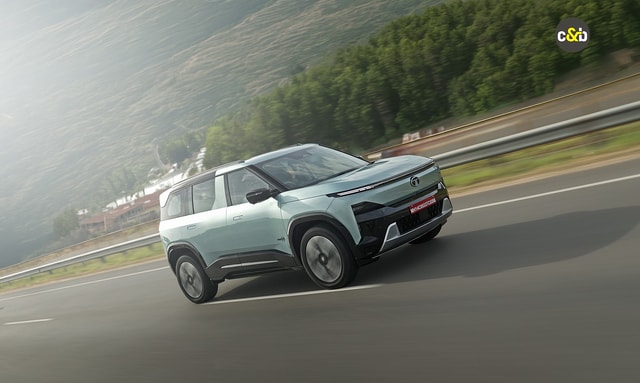 Bilal Firfiray | Jul 12, 2026Tata Sierra EV Review: Reborn In The Electric AgeThe Tata Sierra EV isn’t drastically different from its ICE counterpart when it comes to design. But being the seventh electric offering from the Indian brand, it has gotten a few things right, and very few things wrong. But is it a compelling package to buy?5 mins read
 Jafar Rizvi | Jul 13, 2026TVS Orbiter Long-Term Review (Report 1): Settling In Takes TimeFirst impressions weren't the strongest, but the Orbiter has made a mark in its first month in the car&bike garage.5 mins read