
All-New Hyundai Santro: Engine And Gearbox Explained

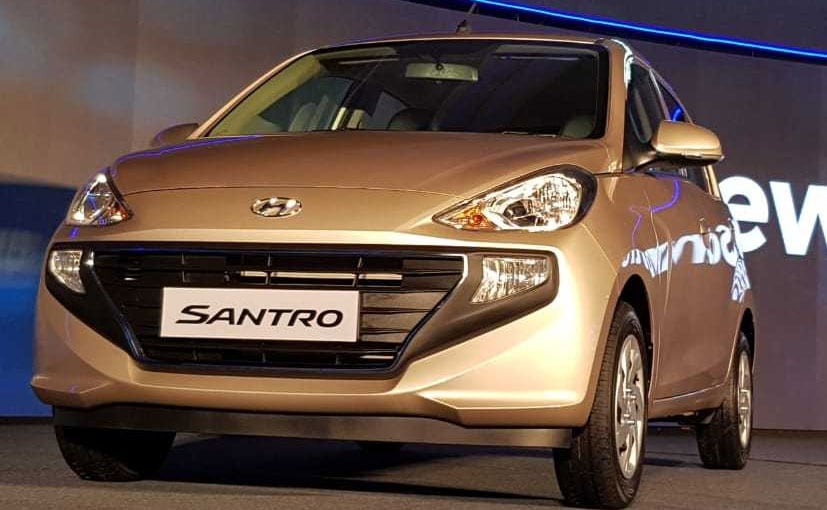
The new 2018 Hyundai Santro has finally been launched in India and with prices starting from Rs 3.89 lakh, has already attracted over 23,500 bookings before official launch. The Santro is available in five variants for the petrol manual i.e. D-Lite, Era, Magna, Sportz and Asta. The CNG manual version and the petrol AMT version gets two variants each - the mid range Magna and the very well equipped Sportz. On the inside, the Santro gets a fair few first in class features like a 7-inch touchscreen that gets Apple CarPlay, Android Auto and Mirrorlink and rear AC vents. But, as the title suggests, lets have a more in-depth look at the engine and gearbox that is offered on the new Santro.
Also Read: New 2018 Hyundai Santro Launched In India, Prices Starting At Rs 3.89 lakh
Under the bonnet, the new Hyundai Santro gets a 1.1-litre engine. The engine is a 4-culinder unit as compared to other automakers that are offering a 3-cylinder unit in the same category. The engine makes 69 bhp of peak power at 5500 Rpm and 99 Nm of peak torque at 4500 Rpm. We have driven the Santro briefly at the Hyundai test track in Chennai a few weeks ago and the engine does pull well through the rev range although a little bit better performance in the higher rev range would have been nicer.
Also Read: New 2018 Hyundai Santro VS Rivals: Price Comparison
The engine is mated to a 5-speed manual gearbox or a 5-speed AMT automatic. The manual gearbox is the one I personally prefer as it is more fun to drive. Clutch action on the manual gearbox version is typically light and easy to use (as expected from most Hyundai cars). The 5-speed AMT gearbox on the other hand has been made in house by Hyundai and not a third party unit like the ones on Maruti or Tata cars. The AMT unit uses an electric actuator to shift gears and is nice to drive, especially at slower speeds. It does feel a little slow when you push the car hard though.
Also Read: 2018 Hyundai Santro Receives 23,500 Bookings In Just 12 Days
The Hyundai Santro isn't exactly what you would call quick but it does get a move on in the right gear. The 0-100 kmph time for the manual car is 14.5 kmph while the same in the AMT variant takes 16.6 kmph! The top speed for both cars is rated at 156 kmph. Fuel economy for the petrol version is rated at 20.3 kmpl.
Also Read: 2018 Hyundai Santro CNG: All You Need to Know
The Hyundai Santro CNG on the other hand also gets the same 1.1-litre, 4-cylinder, petrol engine and is mated exclusively to the 5-speed manual gearbox only. The car is downrated on power as compared to the petrol and makes 59 bhp of peak power and 84 Nm of peak torque. The CNG tank will have a capacity of about 8 kg. Fuel economy for the CNG version is rated at 30.48 kmpl.
Related News


Latest Cars


Upcoming Cars


Latest News


 Sarthak Mahajan | Sep 22, 20262027 Mahindra Thar 3-Door Facelift: In PicturesThe facelifted Mahindra Thar has been renamed the Mahindra ‘Thar OG’.1 min read
 car&bike Team | Sep 22, 2026Amkette Launches AirPulse Tyre Inflator Range In India; Prices Start At Rs 1,399With five AirPulse models, ranging from a compact wired inflator to a 4-in-1 emergency device with a jump starter.1 min read
 Amaan Ahmed | Sep 22, 20262027 Mahindra Thar 3-Door Facelift Launched As 'Thar OG', Priced From Rs 10.32 LakhWith a midlife update, the ever-popular 3-door Thar gains structural reinforcements, new rear suspension, larger wheels, more powerful engines and a slew of additional features.4 mins read
 car&bike Team | Sep 22, 20262027 Mahindra Thar Facelift Launch Highlights: Price, Images, Specifications, DetailsMahindra will launch the 2027 Thar 3-door in India today. Watch this space to get all the information first-hand.0 mins read
 Sarthak Mahajan | Sep 22, 2026Saudi Arabia’s New EV Brand CEER Unveils First ModelsCEER, Saudi Arabia’s newly established EV brand, has unveiled the EXOBOT sedan and SUV as its first products.3 mins read
 car&bike Team | Sep 22, 2026JSW Group Introduces New Ampstar Brand For Electric Commercial VehiclesThe company has showcased a 55-tonne electric tractor-trailer and an electric bus at the new brand’s launch.1 min read
 Bilal Firfiray | Sep 19, 2026MG Hector Tomahawk EV Review: Play It SafeMG’s new electric SUV has one of the coolest names ever, and the coolest temperament amongst its peers. But is it worth buying?7 mins read
 Preetam Bora | Sep 16, 2026Royal Enfield Himalayan 440 Review: Better Than the 450?The new Himalayan 440 with an upsized engine and gearbox has certainly improved as a touring machine and at an extremely attractive price of Rs. 2.29 Lakh. Is it the better Himalayan to choose for many riders?9 mins read
 Seshan Vijayraghvan | Sep 15, 2026BMW i5 LWB Review: Not The M60, This Is The Proper Electric 5 SeriesThe BMW i5 LWB takes the electric 5 Series formula and puts a stronger focus on rear-seat comfort and long-distance luxury. With a 669 km claimed range, 268 bhp and a more relaxed character, is this the i5 that makes the most sense for India?7 mins read
 Preetam Bora | Sep 14, 2026Ladakh Uncharted: Himalayan Basecamp Off-Road Ride ExperienceA day-long off-road excursion from Royal Enfield’s Himalayan Basecamp event in Ladakh, the Ladakh Uncharted ride by Alpinestars was all about re-discovery!6 mins read
 Janak Sorap | Sep 12, 2026New Bajaj Pulsar 125 First Ride Review: More Tech, Less Weight, Same Pulsar DNAThe new Bajaj Pulsar 125 retains the familiar Pulsar identity but gets a new engine, lighter construction, more features and a sharper riding experience.5 mins read