
Bajaj Pulsar NS200 Vs TVS Apache RTR 200 4V: Specifications Comparison
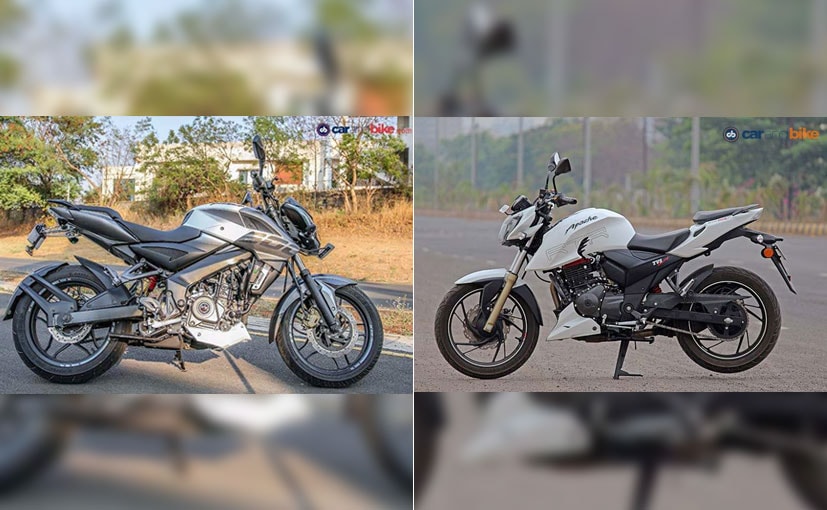
- Bajaj Pulsar NS200 Relaunched in 2017
- Bajaj Pulsar NS200 is pitted against the TVS Apache RTR 200 4V
- Both bikes have 200 cc engines, and cost under Rs 1 lakh
Bajaj Auto has re-introduced one of its acclaimed motorcycles in the 200 cc entry-level performance motorcycle segment - the Bajaj Pulsar NS200. Introduced as the Pulsar 200NS in 2012 and discontinued in 2015, the 2017 Bajaj Pulsar NS200 gets new styling with new graphics, meets Bharat Stage IV (BS IV) emission regulations and comes equipped with the mandatory 'anytime headlamp on' function.
The Pulsar 200NS was discontinued as a tactical move by Bajaj, to 'make space' for the Pulsar Adventure Sport 200, or Pulsar AS200, in 2015. And this was just around the time when the 200NS was beginning to warm up, both in terms of consumer interest and sales numbers. The Pulsar AS (both 150 and 200) models failed to make any significant headway and now in 2017, the 200NS gets a new lease of life with updated styling. But the game in the 200 cc segment has since changed, with TVS Motor Company launching the very-capable Apache 200 4V in 2016. Here's a look at how these two bikes compare, at least on paper, for now.
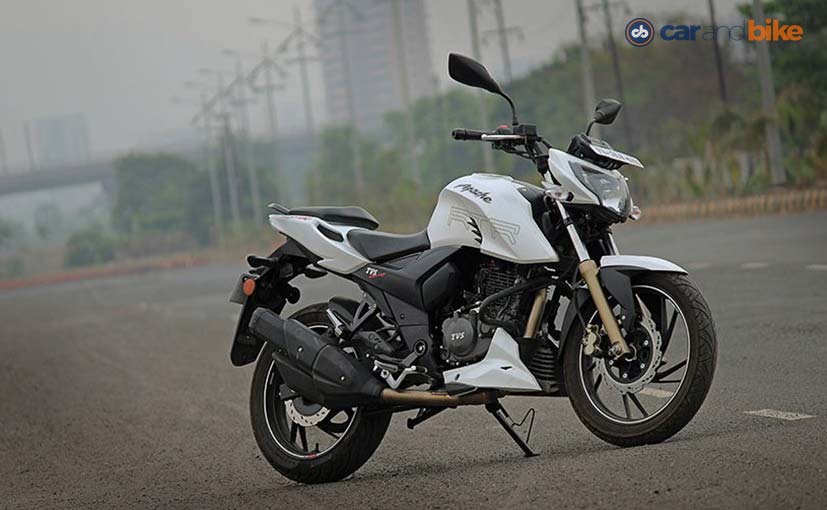
(TVS Apache RTR 200 4V)
Design and Features
Looks can be subjective, very subjective indeed. The TVS Apache RTR 200 4V is a fine looking motorcycle, no doubt, with aggressive styling and bold looks. The split seats, muscular fuel tank with tank extensions and a multi-information digital instrument panel add that 'premium' performance quotient. It does look unique, but the drawback is that it doesn't look dramatically different from the smaller displacement (RTR 160, RTR 180) bikes in the Apache series. The Apache 200 gets a 270 mm front disc and a 240 mm rear disc, but also gets optional ABS, which makes it better equipped than the Pulsar.
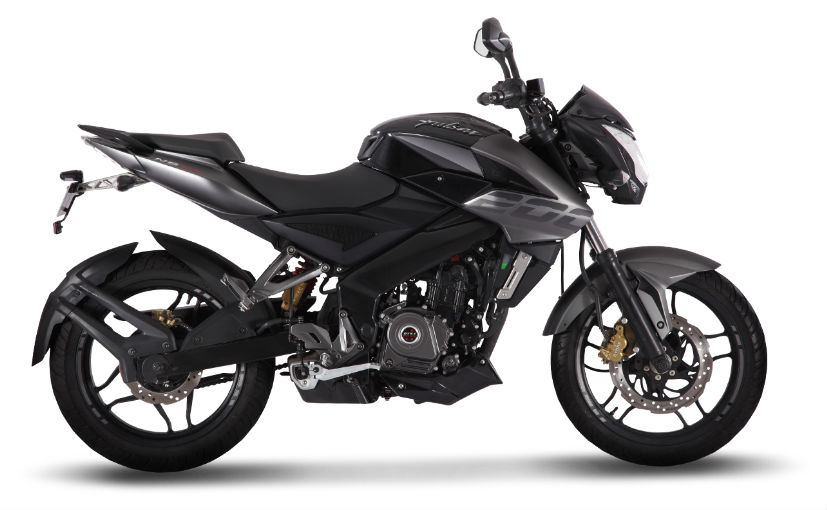
The Bajaj Pulsar NS200 on the other hand looks more muscular, more aggressive and looks like a proper fast naked, even when standing still. The upgrades to the NS200's styling - new colours, new graphics, matte finish on the tank, and a belly pan also add to the Pulsar's overall appeal. Just on looks alone, the NS200 looks sportier, muscular and faster, even when standing still. The Bajaj Pulsar NS200 gets liquid-cooling, which the Apache 200 lacks, and it also comes equipped with a larger 280 mm front disc, which gives adequate stopping power. But ABS is missed and not even offered as an option on the Pulsar. At 152 kg kerb weight, the NS200 is also the heavier bike with the Apache tipping the scales at 148 kg. Both bikes come with 17-inch wheels; the Apache 200 comes with the option of TVS Remora tyres or Pirelli rubber, but the Pulsar NS200 only has MRF rubber on offer.
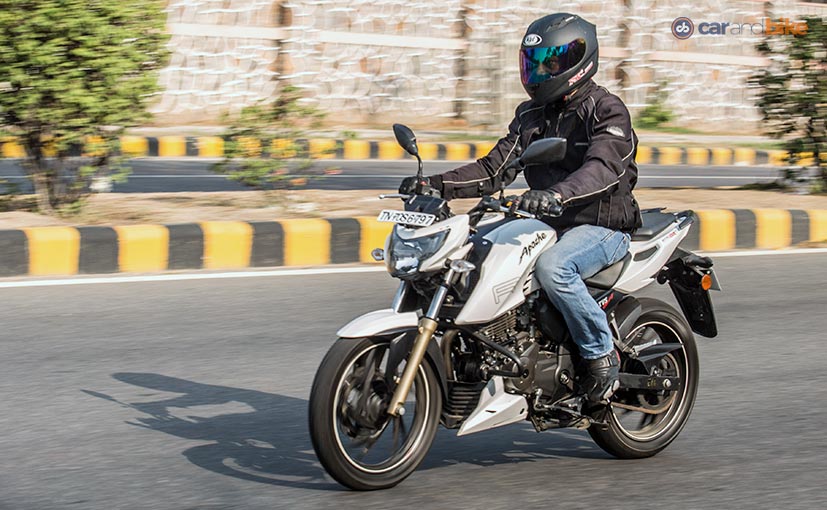
TVS Apache RTR 200 4V
Engine and Performance
The TVS Apache RTR 200 4V gets a 197.7 cc, single-cylinder, oil-cooled unit. The 4V in the name stand for four valves in the cylinder. And the patented oil-cooled combustion chamber is said to aid in better and more effective cooling of the engine. The engine makes 20.7 bhp at 9,000 rpm with 18.1 Nm of peak torque kicking in at 7,000 rpm. The Apache RTR 200 4V is available in carburetted version as well as one with electronic fuel injection and transmission duties are handled by a five-speed gearbox.
| TVS Apache RTR 200 4V | Bajaj Pulsar NS 200 | |
|---|---|---|
| Engine | Single-cylinder, oil-cooled | Single-cylinder, liquid-cooled |
| Engine Displacement | 197.75 cc | 199.5 cc |
| Max Power | 20.7 bhp @ 9,000 rpm | 23.5 bhp @ 9,500 rpm |
| Max Torque | 18.1 Nm @ 7,000 rpm | 18.3 Nm @ 8,000 rpm |
| Fuel Delivery | Carburetted (Optional EFI) | Carburetted |
| Transmission | 5-speed | 5-speed |
| Front Brake | 270 mm disc | 280 mm disc |
| Rear Brake | 240 mm disc | 230 mm disc |
| ABS Offered | Yes (Optional) | No |
| Kerb Weight | 148 kg | 152 kg |
| Price | Rs 92,615 (ex-Delhi) | Rs 96,453 (ex-Delhi) |
| Fuel Consumption (Claimed) | 41 kmpl | 35 kmpl |
The Bajaj Pulsar NS200 is powered by a 199.5 cc single-cylinder engine, which is liquid-cooled. Output of the two engines is more or less comparable with the Pulsar making marginally more power and torque - 23.5 bhp at 9,500 rpm and 18.3 Nm at 8,000 rpm. On the TVS, maximum power and peak torque are both achieved lower in the rev range, so the Apache will have better mid-range grunt while the Pulsar promises a punchier motor at the higher revs.
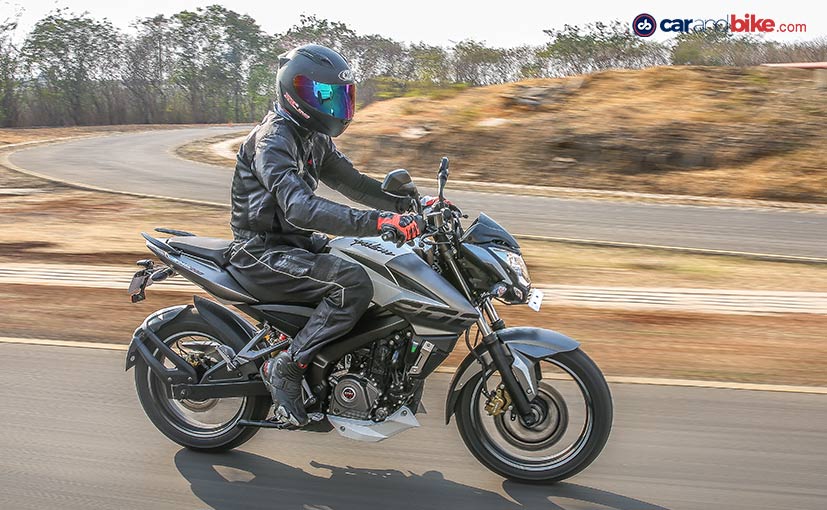
(2017 Bajaj Pulsar NS200)
Price and Market Position
At Rs 92,615 (ex-showroom Delhi), the TVS Apache RTR 200 4V is the less expensive bike in this comparison. But if you want better optional equipment like Pirelli tyres, ABS and fuel-injection, the price of the Apache goes up significantly. At the least, we feel ABS and the Pirelli tyres should make for good optional add-ons if you are considering the TVS Apache RTR 200 4V. On the other hand, the Bajaj Pulsar NS200 is priced at Rs 96,453 (ex-showroom Delhi), and you don't have any company-provided tyre options or even the basic safety feature like ABS. For export markets, the NS200 does get ABS and fuel-injection, but for the domestic market, it's just the one standard variant available.
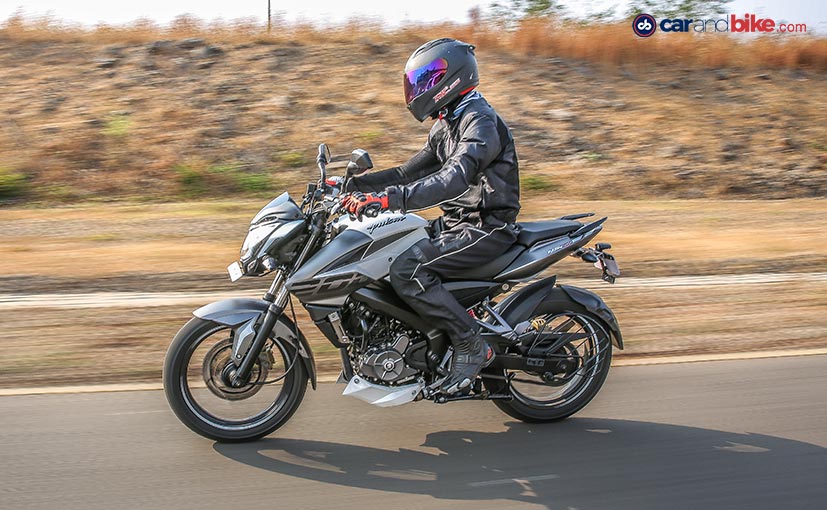
(2017 Bajaj Pulsar NS200)
Both bikes are evenly matched in terms of specifications and prices. In this comparison at least, there's no clear answer to which one is the better bike, or which one suits your requirements. We can say that the Pulsar promises marginally more performance while the Apache offers more practicality in actual, everyday riding conditions. But to get to that, only a real world comparison will be able to throw up a clear winner, or at the least, give a sense of what each bike offers in terms of feel and performance on the road.
Related News


Popular Bajaj Models

Latest Cars


Upcoming Cars


Latest News


 car&bike Team | Oct 15, 2026TVS Raider 125 Gains Traction Control: Priced From Rs 1 LakhThe TVS Raider 125 also gets a wider rear tyre and emergency brake warning on its two top variants.1 min read
 Janak Sorap | Oct 15, 2026BSA Gold Star 650 Gets Two New Colourways; Prices Start At Rs. 3.56 LakhBSA Motorcycles has expanded the Gold Star 650 range in India with two new shades, taking the total colour options to five.1 min read
 Sarthak Mahajan | Oct 15, 2026Mahindra XUV 3XO CNG Launched At Rs 9.99 LakhThe XUV 3XO ZNG produces 110 bhp and 200Nm of torque, claims a fuel efficiency of 24.7km/kg and offers 270 litres of boot space.2 mins read
 car&bike Team | Oct 14, 2026Toyota Glanza Facelift: Variants, Features, Prices ExplainedThe Glanza Facelift is offered in five trim levels, including E, S, G, V and a newly added trim, V (O).3 mins read
 Seshan Vijayraghvan | Oct 14, 20262026 Toyota Glanza Facelift: In PicturesThe new Toyota Glanza facelift is here, with some interesting visual changes and upgrades. Here's a look at the premium hatch in pictures.1 min read
 car&bike Team | Oct 14, 2026Toyota Glanza Facelift Launched At Rs 6.99 LakhThe Glanza facelift gets a series of changes over the outgoing model including revised exterior, more features and a new 3-cylinder engine.3 mins read