
China's BYD Takes Cautious Approach To U.S. In Global EV Push

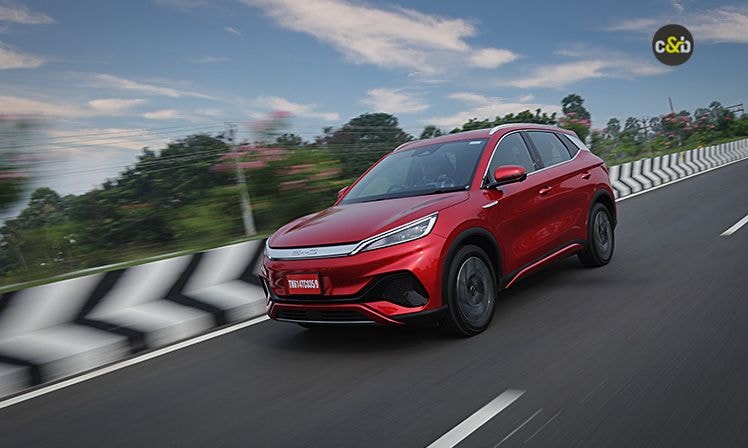
Chinese electric vehicle (EV) giant BYD is embarking on a rapid global expansion to challenge Tesla but for now it's stuck in the slow lane on its rival's home turf. While BYD has not fully articulated its global ambitions in public, a concerted worldwide push has become the single most important strategic focus for China's biggest EV maker, four sources familiar with BYD management's thinking said.
Besides a drive into some European markets already underway, BYD spent much of last year conducting a study on how to set up a U.S. distribution network for its latest electric models, two of the sources said. They described the study as advanced and serious, with specific recommendations from Detroit-based consultancy Urban Science on how many outlets in each state and city BYD would need, as well as formats for the brick-and-mortar stores. The momentum was building towards an announcement at this year's global CES tech show in Las Vegas, where BYD was planning to showcase a new generation of battery electric vehicles (BEVs) and plug-in hybrids for the U.S. market, a BYD official said. The announcement never came.
Tense relations between Washington and Beijing, anti-China sentiment in the United States and President Joe Biden's move to prioritise home-grown production of EVs and batteries all pushed BYD to hit the pause button, one of the sources said. BYD's management has yet to give the project a final green light and an aggressive U.S. expansion remains unlikely for the foreseeable future, the source said.
"BYD is taking a cautious approach to the U.S.," the person said. "Think about all the U.S.-China political tensions and then think about the craziness of the whole world now. You don't want to jump into a big mess."
BYD's U.S. project was complicated by the Biden administration's Inflation Reduction Act (IRA), which imposes rules on where to source battery materials and disqualifies EVs produced outside North America for a $7,500 purchase rebate.
"Who would start selling cars with a $7,500 disadvantage?" said another of the sources.
BYD declined to comment for this report.
U-TURN
BYD, which stands for Build Your Dreams, was the world's biggest seller of BEVs and plug-in hybrids in 2022 with a total of 1.86 million sales - the vast majority in China and well ahead of Tesla on 1.3 million overall. BYD still trails Tesla in terms of fully electric cars by almost 400,000, though the Chinese company is planning to ramp up sales quickly at home and abroad, having already increased its BEV sales by 184% in 2022 from the previous year. To be sure, BYD is not the only Chinese company in the auto sector to rein in its U.S. ambitions because of the geopolitical backdrop and moves by Biden to promote local production.
Chinese battery giant CATL has slowed its planning for investment in battery plants in the United States and Mexico due to concerns the IRA rules on sourcing materials would drive its costs higher. U.S. firm HAAH Motors Holdings tried to import cars designed by China's state-owned Chery Automobile and came up with plans for a U.S. factory that would bring jobs to America. But the two pulled the plug in 2021 when HAAH could not raise enough money to follow through, due to what executives described as concerns over U.S. tariffs and trade tensions.
BYD has been making electric buses in the United States for years and supplies cities such as Los Angeles and Long Beach from a factory in Lancaster, California, built a decade ago. But when it comes to EVs, BYD's leaders, including Chairman Wang Chuanfu, knew as recently as five years ago that their cars were not ready for the global market, due to their quality and other deficiencies, two of the sources said. They have since done a U-turn.
Leveraging its latest range of electric cars such as the Han sedan and the Tang crossover, BYD has stormed into a commanding lead in China, and made inroads into other markets starting with Norway in 2021, and now including Australia, Britain, Brazil, Costa Rica, Germany, Japan, Mexico and Singapore. BYD is banking on lower costs than most rivals to eventually overtake the world's biggest carmaker - Japan's Toyota - as EVs become the cars of choice.
VERTICAL INTEGRATION
In the medium term, BYD, which is backed by Warren Buffett's Berkshire Hathaway, is shooting for more than 3 million car sales a year worldwide, two of the sources said. BYD did not respond to requests for comment about sales targets. Global consultancy LMC Automotive believes the idea of selling more than 3 million vehicles before 2030 is not far-fetched, although it said most sales would still be in China. LMC said BYD's ability to offer a full range of globally attractive and well-priced full EVs in mainstream and premium markets made its sales aspirations credible.
Zhang Wei, founder of Yuanhao Capital Management and BYD's 10th biggest shareholder as of the first quarter of 2022, believes BYD's prospects should be even better. He told Reuters the 3 million target would be within reach by around 2025 and BYD should be able to sell 10 million vehicles a year by the early 2030s. Zhang, who began building a sizable stake in BYD around 2015, told Reuters he likes the company because its chairman has created the kind of vertically integrated, cost-competitive electric carmaker Elon Musk is still struggling to achieve.
Unlike many rivals, BYD can meet most of its battery and EV systems needs alone. It sources key battery materials in part from its mines in China and makes its own batteries and semiconductors, including the power-management chips that are crucial components in EVs, Zhang said. "Other than windshields and tires, they can make on their own just about everything in the car. They have their own construction company that helps build factories. That's how they can speed things up," he said. "I would say BYD at this point is already better positioned than Tesla in the EV era."
According to two Toyota officials who are close to Toyota's joint R&D centre with BYD in Shenzhen, BYD's product development cost is 20% to 30% lower than at the Japanese carmaker. "The high level of vertical integration in its battery supply chain gives it a clear cost advantage over similar carmakers, an enabler for rapid expansion both within and outside of China," LMC analyst Al Bedwell said. Still, even though BYD is taking a cautious approach towards the United States now, it will likely focus on the U.S. car market in the longer term, the sources said. "America is going to be a key, key part of this global push strategy," one said.
Related News


Popular BYD Models


Latest Cars


Upcoming Cars


Latest News


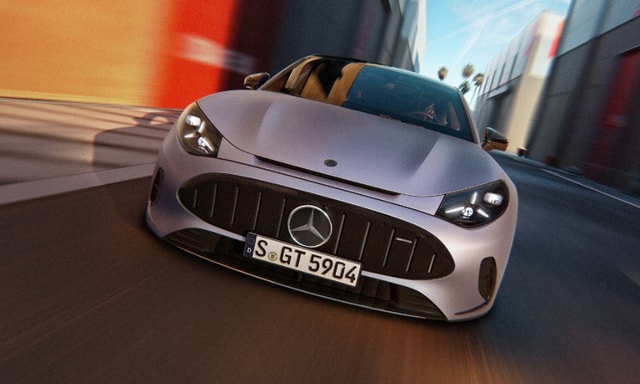 Jaiveer Mehra | Aug 7, 2026New Mercedes-AMG GT 53 4-Door EV Debuts With Dual-Motor AWD, 800 Km RangeNew entry variant to the all-electric AMG GT 4-Door range drops one electric motor and offers a notably higher range than its more powerful siblings.1 min read
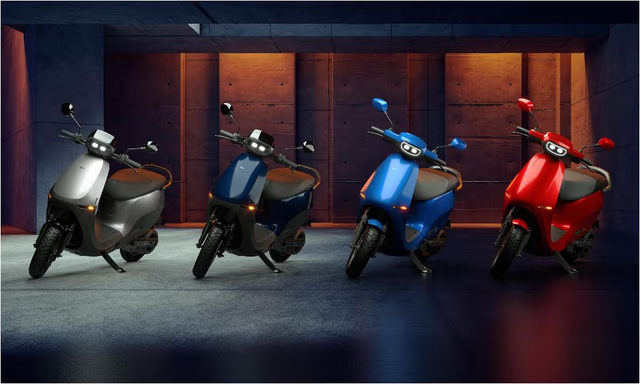 car&bike Team | Aug 6, 2026Ola Electric Shifts To Dealer-Led Retail Model After Five Years Of Company-Owned StoresOla Electric has announced a strategic shift to a dealer-led retail model, while retaining its company-owned outlets as brand experience centres.2 mins read
 car&bike Team | Aug 6, 2026E3 Trion Electric Scooter Launched In India At 1 LakhAvailable in three variants, the scooter's biggest talking point is its AI-backed software ecosystem, which promises to monitor the health of the scooter.3 mins read
 car&bike Team | Aug 6, 2026Production-Spec Royal Enfield Himalayan 750 Spotted Testing Ahead Of Global DebutRoyal Enfield's upcoming Himalayan 750 has been spotted testing in near-production form in the UK, ahead of its expected debut at EICMA 2026.2 mins read
 Jafar Rizvi | Aug 6, 2026Audi Confirms New Q3 For India This Year; A5, Q9 To Arrive By 2027Audi has confirmed three new launches for India by 2027. The Q3 is expected to debut around the festive season, followed by the A5 and Q9 in 2027.3 mins read
 Sarthak Mahajan | Aug 6, 2026Tata Nexon Camo Edition Launched At Rs 9.99 LakhAvailable in petrol, diesel, and CNG variants; prices start at Rs 9.99 lakh.2 mins read
 Bilal Firfiray | Aug 1, 2026Toyota Hilux Review: The InvincibleMarking it as the ninth generation, the Hilux comes with a major cosmetic overhaul. But is it still relevant enough for the current times or is it getting too long in the tooth?5 mins read
 Bilal Firfiray | Jul 30, 2026Kia Syros EV Review: Best EV To Buy Under Rs 20 Lakh?The Kia Syros EV comes into the game with a modern design, spacious cabin, strong performance, decent range and an aggressive pricing. But could it become the new benchmark under Rs 20 lakh?5 mins read
 Jaiveer Mehra | Jul 27, 20262026 Maruti Suzuki Brezza Facelift Review: Bestseller Joins The Turbo ClubWhile Maruti’s facelifts have always tended to bring subtle updates over the outgoing models, the latest Brezza brings some heavy updates under the skin, including a new 6-speed manual gearbox and, for the first time, a turbocharged petrol engine option.1 min read
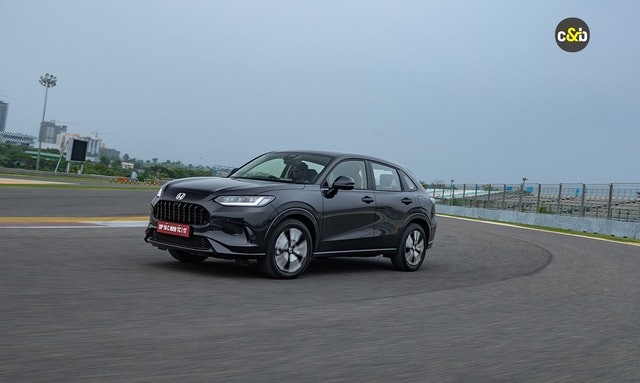 Bilal Firfiray | Jul 24, 2026Honda ZR-V Review: Who Is It For?Honda has brought the new ZR-V to India as their current flagship offering. It’s a CBU, it’s a hybrid, and it’s here for a limited few. Who is it for though?1 min read
 Girish Karkera | Jul 29, 2026Mercedes-AMG E53 4MATIC+ PHEV First Drive Review: Just What The Doctor OrderedThere are luxury cars and there are high-performance cars. But what if you want both for the price of one? Mercedes-Benz has a recommendation that promises to tread a fine line between the two – the second generation E53 with a twist.7 mins read