
How Long Do F1 Engines Last?


- F1 has a number of complex rules.
- Understanding them helps you enjoy the sport even more.
- Heres everything you need to know about engines used in F1.
Formula 1 is an exciting sport to watch by itself but you can't really completely enjoy it without getting into extreme details. This includes the effects different tyres have on the speed of a car, the rules of the various flags that can be waved during races, the qualifying rules, and much more. Among all these are the rules related to the engines that drivers can use during the entire season. If there's a limitation on the number, how long does one last? Scroll down to read all about the life of an F1 engine.
Why are only limited number of engines allowed?

Photo Credit: www.formula1.com
The rule of allowing a limited set of engines to be used per season is part of Formula One's all-around effort to embrace sustainability. Earlier, drivers would use new engines almost every other weekend but that's not the case anymore.
How many engine changes are allowed per season?
At the moment, every car in Formula 1 is allowed three engine changes per year. Given how efficient these hybrid engines are, they are referred to as Power Units. These Power Units are made up of four main components. The first is the traditional combustion engine, the second is the MGU-K or the Motor Generator Unit – Kinetic, which recovers energy from the rear axle, the third is the turbo, and the fourth is the MGU-H or Motor Generator Unit – Heat, which recovers energy from the turbo.
How long do F1 engines last?

Photo Credit: www.formula1.com
Formula 1 engines are designed to last for plenty of races but since racers are allowed three changes per year, teams have to devise their strategies accordingly. That means, since there are 23 races on the calendar, a single engine can be used for 7 to 8 races weekends. Since we said race weekends, we don't need to mention that the same engines must also be used for qualifying and Sprint races. In case a driver needs to go beyond the allotted three engines per season, he will need to incur grid penalties, the severity of which will be decided by the officials.
When were these F1 engine rules introduced?
These rules for F1 engines were introduced for the 2014 season, which marked the start of the sport's hybrid era. Better sounding 1.6-litre V6 turbo engines were allowed and these new changes included multiple Energy Recovery Systems such as the ones mentioned above. Many fuel flow restrictions were also introduced.
What are the changes made to 2022 Formula 1 engine?

Photo Credit: www.formula1.com
As we wait for the 2022 season to start, we are all set to witness a new era in Formula 1. The upcoming changes were originally slated to arrive in the 2021 season but the COVID-19 pandemic didn't let that happen. While the engines from 2022 will retain the 1.6L V6 configuration, one major change to the engine configuration will be the removal of the Motor Generator Unit–Heat (MGU-H) system. To compensate for the power loss, Motor Generator Unit–Kinetic (MGU-K) will be made more powerful. Furthermore, massive changes have been introduced to the designs of the cars. These are mainly focused on curbing the effects of dirty air on the cars behind. The newly altered aerodynamics of these cars won't slow down cars in dirty air zones as much as they do right now and will lead to much more exciting opportunities for overtaking.
Related News


Latest Cars


Upcoming Cars


Latest News


 car&bike Team | Jul 22, 2026Simple Energy To Unveil Its First Family Electric Scooter On September 2Simple Energy is set to enter India's family electric scooter segment with the debut of an all-new model on September 2.1 min read
 car&bike Team | Jul 22, 2026MG Windsor EV Prices Hiked By Up To Rs 60,000The price hike affects all variants of the Windsor EV.2 mins read
 car&bike Team | Jul 22, 2026New Yamaha Electric Scooter Design Revealed; Could Get Swappable BatteryA newly filed design registration in Japan has revealed a production-ready Yamaha electric scooter with an all-new platform and a unique mechanical layout.1 min read
 car&bike Team | Jul 22, 2026Bajaj Pulsar 125-160 cc Range To Be UpdatedOver the next six weeks, Bajaj Auto is planning to introduce 10 “substantially new motorcycles” in the 125 cc and 160 cc Pulsar segments.1 min read
 Amaan Ahmed | Jul 22, 2026Range Rover GT Debuts As All-Electric Fastback Ahead Of World PremiereFifth member of the Range Rover family is JLR's take on a coupe-SUV; will debut in BEV form later this year.1 min read
 car&bike Team | Jul 21, 2026Maruti Suzuki To Hike Prices By Up To Rs 30,000 In August 2026This marks the second price hike in three months for the company, which previously increased prices in June.1 min read
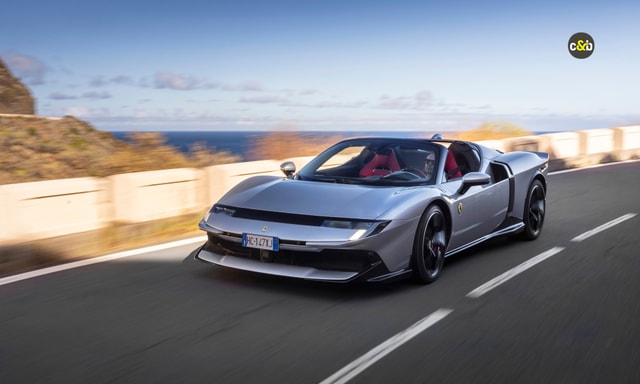 Shams Raza Naqvi | Jul 15, 2026Ferrari 849 Testarossa Spider Driven: Rs. 11.25 Crore Meets 1,000 bhpWe got behind the wheel of the most powerful convertible from Ferrari. What makes the 849 Testarossa Spider Special? We tell you.1 min read
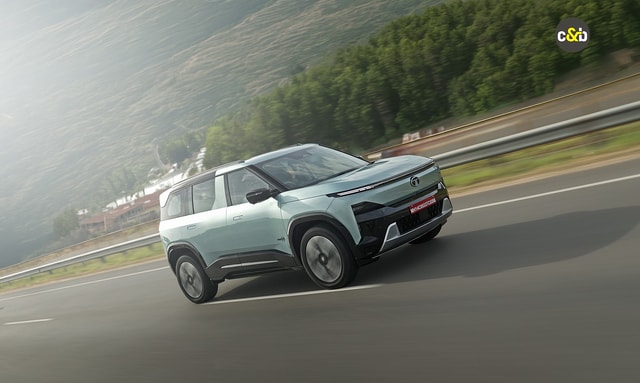 Bilal Firfiray | Jul 12, 2026Tata Sierra EV Review: Reborn In The Electric AgeThe Tata Sierra EV isn’t drastically different from its ICE counterpart when it comes to design. But being the seventh electric offering from the Indian brand, it has gotten a few things right, and very few things wrong. But is it a compelling package to buy?5 mins read
 Jafar Rizvi | Jul 13, 2026TVS Orbiter Long-Term Review (Report 1): Settling In Takes TimeFirst impressions weren't the strongest, but the Orbiter has made a mark in its first month in the car&bike garage.5 mins read
 Seshan Vijayraghvan | Jul 7, 2026Tata Altroz Petrol DCA Long-Term Review: Intercity & Highway Driving ReportWe tested the Tata Altroz Petro DCA’s highway manners, intercity performance, and real-world fuel efficiency.1 min read
 Seshan Vijayraghvan | Jun 29, 2026Renault Kiger vs Toyota Urban Cruiser Taisor: Which Underdog Deserves Your Money?Both the Kiger and the Taisor promise strong performance, solid features, comfortable cabins and everyday usability, all without breaking the bank. But which of these underrated subcompact SUVs deserves your money? Let's find out.1 min read