
Intelligent Manual Transmission: All You Need To Know

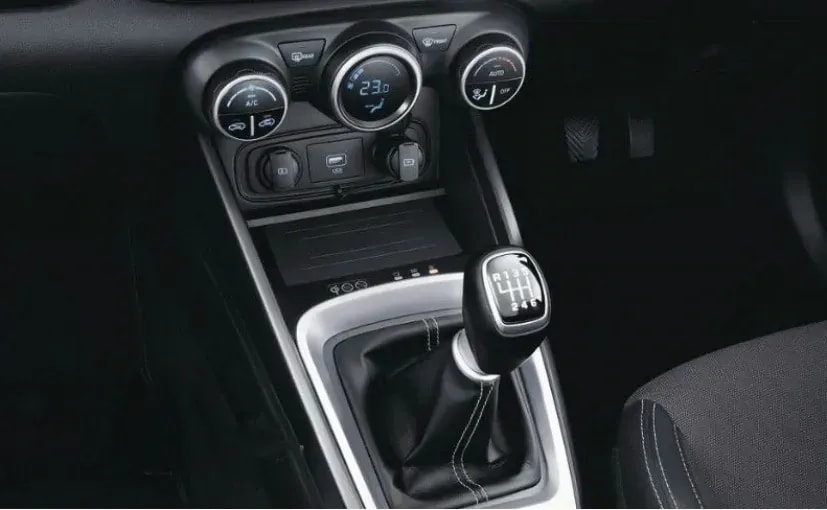
- Hyundai Venue with 1.0 turbo petrol will get iMT technology this month
- The iMT technology does not need clutch operation
- Although the gearshifts still need to be done manually
The intelligent manual transmission or the iMT is a one of its kind gearbox which was first offered in the subcompact SUV segment, particularly on the Hyundai Venue. Then it also made it way to the Kia Sonet and the Hyundai i20. The Toyota Fortuner diesel had an intelligent manual transmission option too. But what exactly is the intelligent manual transmission and how does it work? Here is a comprehensive lowdown.
Also Read: Hyundai Venue 1.0-litre Turbo Petrol Variant To Get iMT
What is an iMT?
(The driver does not need to use the clutch to change shift gears on a car with intelligent manual transmission technology)
So, the iMT eliminates the need of a clutch pedal. To put it simply, imagine you are driving a car with a manual gearbox. Usually when you change gears, you press the clutch pedal, take your foot off the accelerator and shift the gear with the help of the gear knob. In a car with iMT technology, there is no clutch pedal. So, your left foot is basically resting while driving. When you do feel the need to change gears, just slot the gear knob into the desired position and shift up or down like you normally would. The gear knob will have the traditional H-pattern which is seen on almost all manual cars. Plus, there will be just two pedals in the footwell, the accelerator and the brake pedal. While it may feel disconcerting at first, it will be a welcome change when you are driving a car on traffic laden roads, in a bumper to bumper traffic situation. It is just a matter of getting used to.
How does it work?
(The iMT technology foregoes the clutch pedal and operates the clutch plate and pressure plate electronically, with the help of sensors)
Now, let us understand the technology behind this! Simply put, in an intelligent manual transmission, there is a clutch that exists but it is operated electronically with the help of a myriad variety of sensors and not by a clutch pedal that needs to be pressed every time one wants to change gears. In a car with iMT, there is an 'intention sensor' on the gear lever, which gets activated when the gears are shifted. The intention sensor on the gear lever sends a signal to the transmission control unit or TCU when the gears are changed. Then, the TCU sends a signal to the hydraulic clutch actuator to engage or disengage the clutch plate when the gear if shifted up or down. Here, the work of the actuator is to build up hydraulic pressure and transfer the same via a concentric slave cylinder (CCS) which in turn engages/disengages the clutch plate.
Are iMT and AMT the same thing?
(No! Automated Manual Transmission and Intelligent Manual Transmission are not the same thing. They are two different technologies)
No! They aren't one and the same thing! In an AMT or automated manual transmission, you do not have to operate either the clutch nor do you shift gears manually. There is an actuator unit that does the job for you. It is basically driving an automatic car. But, in a car with intelligent manual transmission, one still needs to shift gears manually, with the help of a gear knob. So, in a sense, you still control the revs like you would in a manual car, but without the action of operating the clutch.
Which cars in India have iMT?
(The Kia Sonet will get iMT technology as well)
Like we mentioned earlier in the story, Hyundai was the first manufacturer to offer this technology on a subcompact SUV in India, the Venue. But it was Venue's sister SUV, the Kia Sonet subcompact SUV that was supposed to debut this technology at its launch. Guess Hyundai beat Kia to it! So yes! The Kia Sonet has have an iMT variant too. Internationally, the Kia Rio has this technology as well. It was developed specially for mild-hybrid cars. The Toyota Fortuner with the diesel engine option has an iMT variant as well.
Globally, Kia, Hyundai and Toyota offer intelligent manual transmission on their cars. Saab, the now defunct Swedish car manufacturer offered a similar technology, called the 'Sensonic' on its turbo models back in the 90s. So, the iMT technology isn't really new, so to say!
Any Benefits of iMT technology?
(The iMT technology gives you the best of both worlds, that is manual and automatic, but it takes time getting used to)
The biggest benefit could be that driving in traffic will become easier. Plus, you will still get the feel of a manual car when you shift gears. Then, iMT technology is said to offer better fuel efficiency too, because of electronically controlled clutch operations. Sure, it will take some time getting used to, but will be a more comfortable driving experience, especially in stop-and-go traffic.


Latest Cars


Upcoming Cars


Latest News


 car&bike Team | Aug 18, 2026Yamaha RayZR 125 Gains TFT Screen; Fascino 125 Gets New ColoursYamaha has made a few updates to its 125cc scooter range, with the RayZR 125 gaining a TFT display in its Street Rally trim and the Fascino 125 getting new colour options.1 min read
 Abhishek Nigam | Aug 18, 2026Riding Amongst The Clouds: Inside CEAT Ladakh Enduro ParkCEAT has created Asia’s highest-altitude motorcycle training arena, giving adventure riders a chance to experience and prepare for Ladakh’s challenging terrain before heading out on the real thing.6 mins read
 Janak Sorap | Aug 17, 2026Hero MotoCorp Patents New Dual-Purpose Motorcycle In IndiaHero MotoCorp could be expanding its dual-purpose motorcycle portfolio with this new, machine revealed in the design patent.2 mins read
 Abhishek Nigam | Aug 17, 2026E3 Electric Opens First Experience Centre In BengaluruThe new facility brings the Trion electric scooter range, sales, service and charging facilities under one roof1 min read
 car&bike Team | Aug 17, 2026Jeep Compass 85th Anniversary Edition Launched At Rs 26.70 LakhJeep has added the Compass to its 85th Anniversary Edition lineup and will be offered in limited numbers.1 min read
 Sarthak Mahajan | Aug 17, 2026Chief Economic Advisor Recommends Reintroduction Of E10 Fuel In IndiaIn an opinion piece published in The Indian Express, CEA (Chief Economic Advisor) V. Anantha Nageswaran has suggested the government consider bringing back lower ethanol blends, such as E10, or lower, for older vehicles still plying on Indian roads.1 min read
 Janak Sorap | Aug 17, 2026Bajaj Pulsar N160 SS First Ride Review: The Most Tech-Loaded Pulsar Yet?The Bajaj Pulsar N160 SS brings more power, new-age electronics and sharper styling to the familiar 160cc Pulsar formula.5 mins read
 Jaiveer Mehra | Aug 16, 2026Honda Amaze CVT Long Term First Report: 1800 Km InThe Amaze is the first sedan to join our long term feet in a year, and while on paper it lacks some of the features offered in its rivals, there’s plenty of promise in the package.1 min read
 Preetam Bora | Aug 12, 2026Royal Enfield Himalayan 440 Custom Review: Beating RE to the PunchDelhi-based custom motorcycle shop TNT Motorcycles introduces packages to convert existing Himalayan 411 adventure bikes to Himalayan 440. Is it worth the expense?8 mins read
 Seshan Vijayraghvan | Aug 11, 20262026 Nissan Tekton 700 km Review: Can It Conquer The Himalayas?We drove the newly launched Nissan Tekton from Chandigarh all the way up to Leh, covering over 700 km with the new SUV. From exploring the Tekton’s capabilities in the Himalayas to setting an India Book Record, here’s how the trip unfolded.8 mins read
 Preetam Bora | Aug 11, 20262026 Aprilia Tuono 457 Special Edition First Ride Review: Should You Buy It?The 2026 Aprilia Tuono 457 delivers an engaging, everyday riding experience with strong performance. At its price point, the Tuono 457 is a brilliant motorcycle, but not quite the complete package. Why is that, and should you still buy it? Read on.8 mins read