
Is India Ready To Go Fully Electric With Two And Three-Wheelers 2025 Onwards?

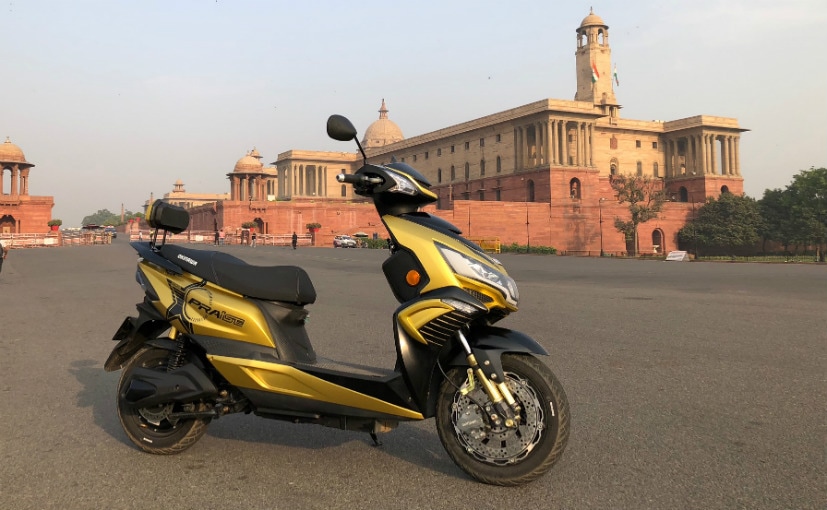
- Niti Aayog has proposed to ban 150 cc and below 2 wheelers from 2023.
- It has also proposed a ban on all IC engine powered 3 wheelers.
- Limited charging infrastructure is a big challenge in their adoption.
A few days ago, NITI Aayog panel led by Amitabh Kant, proposed that all two-wheelers below 150 cc and all three-wheelers with an internal combustion engine could be banned from 2025 and 2023 onwards. The NITI Aayog panel believes that this move will not only address pollution and fossil fuel dependency concerns but also slowly transform in India into a hub of electric vehicle manufacturing. But if the current draft proposal indeed becomes a policy then how does it affect existing EV-only manufacturers? Does it bode well for existing EV manufacturers or will mass-market two-wheeler manufacturers take over and establish dominance?
Also Read: Electric Bikes Proposal For Indian Market Has Challenges, Say Observers
India is the largest two-wheeler market in the world and massive chunk of it consists of two-wheelers below 150 cc. In FY2019, the top 10 two-wheelers sold in the country all consisted of models which displaced less than 150 cc and accounted for total sales of 1.31 crore units of over 2.11 crore units sold in total. There is a wide range of two-wheelers on offer as well below the 150 cc segment and buyers have plenty of options to choose from. Speaking with carandbike, Rakesh Batra, Auto Analyst at Ernst and Young said, "To speed up the demand for electric two-wheelers, companies will need to bring a large number of models by 2023 as there are many models on sale below the 150 cc segment."
Yes, there is a massive growth opportunity for electric two-wheelers but there are a few challenges as well.
Also Read: Govt. Think Tank Proposes Electrifying Two-Wheelers In 6-8 Years
What are the challenges?
 Charging infrastructure remains one of the biggest challenges in adoption of electric two-wheelers.
Charging Infrastructure
One of the biggest challenges of electrification will be charging infrastructure. It will be safe to say that currently the charging infrastructure in India is nearly zero. EV companies such as Ather Energy and Revolt Intellicorp are working on charging infrastructure grids but only in small pockets. It is highly unlikely that the entire country will have a strong network of charging stations which can accommodate the volumes of EVs, should the proposal become a policy. Although, under FAME II, the govt. has proposed setting up of 2,700 charging stations across the country, with the idea of having at least one station in a grid of 3 square kilometres.
Localisation
Most electric two-wheeler manufacturers are still playing in low volumes hence, localisation in most cases is less than 50 per cent. As a part of FAME II, the companies whose products have more than 50 per cent localisation can only get the incentives and subsidies. This means increasing localisation levels will help electric two-wheeler manufacturers to avail the subsidies. Speaking in the same context, Batra added, "Localisation of electric two-wheelers is very important to make them affordable which will in-turn improve sales. Given the fact that government policies are favouring two-wheelers more, battery manufacturers also may consider starting local assembly of battery packs for two-wheelers first."
Market Penetration
The biggest advantage of big two-wheeler manufacturers such as Hero MotoCorp, HMSI, Bajaj, TVS and so on, is reach! For example Hero and HMSI have about 900 and 2,000 points of sales (dealerships) in India which means excellent market penetration, even in rural areas. In order to gain volumes, EV manufacturers will have to up the footprint game and target audiences across the length and breadth of the country.
Stable Electric Vehicle Policy
While many countries have a proper roadmap made especially for electric vehicles, India is yet to get one. In fact, in September 2018 at the MOVE EV Summit held in Delhi, Prime Minister Narendra Modi mentioned that the government will come out with a detailed and thorough EV policy and roadmap. However, the PM did not mention a timeline as to when the formal policy on EVs will be ready and put into action. Earlier, the government was keen on converting the complete passenger vehicle fleet into an EV fleet by 2030, which was then scrapped.
Opportunities
 The first mover advantage will help new companies like Okinawa, Hero Electric and Ather Energy among others to establish themselves in the market.
First Mover Advantage
There are a fair few EV manufacturers in India and some of the bigger names are Okinawa, Hero Electric, Ather Energy, Avan, Tork Motors, Revolt Intellicorp, 22 Motors and so on. It may be difficult for these companies to match up to bigger companies given that everyone has a level playing field and mainstream two-wheeler manufacturers have the financial backing as well. However, the first mover advantage definitely stands with them. Being on a common note, Batra added, "The first mover advantage will obviously be there but to a certain extent as government policies have given a level playing field to every electric two-wheeler manufacturer."
While companies like Hero, HMSI and Bajaj are yet to launch an EV, most of these companies already have an EV portfolio and more will be launched soon. Much will depend on technological leadership, understanding of the market and keeping prices affordable.
Market Size and Opportunity
India sold more than 2.11 crore motorbikes and scooters in FY2019 out of which only 1.26 lakh units were EVs. Of course, this number is double of the total two-wheeler EV sales in FY2018, which were around 54,800 according to data released by SIAM. This is means there is acceptance of electric two-wheelers and with the right infrastructure and subsidies, there is a massive potential waiting for EV manufacturers.
Batteries Becoming Cheaper
At present, almost 40 per cent of the total cost of an EV is for the battery. As the economies of scale come into play for electric vehicles, the cost of batteries too will come down. Plus, the battery technology itself is growing at a rapid pace. The battery chemistry is becoming more efficient and longer lasting in order to make EVs more relevant and reduce range anxiety. As the prices of the batteries go down, so will the prices of electric two-wheelers, making them even more affordable in the next few years.
Related News





Latest Cars


Upcoming Cars


Latest News


 car&bike Team | Jul 28, 2026Mahindra Scorpio-N Facelift Interior Spied Undisguised Ahead Of DebutWhile a lot of the switchgear is carried over from the current SUV, the facelifted SUV gets a redesigned centre console with a larger touchscreen and a new digital instrument cluster.1 min read
 Bilal Firfiray | Jul 28, 2026Skoda Slavia Facelift India Debut On 18th August; New Gearbox With Cosmetic ChangesSkoda Slavia facelift will be launched in India on August 18 with newer styling cues, additional features and an expected 8-speed automatic gearbox for the 1.0 TSI engine.1 min read
 car&bike Team | Jul 27, 2026Honda CB500: What We Know So Far – Price, Launch Date, SpecsThe Honda CB500 is expected to be launched just before the festive season this year, possibly around September 2026 with prices beginning at around Rs. 3 lakh (Ex-showroom).4 mins read
 Amaan Ahmed | Jul 27, 2026EXCLUSIVE: River Indie Rival Incoming? E3 Trion Electric Scooter Spied Ahead Of August 6 DebutMaiden scooter from E3 Electric.AI employs 14-inch wheels and a hub motor; new startup spearheaded by former TVS executive.2 mins read
 Seshan Vijayraghvan | Jul 27, 2026Maruti Suzuki Brezza Variant-Wise Prices Revealed: Tops Out At Rs. 13.55 LakhThe 2026 Maruti Suzuki Brezza is offered in four key variants – LXI, VXI, ZXI and ZXI+, and based on powertrain and transmission choices, there are 13 different iterations to choose from.2 mins read
 Bilal Firfiray | Jul 27, 2026BMW X5 And iX5 Long Wheelbase Unveiled With Extra Rear Leg RoomBMW has taken the wraps off the long-wheelbase body style of the new-gen X5, and its all-electric iX5 avatar is exclusively for the Chinese market. Both are Neue Klasse with up to 1,000km of claimed range.2 mins read
 Jaiveer Mehra | Jul 27, 20262026 Maruti Suzuki Brezza Facelift Review: Bestseller Joins The Turbo ClubWhile Maruti’s facelifts have always tended to bring subtle updates over the outgoing models, the latest Brezza brings some heavy updates under the skin, including a new 6-speed manual gearbox and, for the first time, a turbocharged petrol engine option.1 min read
 Bilal Firfiray | Jul 24, 2026Honda ZR-V Review: Who Is It For?Honda has brought the new ZR-V to India as their current flagship offering. It’s a CBU, it’s a hybrid, and it’s here for a limited few. Who is it for though?1 min read
 Shams Raza Naqvi | Jul 15, 2026Ferrari 849 Testarossa Spider Driven: Rs. 11.25 Crore Meets 1,000 bhpWe got behind the wheel of the most powerful convertible from Ferrari. What makes the 849 Testarossa Spider Special? We tell you.1 min read
 Bilal Firfiray | Jul 12, 2026Tata Sierra EV Review: Reborn In The Electric AgeThe Tata Sierra EV isn’t drastically different from its ICE counterpart when it comes to design. But being the seventh electric offering from the Indian brand, it has gotten a few things right, and very few things wrong. But is it a compelling package to buy?5 mins read
 Jafar Rizvi | Jul 13, 2026TVS Orbiter Long-Term Review (Report 1): Settling In Takes TimeFirst impressions weren't the strongest, but the Orbiter has made a mark in its first month in the car&bike garage.5 mins read