
2018 Datsun GO And GO+ Facelift Review

- Both the Datsun GO & GO+ facelift come with heavy cosmetic updates
- The GO and GO+ get new 14-inch diamond cut alloy wheels
- Datsun GO & GO+ facelift come powered by the same 1.2-litre petrol engine
The success of the Datsun redi-GO was truly an eye-opener for the Nissan-owned Japanese carmaker. The company saw that car buyers are more than willing to choose a Datsun model as long they get a trendy looking car, with all the modern creature comforts. Now, it was time for Datsun to apply the same formula to the GO hatchback and GO+ MPV, which have not received an update ever since their launch in 2014 and 2015, respectively. Yes, Datsun has finally launched the facelifted 2018 GO and GO+ in India and we recently got to drive both the cars on the traffic-laden streets of Chennai as well as along the beautiful East Coast Road (ECR), and here's our experience.
2018 Datsun GO And GO+ Facelift Exterior Design and Features
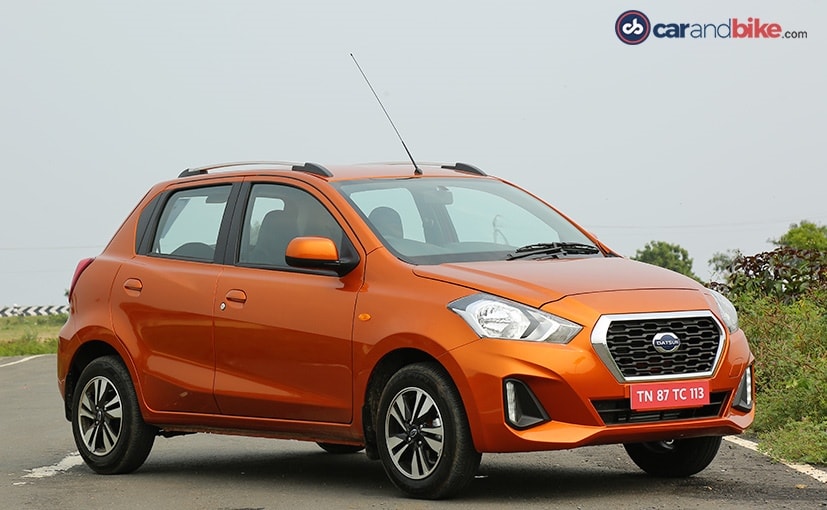
Datsun GO comes with a host of exterior updated that it also shares with the GO+
Now, both the GO and GO+ were already built of Nissan's versatile V platform that also underpins the Micra, so under the skin, nothing has changed. What has changed though is everything above it. Datsun has given both the car a complete makeover inside-out with a bunch of cosmetic changes, along with several new features. Starting with the exterior, the cars now get a heavily updated face, which like the pre-facelift model, is identical for both the GO and GO+. There is a new, larger hexagonal grille with fat chrome surrounds, while the new sweptback headlamps come with styling black highlights. The front bumper is all new and comes with some bold muscular lines, along with some sharp scooped out sections that house the new LED daytime running lights.
Also Read: Datsun India Signs Aamir Khan As Its New Brand Ambassador

Datsun GO+ facelift's face is identical to the GO, featuring the same grille, headlamps and bumper
The cars have also grown in size, and the facelifted GO in particular is now longer by 3 mm, wider by 1 mm, and taller by 17 mm. Similarly, the GO+ is now wider by 1 mm and taller by 17 mm, although the overall length of the MPV remains under the 4-metre mark at 3995 mm. Both the car continue to come with the same 2450 mm wheelbase, however, now they sit a little higher with an increased ground clearance of 180 mm. This has been facilitated by a set of larger 14-inch 5-spoke diamond cut alloy wheels, which we have to say give the cars a much more imposing stance. Both of them, now also come with a pair of large and quite functional roof rails.

Datsun GO and GO+ both get new larger 14-inch alloy wheels and roof rails
Walk towards to rear and you'll start noticing the actual difference between the GO and the GO+. The latter, which gets an extended rear section, features a slightly flatter tailgate with the number plate and chrome slat above it, along with a well-sculpted bumper with trapezoidal inserts on either end. The GO hatchback at the same time comes with a new slightly curvier tailgate with a completely different rear bumper that also houses the number plate and comes with carbon fibre treatment for the lower section. However, both the cars come with similar wraparound taillamps, with integrated turn single lights.

Datsun GO+ is longer than the GO and gets a different design for the rear
2018 Datsun GO And GO+ Facelift Interior Design, Features and Space
Step inside and you'll be welcomed by a heavily redesigned cabin equipped with premium quality plastics and smart-looking upholstery. We were given the top-end models with the optional interior package featuring black faux leather upholstery with orange accents for the GO and silver accents in the GO+. Both the GO and GO+ get an identical dashboard design with the only difference being an all-black treatment for the former and a dual tone black and grey treatment for the latter. Datsun has also added some carbon fibre elements which can be seen on the dashboard, centre console and door panels.

Compared to the Datsun GO's all-black dashboard, the GO+ gets a dual tone treatment
The cabin layout also remains unchanged with a standard five-seater format for the GO, while the GO+ continues to feature an additional third row, which in my opinion is still only suitable for maybe 2 children or to get some extended boot space with the third row folded. The GO offers a luggage space of 265 litres, while the GO+ (with the third row folded) offers 347 litres of boot space.

The GO offers a luggage space of 265 litres, while the GO+ (with the third row down) 347 litres
The 2018 Datsun GO and GO+ also feature loaded and the biggest addition is the brand new 7-inch touchscreen infotainment system sourced from Blaupunkt. The system features both Apple CarPlay and Android Auto, along with Google maps navigation, voice recognition, HD video playback, and Bluetooth connectivity among others. The cars also feature a new, more informative instrument cluster with trip computer MFD (Multi-Function display), which also gets the carbon fibre treatment.

Datsun GO and GO+ now get a new 7-inch infotainment system with Apple CarPlay and Android Auto
The cabin will not just keep you entertained but also safe as now, the carmaker also offers a host of safety features like dual front airbags, ABS (antilock braking system) with EBD and brake assist, along with reverse parking sensors, all as standard. This especially is a big step from Datsun, which in the past has been widely criticised for offering cars with poor safety standards.
Also Read: 2018 Datsun GO And GO+ Come With Dual Airbags And ABS As Standard
2018 Datsun GO And GO+ Facelift Engine, Gearbox, Ride and Handling

Both the Datsun GO and GO+ get the same 1.2-litre petrol engine as before
Powering both the Datsun GO and the GO+, is the same Nissan Micra-sourced 1.2-litre, three-cylinder petrol engine as before. The 1198 cc motor continues to offer the same output of 67 bhp and develops a peak torque of 104 Nm while being mated to a 5-speed manual gearbox as standard. The engine feels quite peppy and eager especially around the city when driving through lower revs, which means there is a good amount of low-end torque, however, once you hit an open road and try to push the car further there is a noticeable lag, especially above 2800 rpm, but the car's eagerness returns once you cross the 4000 rpm mark which indicates that most of the power is concentrated a little higher in the rev band.

Datsun has considerably improved the ride quality, however, both the cars come with poor NVH levels
However, by this time you start to hear all kinds of noises from the road, from the tyre, and even the engine, which shows poor NVH levels of the cars. Another thing that kept on bugging me was the gearbox, which was a bit clunky and there was this occasional doubt whether the gear has been slotted in the right position or not. Here, we wish Datsun had worked on making the gearbox smoother and the shifts a bit more precise, because driving through city traffic with such a gearbox could become irritating after a while. Having said that, the ride quality of the cars, both the GO and GO+, has improved a lot thanks to the new suspension set up, which helps the cars tackle all the undulations on the road pretty nicely.

Starting at Rs. 3.83 lakh the Datsun GO+ is the most affordable 7-seater MPV in India
2018 Datsun GO And GO+ Facelift Verdict
With the prices starting at Rs. 3.29 lakh for the Datsun GO and Rs. 3.83 lakh for the GO+, there is no doubt that the cars make a strong case for themselves, especially the GO+, which is still the most affordable 7-seater in India. Moreover, the cars come with a bunch of new features and creature comforts that make them a much better package compared to the pre-facelift models. Well, there are certain creases that Datsun still needs to iron out, especially if it wants the GO siblings to do some damage to its competitors' numbers. However, the biggest problem for the Datsun, especially the GO hatchback, right now is the soon-to-be-launched Hyundai Santro, which is expected to be priced very similarly and will be at par with it in terms of features and equipment.
Photos: Pawan Dagia
Seshan Vijayraghvan is among those who chose to be an automotive journalist just for the pleasure of getting their hands on all the awesome 4-wheeled and 2-wheeled machines that comes their way. A writer by day and a reader by night, this South-Indian Mumbaikar's love for cars and bikes is as strong as his beloved filter coffee. His current desire is to procure a mint-condition Premier Padmini and Royal Enfield Interceptor 650.
Read all latest news and reviews from Seshan Vijayraghvan →


Related News


Learn more about


Latest Cars


Upcoming Cars


Latest News


 car&bike Team | Oct 3, 20262027 Kawasaki Ninja 650 Revealed; Gets Hardware UpgradesThe 2027 Ninja 650 gets a new Showa inverted fork, radial-mount brakes and more torque, along with updated TFT connectivity.2 mins read
 car&bike Team | Oct 3, 2026Auto Sales September 2026: Maruti Leads As Kia, Tata, Mahindra Post Strong GrowthMaruti Suzuki led September sales with over 2.36 lakh units, while Tata, Mahindra, Hyundai and Kia also posted growth, with Tata recording its highest-ever quarterly sales in Q2 FY27.3 mins read
 Amaan Ahmed | Oct 2, 2026BMW F 450 R: Five Important Questions AnsweredReplacing the G 310 R as BMW's entry-level naked motorcycle is the just-unveiled F 450 R, and here are answers to five pressing questions about it.1 min read
 car&bike Team | Oct 2, 2026Honda Rebel 500 Recalled In India To Address Potential Steering IssueLess than 100 units of the motorcycle manufactured in 2025 that were sold in India are affected by this global recall.1 min read
 Amaan Ahmed | Oct 2, 2026BYD's Denza D9 MPV, Z9 GT Shooting Brake India Debut In November 2026BYD's luxury sub-brand Denza has announced its imminent India entry, and car&bike can confirm two strikingly different models from the Chinese carmaker will arrive in the next few weeks.1 min read
 car&bike Team | Oct 2, 2026Mahindra's 'Electric Origin' SUVs Cross 1 Lakh Sales Mark in 18 MonthsMahindra currently sells 3 SUVs under the Electric origin umbrella which include BE 6, XEV 9e and the 3-row XEV 9S1 min read
 Bilal Firfiray | Oct 3, 2026Kia Sorento Review: Is Bigger Always Better?The Kia Sorento has arrived to our shores at the right time. But does it have what it takes to take the market by a storm?7 mins read
 Abhishek Nigam | Oct 2, 2026MINI Countryman C Review: Has MINI Finally Grown Up Without Losing Its Personality?The new Countryman C is bigger, more practical and packed with technology, but its quirky appeal comes with a few compromises.1 min read
 Janak Sorap | Oct 1, 2026Yamaha YZF-R2 Track Review: New TerritoryYamaha's all-new YZF-R2 brings 200cc performance, lightweight construction and R-series DNA to a new generation of riders, but its true track potential is held back by one crucial component.1 min read
 Bilal Firfiray | Sep 28, 2026Renault Triber 1.0 Turbo Review: Was It Necessary?With the new RGEP platform, the Triber has received a much-awaited turbocharged petrol engine. It makes more power now, but was it necessary for this seven-seater MPV's fitness to purpose?5 mins read
 Girish Karkera | Sep 26, 2026Mahindra Thar OG Review: An Ode To The Past But Aimed At The FutureOn the surface, the new Mahindra Thar OG might look like a facelift, but that is more than meets the eye.7 mins read