
Bharat NCAP vs Global NCAP: What’s the Actual Difference?
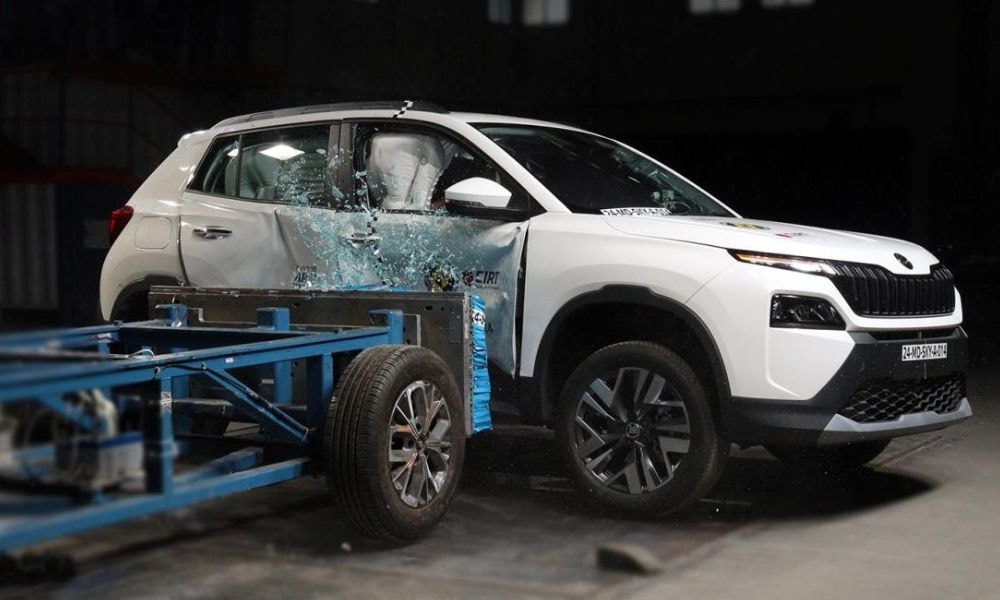
- Bharat NCAP and Global NCAP use largely similar crash-test speeds and core protocols
- The biggest differences lie in scoring, transparency, and vehicle selection methods
- Bharat NCAP ratings are government-backed, while Global NCAP operates independently
For years, the Global NCAP “Safer Cars for India” campaign completely changed how Indian buyers looked at vehicle safety. Crash-test ratings became one of the biggest deciding factors while buying a car, especially after several popular models scored poorly in earlier tests.
Also read: Top 5 Safest Cars Under ₹10 Lakh In India (May 2026) As Per Bharat NCAP Ratings
Now, with Bharat NCAP fully operational since 2023, India finally has its own official crash-testing program under the Ministry of Road Transport and Highways. But that has also created a new question among buyers: if almost every Bharat NCAP-tested car is getting five stars, is Bharat NCAP easier, or are Indian cars genuinely becoming safer? The answer is a mix of both evolving regulations and differences in how the two systems operate.
The Core Similarities: Same Crashes, Same Speeds
Before looking at the differences, it is important to understand that Bharat NCAP did not completely reinvent crash testing. Both Bharat NCAP and Global NCAP largely follow the same updated crash protocols used between 2022 and 2025.
Also read: New Renault Duster Bags Five Stars In Latest Bharat NCAP Crash Tests: Check Details
Requirements of Both Tests:
- Frontal offset crash at 64 kmph
- Side impact crash at 50 kmph
- Side pole impact at 29 kmph
- Child occupant protection using crash-test dummies
- ESC and basic active safety requirements
That means the actual physical crash severity itself is broadly comparable between the two programs.
Bharat NCAP vs Global NCAP: The Biggest Differences
We have listed the major differences between the two crash test systems below.
The Scoring System Is Slightly Different
This is one of the biggest technical differences.
| Category | Global NCAP | Bharat NCAP |
| Adult Occupant Protection | 34 Points (27-34 needed for five stars) | 32 Points (27+ needed for five stars) |
| Child Occupant Protection | 49 Points (45 needed for five stars) | 49 Points (45 needed for five stars) |
| Seatbelt Reminder | Two points awarded | Mandatory requirement |
| Final Rating Style | Separate adult & child star ratings | Unified overall star label |
Global NCAP awards bonus points for seatbelt reminders, while Bharat NCAP treats front seatbelt reminders as a mandatory requirement instead of a scoring bonus.
Also read: New Hyundai Venue Secures 5-Star Bharat NCAP Safety Rating
The “Stable vs Unstable Bodyshell” Difference
This is probably the biggest difference enthusiasts care about. Global NCAP publicly mentions whether a car’s bodyshell remained “Stable” or “Unstable” during the crash. That detail became extremely important in India because some cars managed decent scores mainly due to airbags and restraints despite significant structural deformation.
For example, some cars scoring well in occupant safety still received an “unstable bodyshell” remark from Global NCAP. Bharat NCAP does not prominently highlight the stable/unstable bodyshell classification in its consumer-facing summaries. Instead, it focuses more heavily on injury readings and overall occupant protection scores. That difference alone is one reason some enthusiasts still analyse Global NCAP reports more deeply.
Also read: Kia Seltos Gets 5-Star Bharat NCAP Safety Rating, Outscores The Tata Sierra
Vehicle Selection Works Differently
Global NCAP often tests vehicles independently by purchasing random lower-spec variants directly from dealerships. Bharat NCAP works differently because manufacturers voluntarily submit vehicles for testing under the government-backed system. This has created criticism that brands naturally prefer sending their newer, safer, or stronger products rather than older legacy models. That is one reason many people feel almost every Bharat NCAP-tested car now scores five stars.
Why Are More Cars Suddenly Getting Five Stars?
The answer is not simply that a Bharat NCAP rating is “easy” to achieve. Indian car safety standards themselves have improved a lot compared to a decade ago. Features like six airbags, ESC, stronger crash structures, ISOFIX mounts, and better restraint systems are now far more common even in mainstream cars.
Also read: Tata Sierra Gets A 5-Star Safety Rating In Bharat NCAP Crash Tests
Cars like the Hyundai Verna, Tata Nexon, Mahindra Scorpio N, and Volkswagen Virtus are structurally much safer than many entry-level cars sold in India around 2015-2018. At the same time, Bharat NCAP’s manufacturer-submission approach also means weaker or ageing platforms are less likely to be voluntarily tested.
So the reality lies somewhere in between: Indian cars genuinely are getting safer, but the testing pool itself is also more selective today.
So, Which Rating Should Buyers Trust?
Both Bharat NCAP and Global NCAP remain credible crash-testing systems, and both follow globally recognised testing standards. For most buyers, a strong rating in either program is still a good sign because the actual crash protocols remain quite demanding. However, if someone wants a deeper understanding of structural integrity and long-term crash performance, Global NCAP reports still tend to reveal slightly more technical detail publicly.
The bigger takeaway, though, is that crash safety itself has finally become a major focus area in the Indian market. And compared to where the industry stood even a few years ago, that shift alone is probably the most important change.

carandbike is not merely another name in the world of automotive web sites. We bring together the best from the world of both, cars and bikes. New cars, used cars, new bikes, - we endeavour to help you with all of that. Additionally, carandbike also strives to keep its users updated with the latest from the global automotive industry. car price, car reviews, car dealers, new bikes, and everything in between, carandbike is happy to help!
Read all latest news and reviews from car&bike Team →


Related News


Latest Cars


Upcoming Cars


Latest News


 Jafar Rizvi | Oct 1, 2026New Porsche 911 GT3 To Debut In India By Early 2027The 992.2-generation 911 GT3 made its global debut in October 2024.2 mins read
 Seshan Vijayraghvan | Oct 1, 2026New BMW 3 Series Unveiled: Performance-Oriented M350 And Plug-In Hybrid Models AnnouncedThe new BMW 3 Series family will include a performance-oriented M350 xDrive, a regular petrol model, and a PHEV as well.3 mins read
 car&bike Team | Oct 1, 2026Bajaj Pulsar NS400Z Gains TFT Screen: Priced At Rs 1.90 LakhThe 5-inch TFT screen gets Google Maps mirroring among other features.1 min read
 car&bike Team | Oct 1, 2026Honda Elevate Facelift Teased Ahead Of October 6 Launch, Bookings OpenHonda has released the first teaser of the facelift of its compact SUV Elevate which confirms a lot of new features on the SUV2 mins read
 Amaan Ahmed | Oct 1, 2026India To Get Its First-Ever BMW Estate: M5 Touring '100 Jahre Nurburgring' Edition Launch SoonFor the first time in its near two-decade-long journey in India, BMW is introducing a station wagon to its portfolio as part of a limited-series launch paying tribute to the famed circuit in Germany.3 mins read
 Jafar Rizvi | Oct 1, 2026Aprilia SXR GT 175, SXR GT 125 Revealed Ahead Of Launch In OctoberBookings for both the maxi scooters are now open across India.2 mins read
 Janak Sorap | Oct 1, 2026Yamaha YZF-R2 Track Review: New TerritoryYamaha's all-new YZF-R2 brings 200cc performance, lightweight construction and R-series DNA to a new generation of riders, but its true track potential is held back by one crucial component.1 min read
 Bilal Firfiray | Sep 28, 2026Renault Triber 1.0 Turbo Review: Was It Necessary?With the new RGEP platform, the Triber has received a much-awaited turbocharged petrol engine. It makes more power now, but was it necessary for this seven-seater MPV's fitness to purpose?5 mins read
 Girish Karkera | Sep 26, 2026Mahindra Thar OG Review: An Ode To The Past But Aimed At The FutureOn the surface, the new Mahindra Thar OG might look like a facelift, but that is more than meets the eye.7 mins read
 Jafar Rizvi | Sep 28, 2026TVS Orbiter Long-Term Review (Report 2): Slow But SmoothAfter nearly three months with the TVS Orbiter, its relaxed performance remains its biggest weakness, but easy handling, comfort and usable real-world range make it a capable city commuter.1 min read
 Bilal Firfiray | Sep 19, 2026MG Hector Tomahawk EV Review: Play It SafeMG’s new electric SUV has one of the coolest names ever, and the coolest temperament amongst its peers. But is it worth buying?7 mins read