
Formula One Regulations Since 2010


- These new regulations ushered in a new era in Formula 1.
- Sebastian Vettel claimed the drivers championship in his Red Bull.
- Four years later, the hybrid era of Formula 1 began.
While 2014 ushered in the hybrid era in Formula 1, 2022 is all set to see another big set of regulations come into force with the big aim of promoting closer racing. However, if you wind the clock back to 2010, you will see that the regulations introduced in this season gave F1 cars their biggest overhaul in 25 years. In fact, the regulation changes in 2014 and 2022 couldn't have been possible if it weren't for the 2010 overhaul. Take a look at what these changes were.
No refuelling

Before 2010, pitstops also involved refuelling the car using large hoses. The no refuelling rule not only made pitstops less dangerous but also helped cut costs. But this meant that the new Formula 1 cars were now longer by 20 to 22cm to accommodate the larger tanks. Carrying the entire race's worth of fuel meant that the weight of the liquid was twice that of the previous years.
Tyre update
Though there was no refuelling needed, pitstops were still a necessity to replace tyres. The 2010 season saw the introduction of front tyres that were narrower by 20mm. This was done with the aim of improving the balance of the cars. Wheel covers and rim heaters were banned, and tyre blankets were only allowed to act on the tyre's outer surface. The year 2010 saw each driver getting eleven sets of tyres for the weekend instead of fourteen.
Points system

This change was mainly caused by the increased number (26) of drivers participating in the 2010 season. Points were awarded to 10th place cars as well. The season's allocation for points from the 1st to 10th positions was 25, 18, 15, 12, 10, 8, 6, 4, 2, and 1.
Qualifying update
These changes were also the consequence of a larger grid occupying more drivers. This now meant that the eight slowest cars would drop out of the first two sessions. The final session of qualifying mandated that the cars run on low fuel loads and that they start the Sunday race on the set of tyres they used during the final qualifying session, assuming that there's no rain.
Engine changes
The 2010 rule changes in Formula 1 also introduced a slight change to the penalty slapped to a driver if they end up using more than eight engines during the season. The driver would be needed to drop ten places on the starting grid at the first race during which each additional engine is used.

These were more or less all the major changes that the 2010 season introduced to Formula 1. As history tells us, every new rule change has led to newer teams and drivers dominating the grid. This one saw Sebastian Vettel going on to win four consecutive driver's championships in his Red Bull.
This weekend will mark the start of the 2022 season that has brought huge changes to the car regulations and we just can't wait to see who ends up dominating Formula 1 from here on.
Related News


Latest Cars


Upcoming Cars


Latest News


 Bilal Firfiray | Jul 27, 2026BMW X5 And iX5 Long Wheelbase Unveiled With Extra Rear Leg RoomBMW has taken the wraps off the long-wheelbase body style of the new-gen X5, and its all-electric iX5 avatar is exclusively for the Chinese market. Both are Neue Klasse with up to 1,000km of claimed range.2 mins read
 car&bike Team | Jul 25, 2026Jeep Meridian 85th Anniversary Edition Launched At Rs 36.05 LakhLimited to 85 units, the special edition gets cosmetic changes and also features the CARA AI voice assistant.1 min read
 car&bike Team | Jul 25, 2026River Indie Electric Scooter Crosses 50,000 Units Production MilestoneThe milestone comes less than three years after the first unit rolled out of the company's Hoskote manufacturing facility.2 mins read
 car&bike Team | Jul 25, 20262026 Maruti Brezza Facelift Fuel Efficiency Figures RevealedThe updated model returns up to 26.90 km/kg in CNG guise, while the newly introduced turbo-petrol delivers a claimed 20.47 kmpl.2 mins read
 Jafar Rizvi | Jul 25, 2026Honda ZR-V Hybrid SUV Launched In India At Rs 47.99 LakhThe ZR-V is Honda’s first hybrid SUV for India and arrives as a CBU.1 min read
 Jafar Rizvi | Jul 24, 20262026 Maruti Brezza Facelift: Variants, Features, Engine Options ExplainedThe 2026 Maruti Suzuki Brezza is offered in four trim levels: LXi, VXi, ZXi and ZXi+ and with two engine options.5 mins read
 Jaiveer Mehra | Jul 27, 20262026 Maruti Suzuki Brezza Facelift Review: Bestseller Joins The Turbo ClubWhile Maruti’s facelifts have always tended to bring subtle updates over the outgoing models, the latest Brezza brings some heavy updates under the skin, including a new 6-speed manual gearbox and, for the first time, a turbocharged petrol engine option.1 min read
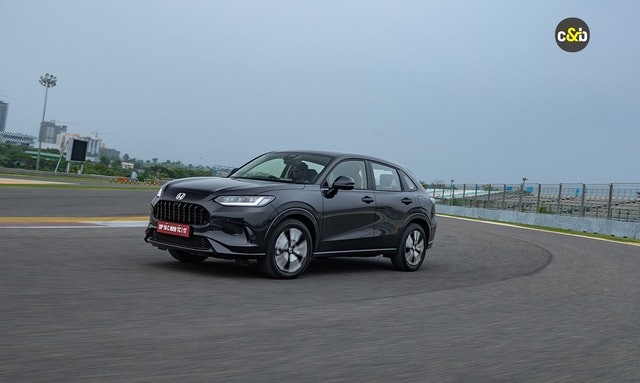 Bilal Firfiray | Jul 24, 2026Honda ZR-V Review: Who Is It For?Honda has brought the new ZR-V to India as their current flagship offering. It’s a CBU, it’s a hybrid, and it’s here for a limited few. Who is it for though?1 min read
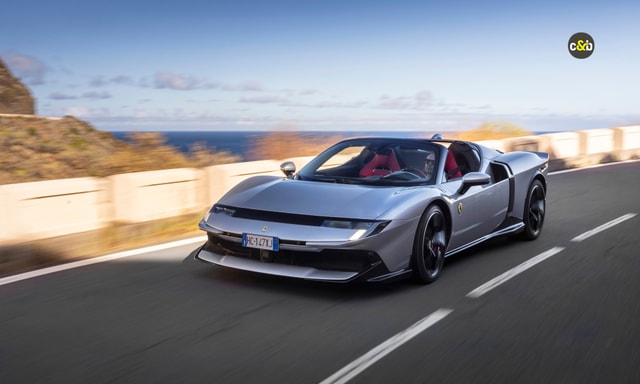 Shams Raza Naqvi | Jul 15, 2026Ferrari 849 Testarossa Spider Driven: Rs. 11.25 Crore Meets 1,000 bhpWe got behind the wheel of the most powerful convertible from Ferrari. What makes the 849 Testarossa Spider Special? We tell you.1 min read
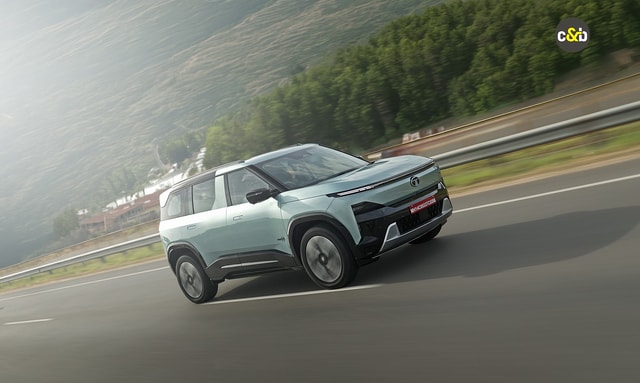 Bilal Firfiray | Jul 12, 2026Tata Sierra EV Review: Reborn In The Electric AgeThe Tata Sierra EV isn’t drastically different from its ICE counterpart when it comes to design. But being the seventh electric offering from the Indian brand, it has gotten a few things right, and very few things wrong. But is it a compelling package to buy?5 mins read
 Jafar Rizvi | Jul 13, 2026TVS Orbiter Long-Term Review (Report 1): Settling In Takes TimeFirst impressions weren't the strongest, but the Orbiter has made a mark in its first month in the car&bike garage.5 mins read