
MIT Designed A Flying Saucer That May Make It To The Moon


- The flying saucer takes advantage of electrostatic levitation
- It takes advantage of the fact that the moon doesnt have an atmosphere
- MIT has already demoed this in a 60 gram model
MIT scientists have designed a flying saucer which has been designed to explore the moon. The flying saucer has been designed in such a way that it will be hovering above the surface of the lunar body via the force of electrostatic repulsion. It is able to work this way as the surface of the moon lacks a protective atmosphere and its surface is directly exposed to space plasma and the sun's ultraviolet rays. This ensures its surface is positively charged to such a degree that the dust levitates up to 1 meter above the ground. It is fundamentally the same effect that causes human hair to stand up when statically charged.
This is not the first time researchers have dabbled with such an idea. Researchers have suggested leveraging this phenomenon to deploy the glider that will explore the surface of airless celestial objects like the moon. If the wings are made of positively charged material like Mylar, it has been theorised that a glider and the positively charged lunar surface can repel one another causing levitation.
As per MIT's findings, such a system will even work on small asteroids and the force of gravity on larger celestial bodies such as the moon would still pull the glider down. That's what a flying saucer-like rover is needed. This flying saucer wouldn't have a crew and it would boost the electrostatic repulsion by emitting beams of negatively charged ions outward giving the rover a positive charge.

The flying saucer takes advantage of no atmosphere on the moon
MIT says these ions will be released by nozzles on upward and downward facing miniature ion thrusters which would apply voltage to an ionic liquid drawn from a connected onboard reservoir. In fact, such thrusters are already used to manoeuver small satellites in outer space. MIT has shown this off in a proof of concept experience where a 60-gram model rover which is approximately the size of a person's hand was hung from springs above an aluminum surface within a vacuum chamber in order to simulate the low gravity airless surface of the moon.
It had an upwards facing ion thruster and four of which were facing down. "With a levitating rover, you don't have to worry about wheels or moving parts," says Prof. Paulo Lozano, who is leading the study along with graduate student Oliver Jia-Richards. "An asteroid's terrain could be totally uneven, and as long as you had a controlled mechanism to keep your rover floating, then you could go over very rough, unexplored terrain, without having to dodge the asteroid physically," added Prof. Paulo Lozano.


Latest News


 car&bike Team | Aug 13, 2026Mahindra Scorpio-N Pickup Unveil Tomorrow: What To Expect?The production version of the 2023 Global Pik Up concept shares several design elements with the Scorpio N, albeit with a cargo bed.3 mins read
 Sarthak Mahajan | Aug 13, 2026Updated Ampere Magnus G Max Launched At Rs 1.10 LakhAmpere has updated the Magnus G Max with more features, along with a new 5-inch instrument cluster and more.1 min read
 car&bike Team | Aug 13, 20262026 Hero Xtreme 125R Gets TFT ScreenXtreme 125R with a TFT screen will be introduced as a new top-spec variant in the lineup.2 mins read
 car&bike Team | Aug 13, 2026E20 Fuel Contamination: Carmakers Raise Concerns Over Chloride And Moisture LevelsInternal discussions involving Maruti Suzuki, Tata Motors and Mahindra have brought fresh attention to the quality of E20 petrol being dispensed in India.1 min read
 Sarthak Mahajan | Aug 13, 2026MG Hector Hawk 7-Seat Electric SUV Teased Ahead Of August 26 DebutThe SUV is expected to be offered in a PHEV iteration as well.3 mins read
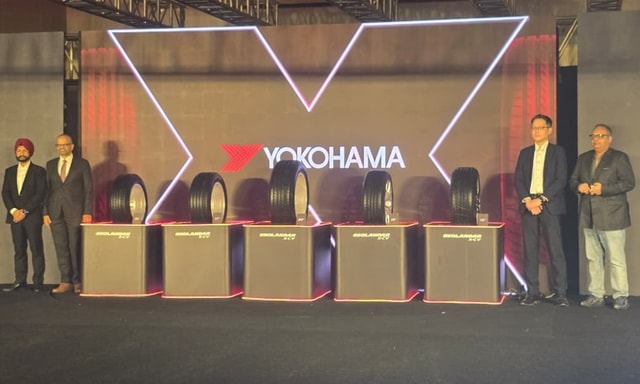 Jaiveer Mehra | Aug 12, 2026Yokohama India Launches New Geolandar X-CV SUV TyresNew variant of the Geolandar series is EV-compatible and offers better grip and longer life compared to conventional tyres.1 min read
 Preetam Bora | Aug 12, 2026Royal Enfield Himalayan 440 Custom Review: Beating RE to the PunchDelhi-based custom motorcycle shop TNT Motorcycles introduces packages to convert existing Himalayan 411 adventure bikes to Himalayan 440. Is it worth the expense?8 mins read
 Seshan Vijayraghvan | Aug 11, 20262026 Nissan Tekton 700 km Review: Can It Conquer The Himalayas?We drove the newly launched Nissan Tekton from Chandigarh all the way up to Leh, covering over 700 km with the new SUV. From exploring the Tekton’s capabilities in the Himalayas to setting an India Book Record, here’s how the trip unfolded.8 mins read
 Preetam Bora | Aug 11, 20262026 Aprilia Tuono 457 Special Edition First Ride Review: Should You Buy It?The 2026 Aprilia Tuono 457 delivers an engaging, everyday riding experience with strong performance. At its price point, the Tuono 457 is a brilliant motorcycle, but not quite the complete package. Why is that, and should you still buy it? Read on.8 mins read
 Bilal Firfiray | Aug 1, 2026Toyota Hilux Review: The InvincibleMarking it as the ninth generation, the Hilux comes with a major cosmetic overhaul. But is it still relevant enough for the current times or is it getting too long in the tooth?5 mins read
 Bilal Firfiray | Jul 30, 2026Kia Syros EV Review: Best EV To Buy Under Rs 20 Lakh?The Kia Syros EV comes into the game with a modern design, spacious cabin, strong performance, decent range and an aggressive pricing. But could it become the new benchmark under Rs 20 lakh?5 mins read