
Stellantis Sees India As Profitable Auto Market Amid Challenges In China, Russia


Stellantis chief Carlos Tavares expects India to be a profitable market and a bigger growth opportunity than the carmaker previously expected as it faces challenges in countries such as China and Russia.
India, where Stellantis sells its Jeep and Citroen brands, makes up a fraction of the carmaker's global sales but Tavares said he expects revenues in the South Asian nation to more than double by 2030 and operating profit margins to be in double-digits within the next couple of years.
Western carmakers for years have struggled to make money in India, a market dominated by Asia's Suzuki Motor and Hyundai Motor with their small, low-cost cars.
"Being profitable in India is possible if you do things the India way," Tavares said at a virtual media roundtable late on Tuesday.
This, according to him, includes sourcing parts locally and vertically integrating the supply chain to keep costs low, and engineering cars locally with features Indian consumers want and are willing to pay for. Stellantis, formed at the start of 2021 through the merger of France's PSA with Fiat Chrysler (FCA), in March outlined a new group strategy to boost revenues and keep profit margins high as it steps up efforts to roll out electric vehicles (EVs).
The focus on India comes at a time when the world's fourth-largest carmaker is facing headwinds in China, where it is reshuffling its strategy amid lagging sales and strong competition, and in Russia, where it has suspended production due to the Ukraine war. "The challenges ... are giving India a bigger opportunity, even bigger than in the past," Tavares said.
At the heart of its India plan is Stellantis' smart car platform program which it has developed in the country to allow it to launch small, gasoline-powered cars of less than four metres in length, Tavares said. Small cars are taxed at lower rates, making them more affordable.
It will also launch electric versions of its small cars starting next year, he said.
Small cars have been an Achilles heel for most global automakers in India and trying to compete in that space has been a race to the bottom for the likes of Ford and General Motors, leading to their eventual exit.
But Tavares is confident of Stellantis' approach -- before building cars, it has strengthened its supply chain.
Stellantis manufactures its powertrains and gearboxes locally and sources more than 90% of the vehicle's contents in India. Its engine plant in southern India is a global benchmark on cost and quality and it plans to do the same at its two car plants, where it manufactures Jeep SUVs and Citroen cars, Tavares said.

"We have been working for many years now on localisation, vertical integration in India, to enjoy the smart frugality of India," he said.
Stellantis has invested over one billion euros ($1.05 billion) in its Indian operations since 2015.
The carmaker also wants to source cells and batteries from India whenever the supply chain develops, Tavares said, adding that this would be the only way to build affordable EVs.
Stellantis has less than 1% of India's car market of 3 million units a year but Tavares said he is not chasing volumes in India or globally.
"We believe the world is changing and in some cases being too big may be a penalty," he said.
(This story has not been edited by NDTV staff and is auto-generated from a syndicated feed.)





Latest News


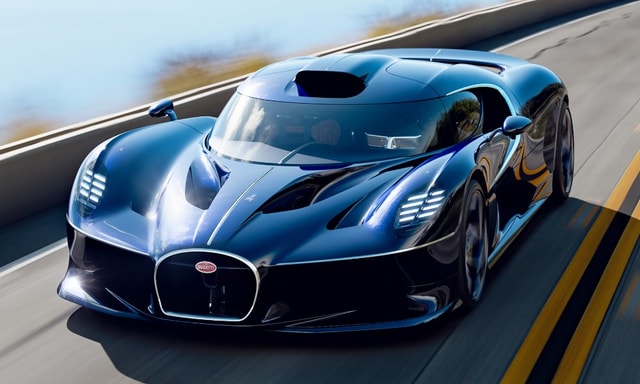 car&bike Team | Aug 8, 2026Bugatti Destrier Revealed As One-Off Bolide-Based Hypercar With 1,578 BhpBugatti has revealed the Destrier, a one-off based on the Bolide but with a completely different design brief.3 mins read
 car&bike Team | Aug 8, 2026KTM 160 Duke, RC 160 Prices Hiked By Up To Rs 15,000KTM India has revised the prices of its entry-level motorcycles, with both the 160 Duke and RC 160 getting more expensive.1 min read
 car&bike Team | Aug 8, 2026MG Majestor SUV Prices Hiked By Rs 1.50 LakhAfter the hike, prices for the Majestor now start at Rs 42.49 lakh (ex-showroom) for both 4x2 variants.2 mins read
 car&bike Team | Aug 7, 20262026 Ducati Monster India Launch On August 10; Gets New 890cc EngineDucati is set to launch the 2026 Monster in India on August 10, bringing an updated design, new engine and revised electronics package to the premium streetfighter segment.1 min read
 car&bike Team | Aug 7, 2026New Bajaj Pulsar 150 Spotted Ahead Of LaunchThe updates point to one of the biggest overhauls the nameplate has received in years.2 mins read
 Jaiveer Mehra | Aug 7, 2026FADA Sales July 2026: Auto Sales Up By Over 25 Per Cent; Passenger Vehicle, Two-Wheelers Report Best-Ever Numbers For The MonthFADA reported sales across all segments stood at a new high for July - a first-ever.1 min read
 Bilal Firfiray | Aug 1, 2026Toyota Hilux Review: The InvincibleMarking it as the ninth generation, the Hilux comes with a major cosmetic overhaul. But is it still relevant enough for the current times or is it getting too long in the tooth?5 mins read
 Bilal Firfiray | Jul 30, 2026Kia Syros EV Review: Best EV To Buy Under Rs 20 Lakh?The Kia Syros EV comes into the game with a modern design, spacious cabin, strong performance, decent range and an aggressive pricing. But could it become the new benchmark under Rs 20 lakh?5 mins read
 Jaiveer Mehra | Jul 27, 20262026 Maruti Suzuki Brezza Facelift Review: Bestseller Joins The Turbo ClubWhile Maruti’s facelifts have always tended to bring subtle updates over the outgoing models, the latest Brezza brings some heavy updates under the skin, including a new 6-speed manual gearbox and, for the first time, a turbocharged petrol engine option.1 min read
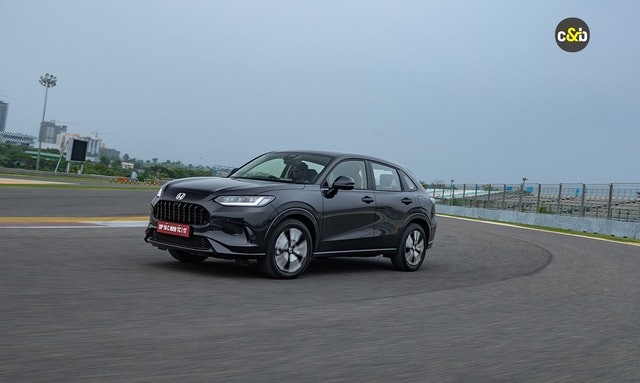 Bilal Firfiray | Jul 24, 2026Honda ZR-V Review: Who Is It For?Honda has brought the new ZR-V to India as their current flagship offering. It’s a CBU, it’s a hybrid, and it’s here for a limited few. Who is it for though?1 min read
 Girish Karkera | Jul 29, 2026Mercedes-AMG E53 4MATIC+ PHEV First Drive Review: Just What The Doctor OrderedThere are luxury cars and there are high-performance cars. But what if you want both for the price of one? Mercedes-Benz has a recommendation that promises to tread a fine line between the two – the second generation E53 with a twist.7 mins read