
Trump Administration Freezing Fuel Efficiency Penalties In The US


The Trump administration said late on Friday it was issuing final rules to suspend a 2016 Obama administration regulation that more than doubled penalties for automakers failing to meet fuel efficiency requirements. Congress in 2015 ordered federal agencies to adjust a wide range of civil penalties to account for inflation and, in response, the National Highway Traffic Safety Administration (NHTSA) under President Barack Obama issued rules to eventually raise fines to $14 from $5.50 for every 0.1 mile per gallon of fuel that new cars and trucks consume in excess of the required standards.
Automakers protested the hike, saying it could increase industry compliance costs by $1 billion annually. After a group of states and environmental groups filed suit, the Trump administration began the process of formally undoing the Obama regulation and first proposed the freeze in 2018.
In a statement late on Friday, NHTSA said it was faithfully following the intent of Congress to ensure the penalty rate was set at the level required by statute.
It expected this final rule to significantly cut the future burden on industry and consumers by up to $1 billion a year, it added.
The Alliance of Automobile Manufacturers, a trade group representing General Motors Co (GM.N), Volkswagen AG (VOWG_p.DE), Toyota Motor Corp (7203.T), Fiat Chrysler Automobiles NV (FCHA.MI) and others, had said it could increase industry compliance costs by $1 billion annually.
Late on Friday, Gloria Bergquist, a spokeswoman for the group, praised the decision, saying NHTSA's "own model clearly shows the significant economic harm that such a dramatic and unjustified increase in penalties would have on auto manufacturers, workers, and ultimately consumers."
The prior administration had "failed to take into account the significant economic harm that would result," she added.
Automakers argued the increases would dramatically raise costs, since they would also boost the value of fuel economy credits that are used to meet requirements.
In September 2017, three environmental groups and some U.S. states including New York and California sued NHTSA for putting the Obama rules on hold.
Last year, the states said, "If the penalty is not sufficiently high, automakers lack a vital incentive to manufacture fuel-efficient vehicles."
Some automakers historically have paid fines instead of meeting fuel efficiency requirements - including some luxury automakers like Jaguar Land Rover, owned by India's Tata Motors (TAMO.NS), and Daimler AG (DAIGn.DE).
In February, Fiat Chrysler told Reuters it paid $77 million in U.S. civil penalties in 2018 for failing to meet 2016 model year fuel economy requirements.
Fiat Chrysler welcomed the decision.
It "enables us to continue our significant investment plans in both our U.S. manufacturing footprint and new technologies required to maintain our trajectory of improved fuel-efficiency," the carmaker said in a statement late on Friday.
Environmental groups urge the administration to retain the increase, noting U.S. fuel economy fines have lost nearly 75% of their original value because the fines have only been increased once - from $5 to $5.50 in 1997 - in more than four decades.
The move comes as NHTSA and the Environmental Protection Agency are working to finalize a rewrite of the Obama administration's fuel efficiency requirements through 2026 in the coming months.
In August 2018, the administration proposed freezing fuel efficiency requirements and stripping California of the right to set its own vehicle-emissions rules.
Related News


Popular MINI Models


Latest Cars


Upcoming Cars


Latest News


 car&bike Team | Jul 25, 2026Jeep Meridian 85th Anniversary Edition Launched At Rs 36.05 LakhLimited to 85 units, the special edition gets cosmetic changes and also features the CARA AI voice assistant.1 min read
 car&bike Team | Jul 25, 2026River Indie Electric Scooter Crosses 50,000 Units Production MilestoneThe milestone comes less than three years after the first unit rolled out of the company's Hoskote manufacturing facility.2 mins read
 car&bike Team | Jul 25, 20262026 Maruti Brezza Facelift Fuel Efficiency Figures RevealedThe updated model returns up to 26.90 km/kg in CNG guise, while the newly introduced turbo-petrol delivers a claimed 20.47 kmpl.2 mins read
 Jafar Rizvi | Jul 25, 2026Honda ZR-V Hybrid SUV Launched In India At Rs 47.99 LakhThe ZR-V is Honda’s first hybrid SUV for India and arrives as a CBU.1 min read
 Jafar Rizvi | Jul 24, 20262026 Maruti Brezza Facelift: Variants, Features, Engine Options ExplainedThe 2026 Maruti Suzuki Brezza is offered in four trim levels: LXi, VXi, ZXi and ZXi+ and with two engine options.5 mins read
 Jafar Rizvi | Jul 24, 20262026 Maruti Brezza Facelift Launches With Three Major FirstsThe 2026 Maruti Suzuki Brezza has arrived, and along with carrying a five-star Bharat NCAP rating, the model brings three firsts for both the Brezza and, in one case, Maruti itself.2 mins read
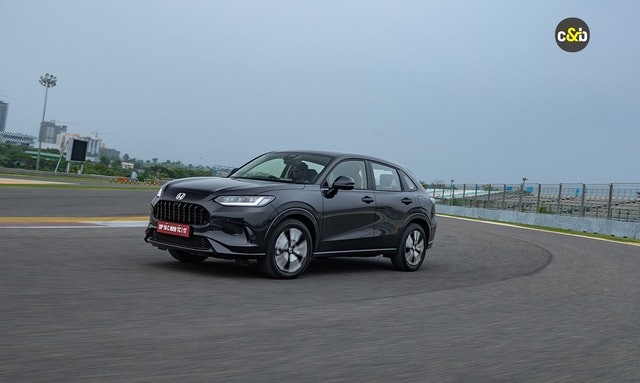 Bilal Firfiray | Jul 24, 2026Honda ZR-V Review: Who Is It For?Honda has brought the new ZR-V to India as their current flagship offering. It’s a CBU, it’s a hybrid, and it’s here for a limited few. Who is it for though?1 min read
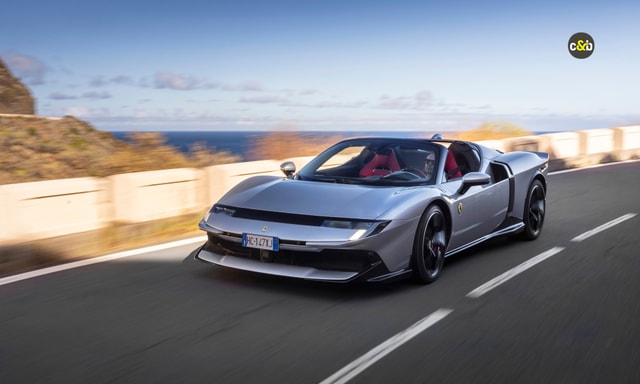 Shams Raza Naqvi | Jul 15, 2026Ferrari 849 Testarossa Spider Driven: Rs. 11.25 Crore Meets 1,000 bhpWe got behind the wheel of the most powerful convertible from Ferrari. What makes the 849 Testarossa Spider Special? We tell you.1 min read
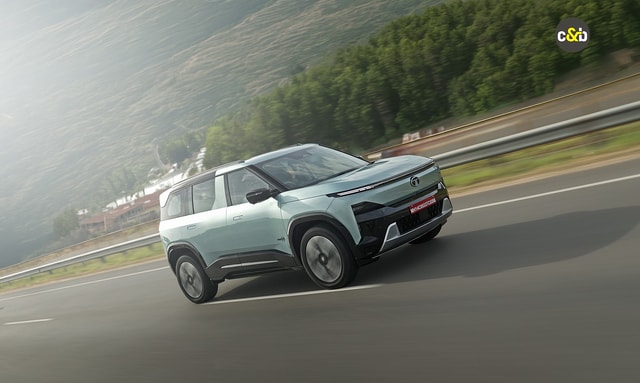 Bilal Firfiray | Jul 12, 2026Tata Sierra EV Review: Reborn In The Electric AgeThe Tata Sierra EV isn’t drastically different from its ICE counterpart when it comes to design. But being the seventh electric offering from the Indian brand, it has gotten a few things right, and very few things wrong. But is it a compelling package to buy?5 mins read
 Jafar Rizvi | Jul 13, 2026TVS Orbiter Long-Term Review (Report 1): Settling In Takes TimeFirst impressions weren't the strongest, but the Orbiter has made a mark in its first month in the car&bike garage.5 mins read
 Seshan Vijayraghvan | Jul 7, 2026Tata Altroz Petrol DCA Long-Term Review: Intercity & Highway Driving ReportWe tested the Tata Altroz Petro DCA’s highway manners, intercity performance, and real-world fuel efficiency.1 min read